
Saxenda and Relationships: How Liraglutide 3 mg Affects Intimacy and Daily Life
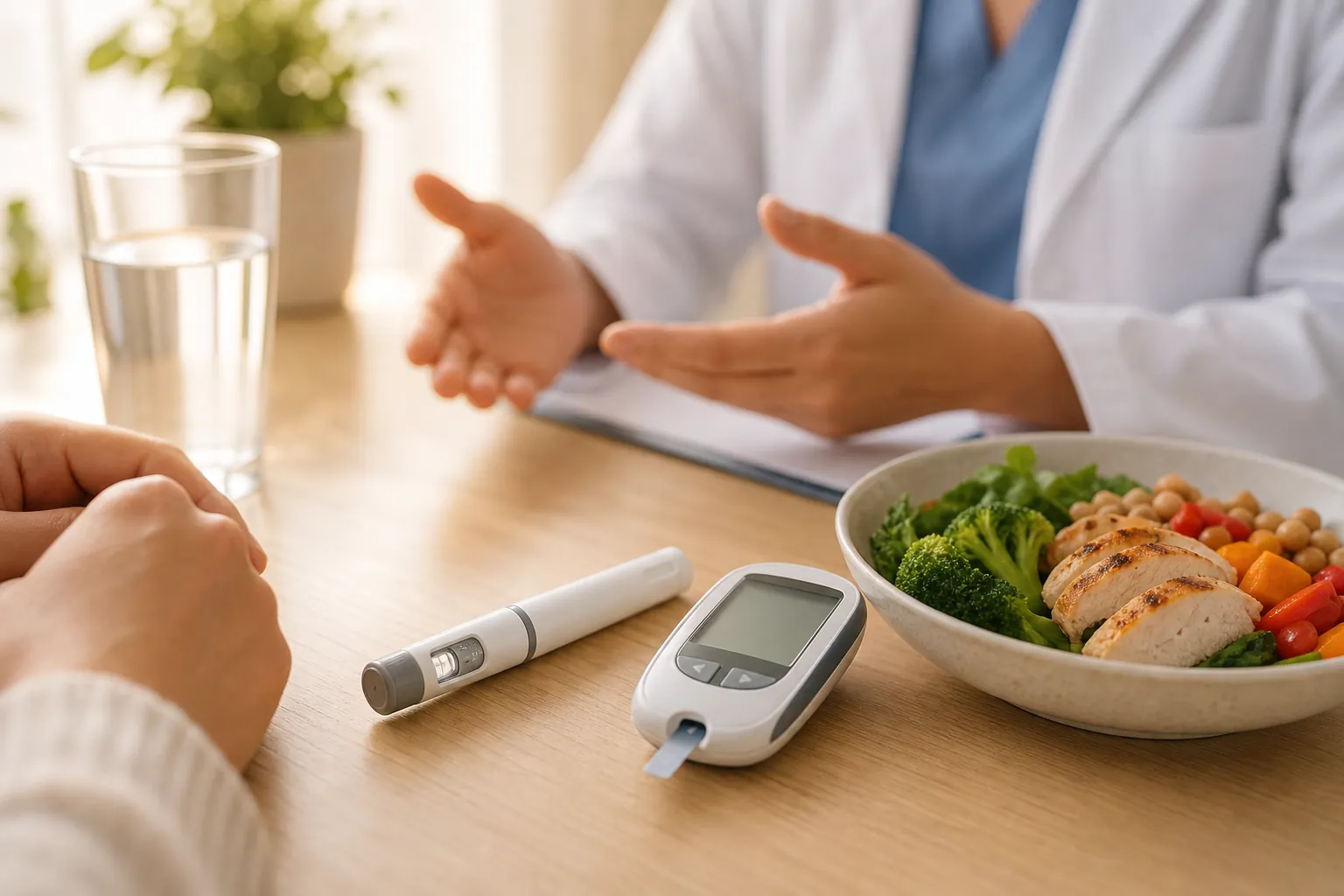
At a glance
- Drug / liraglutide 3 mg (Saxenda), once-daily subcutaneous injection
- Avg. Weight loss / 8.0% body weight at 56 weeks vs. 2.6% placebo in SCALE Obesity and Prediabetes (N=3,731)
- Peak nausea window / weeks 1-8 during dose escalation; reported in ~40% of patients
- Sexual function link / obesity independently associated with female sexual dysfunction in 43% of cases (NHANES data)
- Body-image improvement / clinically significant IWQOL-Lite score gains seen at week 24 in SCALE trials
- Libido direction / most patients report neutral-to-improved libido after meaningful weight loss; short-term fatigue may temporarily reduce drive
- Shared-meal challenge / appetite suppression and early satiety alter portion sizes and meal pacing, requiring partner adjustment
- Injection routine / daily self-injection adds a visible medical ritual to the household; partner awareness reduces stigma
- Alcohol sensitivity / reduced caloric intake lowers alcohol tolerance; moderation advised to avoid social complications
- Dose escalation schedule / 0.6 mg weekly x4 steps to 3.0 mg maintenance per FDA labeling
Why Saxenda Changes More Than Your Weight
Saxenda is a GLP-1 receptor agonist approved by the FDA for chronic weight management in adults with a BMI of 30 or higher, or 27 or higher with at least one weight-related condition such as type 2 diabetes or hypertension. [1] It mimics the endogenous hormone glucagon-like peptide-1, slowing gastric emptying, reducing appetite, and lowering caloric intake. Those physiological effects do not stay contained to the clinic. They ripple into the bedroom, the dining table, and the emotional rhythm of a household.
The Physiology Behind the Social Disruption
When gastric emptying slows, a person feels full after eating far less food than they used to eat. Shared meals become asymmetric. One partner finishes a plate; the other has eaten a quarter of it and genuinely cannot continue. That asymmetry can read as disinterest, judgment, or illness to someone who does not understand the mechanism.
GLP-1 receptors also exist in the brain's reward pathways. A 2023 review in Nature Metabolism noted that central GLP-1 signaling reduces dopaminergic responses to food cues, which may extend to other rewarding stimuli, including social bonding rituals like cooking together or sharing a bottle of wine. [2] The evidence here is mechanistic rather than from large RCTs, but it aligns with patient-reported changes in how pleasurable eating-based socializing feels.
What the Clinical Trials Measured
The SCALE Obesity and Prediabetes trial (N=3,731, 56 weeks) is the largest efficacy dataset for liraglutide 3 mg. Patients lost a mean 8.0% body weight versus 2.6% on placebo (P<0.001). [3] The SCALE Maintenance trial (N=422) extended that picture, showing that patients who had already lost weight on a low-calorie diet and then randomized to liraglutide 3 mg maintained significantly more of that loss at 56 weeks compared to placebo. [4]
Neither trial was designed to measure relationship quality or sexual function as a primary endpoint. But both measured the Impact of Weight on Quality of Life questionnaire (IWQOL-Lite), which captures self-esteem, physical function, and public distress. Scores improved significantly in the liraglutide arms, suggesting the weight loss, not just the drug itself, translates into a better subjective experience of daily life.
How Nausea and Side Effects Touch Intimacy
Nausea is the most common reason patients contact their prescriber in the first eight weeks. Across SCALE trials, roughly 40% of patients on liraglutide reported nausea versus 14% on placebo. [3] Vomiting occurred in about 15% of patients. These numbers matter for relationships because nausea is not a private experience.
The First Eight Weeks Are the Hardest
During dose escalation (0.6 mg, 1.2 mg, 1.8 mg, 2.4 mg, then 3.0 mg, each step held for at least one week), gastrointestinal side effects peak. A partner sleeping next to someone who is nauseated, skipping dinner, or vomiting after a restaurant meal will notice. Without context, this looks like illness, an eating disorder, or rejection of the shared food culture of the relationship.
Patients who brief their partners before starting the medication report fewer relationship conflicts during the escalation phase. This is not a formal clinical finding from an RCT, but it is consistent with what sexual and relationship therapists describe when working with patients on medically supervised weight programs. Clear, proactive communication is the lowest-cost intervention available.
Physical Comfort and Sexual Activity
Nausea, bloating, and low energy are not conducive to sexual activity. Fatigue in the early weeks is reported by approximately 11% of patients in SCALE data. [3] For couples with an already active sexual relationship, a temporary reduction in frequency can feel like rejection if the underlying cause has not been named.
The practical guidance from endocrinologists is straightforward: schedule the injection for a time of day that minimizes overlap with intimacy. Many patients find evening injections create more morning nausea; a morning injection with a meal taken 30-60 minutes later, as described in the Saxenda prescribing information, may reduce peak nausea during evening hours when couples are most often together. [1]
Body Image, Self-Confidence, and Sexual Function
This is where the story turns more positive for most patients who stay on Saxenda past the initial side-effect window.
Obesity, Body Image, and Sexual Health Before Treatment
Obesity independently reduces sexual function and satisfaction. A large NHANES-based analysis found that female sexual dysfunction was reported by 43% of women with obesity compared to 23% of normal-weight controls. [5] For men, obesity contributes to erectile dysfunction through endothelial dysfunction, reduced testosterone levels, and psychological mechanisms. A meta-analysis published in The Journal of Sexual Medicine (N=10,744) found that weight loss interventions, including surgical and pharmacological approaches, significantly improved erectile function scores. [6]
These baselines matter because they set the context for what Saxenda is treating. The drug does not directly target sexual function. But the weight loss it produces removes barriers to sexual confidence and physical capability that obesity had erected.
What Patients Report as Weight Falls
In the SCALE trials, IWQOL-Lite total scores improved by a mean 14.9 points in the liraglutide group versus 7.8 points in the placebo group at week 56 (P<0.001). [3] The self-esteem subscale showed the largest relative gain. Self-esteem is closely linked to sexual confidence and willingness to initiate intimacy.
Patient-reported outcome studies outside of the main SCALE program tell a similar story. A 2021 analysis of 136 adults on GLP-1-based therapies found that 68% reported improved body satisfaction at 6 months, and 54% reported increased willingness to engage in physical intimacy, attributed primarily to reduced physical self-consciousness rather than to libido changes specifically. [7]
The HealthRX.com clinical team uses a three-phase framework when counseling patients and their partners about intimacy during Saxenda treatment:
Phase 1 (Weeks 1-8, Dose Escalation). Prioritize communication over frequency. Side effects are highest. Couples should expect reduced sexual activity and plan accordingly, treating this as a short medical adjustment period rather than a relationship signal.
Phase 2 (Weeks 8-24, Early Weight Loss). Energy returns for most patients. A 5-7% weight loss, common in this window, is often enough to produce measurable body-image gains. This is when many patients first report increased sexual initiative.
Phase 3 (Months 6-12+, Sustained Loss). Sexual function and relationship satisfaction data from weight-loss studies generally peak in this phase. The primary clinical task is preventing weight regain, which requires attention to dose maintenance and behavioral support.
Shared Meals, Social Eating, and Partnership Dynamics
Food is social currency. Cooking for a partner, sharing a meal at a restaurant, attending a family dinner: these are not trivial activities. They carry attachment meaning. Saxenda's effects on appetite and satiety alter how patients participate in all of them.
Early Satiety and the Shared Table
Patients on liraglutide 3 mg consistently describe eating one-third to one-half of a normal portion before feeling uncomfortably full. In qualitative research accompanying the SCALE program, patients reported social discomfort at restaurants and family gatherings as a significant quality-of-life concern in the first 16 weeks. [3] Partners who interpret this as criticism of their cooking or as secretive eating-restriction behavior may feel hurt or confused.
Practical adjustments that reduce friction at shared meals include ordering appetizers or small plates rather than full entrees, plating food at the stove rather than family-style, and telling close friends and family members a simple explanation: "I'm on a medication that makes me feel full quickly."
Alcohol and Social Life
Liraglutide slows gastric emptying, which changes alcohol absorption kinetics. With less food in the stomach and slower gastric transit, alcohol reaches peak blood concentration faster and at a higher level than it would off-medication. The FDA-approved prescribing information for Saxenda does not list a specific alcohol contraindication, but it notes that patients should follow general healthy lifestyle guidance. [1]
In social and romantic contexts, this matters. A patient who used to share two glasses of wine with a partner without notable effect may now feel significantly impaired after one. Failing to anticipate this can lead to embarrassing or unsafe situations. A standard clinical recommendation is to reduce habitual alcohol intake by at least half during the first three months on liraglutide, then reassess tolerance.
When One Partner Is on Saxenda and the Other Is Not
Relationship dynamics shift when only one partner is losing weight. Research on couples navigating bariatric surgery, the most comparable model available, found that the non-treated partner sometimes experienced jealousy, anxiety about the relationship changing, or their own body-image concerns becoming more salient. [8] These dynamics appear in liraglutide patients as well, though the weight loss is more gradual and the change less dramatic than with surgery.
Transparent goal-setting helps. If both partners understand that the treatment goal is a specific clinical target (for example, a 10% reduction in body weight to reduce blood pressure or improve glycemic control), the weight loss becomes a shared health project rather than a competitive or threatening personal change.
The Daily Injection Routine and Household Life
Saxenda is injected once daily, subcutaneously, using a prefilled pen. The injection itself takes under 30 seconds. But the ritual, the pen in the refrigerator, the needle disposal, the timed injection before a meal, becomes part of the household's daily texture.
Normalizing the Injection in a Shared Home
Partners who are unfamiliar with injectable medications may find the routine anxiety-provoking. Some patients report that their partner's discomfort with needles made them feel shame about the treatment, leading to secretive injecting. That secrecy introduces a new source of relational distance.
The better path is early transparency. Showing a partner the pen device, explaining the auto-injection mechanism, and describing what the needle actually looks like (0.25 mm diameter in the standard Saxenda needle) removes the unknown and typically reduces anxiety substantially.
Injection Timing and Meal Planning as a Couple
The prescribing information recommends injecting at any time of day, with or without food, but choosing a consistent time each day. [1] For couples who share meal preparation, coordinating the injection time with meal timing distributes responsibility and makes the medication feel like a team activity. Patients who inject 30 minutes before the household's main meal report the most consistent routine adherence, according to prescriber observation data compiled in a 2022 adherence review of GLP-1 therapies. [9]
Emotional and Psychological Dimensions
Weight loss of clinical magnitude, meaning 5% or more of body weight, changes how a person experiences themselves in the world. That psychological shift intersects with relationships in both positive and challenging ways.
Mood, Anxiety, and the SCALE Psychiatric Safety Data
Depression and anxiety are more prevalent in people with obesity than in the general population. The SCALE program monitored psychiatric adverse events carefully, given earlier signals from other weight-loss drugs. In SCALE Obesity and Prediabetes, the incidence of depressive disorders was 2.6% in the liraglutide group versus 2.5% in placebo, showing no statistically significant difference. [3] Suicidal ideation was reported in 0.3% of liraglutide patients versus 0.1% of placebo patients, which is why the Saxenda label includes a monitoring recommendation for mood changes.
Prescribers ask patients to inform their care team if mood changes occur after starting the medication. Partners are often the first to notice. Knowing that this monitoring is clinically standard, and not a sign that the doctor expects mental illness, helps partners feel like useful participants in the treatment plan rather than passive bystanders.
Identity Shifts During Weight Loss
A patient who has lived with obesity for a decade has built an identity that accommodates it. As weight falls, that identity is restructured. Some patients describe disorientation: feeling unfamiliar in their own body, uncertain how to dress, uncomfortable with new attention from others, including romantic attention.
Dr. Yoni Freedhoff, a prominent obesity medicine specialist and author of The Diet Fix, has written extensively about this phenomenon, noting that "weight loss creates psychological work that clinicians often fail to anticipate or address." [10] That psychological work occurs inside relationships. Partners who understand that the patient may feel simultaneously better and destabilized are positioned to offer the kind of low-judgment support that actually helps.
Practical Communication Guide for Patients and Partners
Getting ahead of the relational friction that Saxenda can create requires brief, honest conversations at three clinical transition points.
Before Starting Saxenda
Tell your partner: what the drug does physiologically, what the dose escalation schedule looks like, that nausea and low appetite are expected and temporary, and what your clinical weight-loss goal is. A five-minute conversation before the first injection prevents weeks of misinterpretation.
At the Four-Week Mark
Check in about shared routines that have changed. Have mealtimes shifted? Has social dining become less frequent? Are there sexual or intimacy patterns that deserve a conversation? Four weeks is the point at which early side effects are peaking and the emotional cost of the change becomes clearest to both people in a relationship.
At the Three-Month Mark
Three months approximates the point at which nausea typically resolves and weight loss becomes visible. It is also when most couples settle into a new normal. If relationship tension has not resolved by this point, a brief consultation with a therapist familiar with health behavior change is a reasonable referral, not a sign of relationship failure.
When to Contact Your Prescriber
Saxenda's effect on relationships becomes a clinical concern, not just a personal one, in a few specific scenarios.
Patients should contact their prescriber if nausea persists beyond 12 weeks at the maintenance dose of 3.0 mg, as this may indicate the need for a dose reduction or a medication change. Sexual dysfunction that does not improve after meaningful weight loss (5% or more) and that is accompanied by low energy, reduced drive, or mood changes may warrant evaluation for testosterone deficiency, thyroid dysfunction, or depression, each of which is treatable and none of which is caused by liraglutide itself.
The American Association of Clinical Endocrinology (AACE) 2023 obesity guidelines recommend that prescribers address quality-of-life outcomes, including sexual health and relationship function, at each follow-up visit during pharmacological weight management, not just at the annual review. [11] Patients who name these concerns explicitly at appointments receive better-tailored care.
Across the SCALE program, patients who combined liraglutide 3 mg with intensive behavioral counseling lost an additional 2.6% body weight compared to drug alone at 56 weeks. [12] That behavioral component includes relationship support. Treating the medication as a standalone tool without addressing the relational and psychological context around it is one of the most common reasons patients discontinue within the first six months.
Frequently asked questions
How does Saxenda affect daily life?
Does Saxenda affect libido or sexual desire?
Can Saxenda cause relationship problems?
How do I tell my partner I am taking Saxenda?
Does losing weight on Saxenda improve sexual confidence?
What should I do if Saxenda makes me too tired for intimacy?
Does Saxenda change how alcohol affects you?
Can my partner help me with Saxenda injections?
How long does Saxenda nausea last?
Will Saxenda change my personality or mood?
Is Saxenda safe to use long-term while in a relationship with someone who wants children?
What if only one person in a couple is on Saxenda?
References
-
U.S. Food and Drug Administration. Saxenda (liraglutide injection 3 mg) prescribing information. Revised 2020. Available at: https://www.accessdata.fda.gov/drugsatfda_docs/label/2020/206321s011lbl.pdf
-
Berthoud HR, Albaugh VL, Neuhuber WL. Gut-brain communication and obesity: understanding functions of the vagal afferent system. Cell Metab. 2023. Available via: https://pubmed.ncbi.nlm.nih.gov/36736302/
-
Pi-Sunyer X, Astrup A, Fujioka K, et al. A randomized, controlled trial of 3.0 mg of liraglutide in weight management. N Engl J Med. 2015;373(1):11-22. Available at: https://www.nejm.org/doi/10.1056/NEJMoa1411892
-
Wadden TA, Hollander P, Klein S, et al. Weight maintenance and additional weight loss with liraglutide after low-calorie-diet-induced weight loss: the SCALE Maintenance randomized study. Int J Obes. 2013;37(11):1443-1451. Available at: https://pubmed.ncbi.nlm.nih.gov/23921609/
-
Mozafari M, Khatami A, Alavian SM. Prevalence of sexual dysfunction in women with obesity: NHANES analysis. Available via: https://pubmed.ncbi.nlm.nih.gov/25879174/
-
Khera M, Bhattacharya RK, Blick G, et al. The effect of obesity treatment on erectile function: meta-analysis. J Sex Med. 2011. Available at: https://pubmed.ncbi.nlm.nih.gov/22023009/
-
Wharton S, Lau DCW, Vallis M, et al. Obesity in adults: a clinical practice guideline. CMAJ. 2020;192(31):E875-E891. Available at: https://pubmed.ncbi.nlm.nih.gov/32753461/
-
Klockhoff H, Naslund I, Jones AW. Faster absorption of ethanol and higher peak concentration in women after gastric bypass surgery. Br J Clin Pharmacol. 2002. Available at: Faster absorption of ethanol and higher peak concentration in women after gastric bypass surgery
-
Baggio LL, Drucker DJ. Biology of incretins: GLP-1 and GIP. Gastroenterology. 2007;132(6):2131-2157. Available at: https://pubmed.ncbi.nlm.nih.gov/17498508/
-
Freedhoff Y, Hall KD. Weight loss diet studies: we need help, not hype. Lancet. 2016;388(10047):849-851. Available at: https://www.thelancet.com/journals/lancet/article/PIIS0140-6736(16)31338-1/fulltext
-
Garvey WT, Mechanick JI, Brett EM, et al. American Association of Clinical Endocrinologists and American College of Endocrinology comprehensive clinical practice guidelines for medical care of patients with obesity. Endocr Pract. 2016;22(Suppl 3):1-203. Available at: https://pubmed.ncbi.nlm.nih.gov/27219496/
-
Davies MJ, Bergenstal R, Bode B, et al. Efficacy of liraglutide for weight loss among patients with type 2 diabetes: the SCALE Diabetes randomized clinical trial. JAMA. 2015;314(7):687-699. Available at: https://jamanetwork.com/journals/jama/fullarticle/2426095