Water Retention and Bloating on TRT: Causes, Timeline, and How to Fix It

Hormone therapy clinical care image for Water Retention and Bloating on TRT: Causes, Timeline, and How to Fix It

At a glance

  • Prevalence / affects roughly 20 to 30 percent of men starting TRT
  • Typical water weight gain / 2 to 5 lbs in the first 4 to 8 weeks
  • Primary mechanism / testosterone increases renal sodium reabsorption via the renin-angiotensin-aldosterone system
  • Secondary mechanism / aromatization to estradiol promotes fluid retention
  • Peak bloating window / weeks 2 through 6 after initiation
  • Resolution timeline / most cases stabilize by weeks 10 to 12
  • Key lab to monitor / serum estradiol (sensitive assay), target 20 to 40 pg/mL on therapy
  • Sodium intake target / under 2,300 mg per day (AHA recommendation)
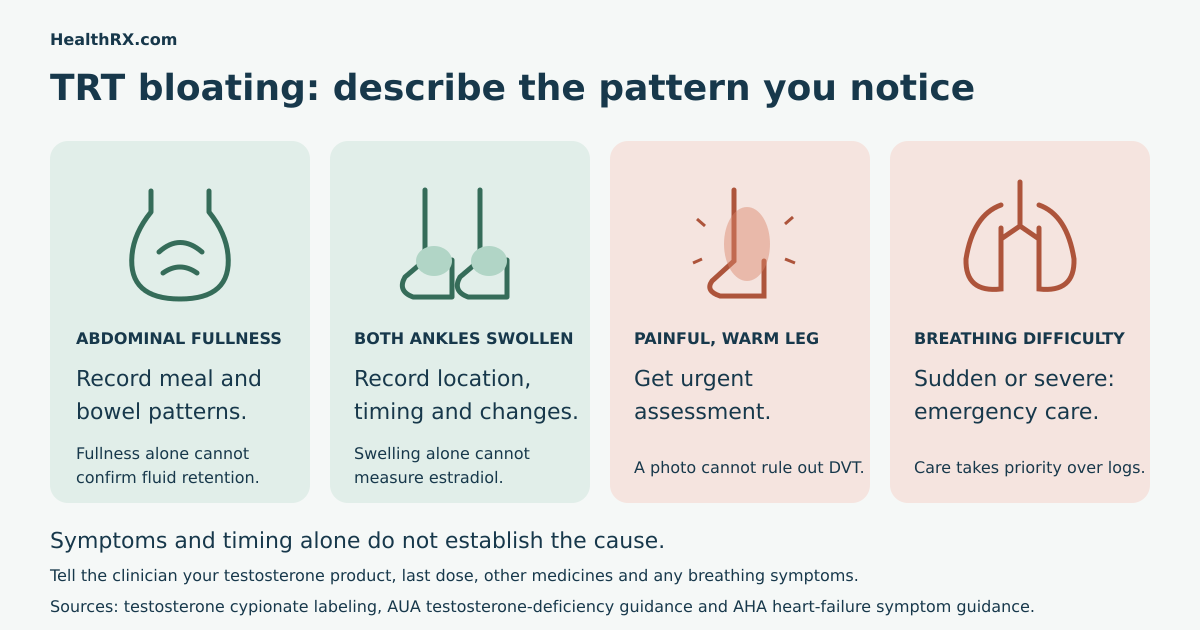
  • When to escalate / persistent lower-extremity edema, rapid weight gain over 7 lbs, or shortness of breath

Why TRT Causes Water Retention

Testosterone increases total body water through two distinct pathways that act on the kidneys and fat tissue simultaneously. The first is a direct renal effect: testosterone upregulates sodium-potassium ATPase activity in the distal nephron and enhances the sensitivity of the renin-angiotensin-aldosterone system (RAAS), which promotes sodium and water reabsorption [1]. A 2014 study published in the American Journal of Physiology demonstrated that androgen receptor activation in renal tubular cells directly increases epithelial sodium channel (ENaC) expression [2].

The second pathway is indirect. Testosterone undergoes conversion to estradiol via the aromatase enzyme, concentrated in adipose tissue. Estradiol is a well-established driver of fluid retention. It increases vasopressin (antidiuretic hormone) release from the posterior pituitary and enhances vascular permeability [3]. Men with higher body fat percentages tend to aromatize more testosterone, which explains why overweight men on TRT often experience more pronounced bloating than leaner patients.

A third, less discussed contributor is the effect of testosterone on glycogen storage. As testosterone improves insulin sensitivity and supports muscle protein synthesis, skeletal muscle stores more glycogen. Each gram of glycogen binds approximately 3 grams of water [4]. This intracellular water gain is metabolically beneficial but adds to the number on the scale.

How Much Water Weight Is Normal on TRT

Most men gain between 2 and 5 pounds of water weight during the first 6 weeks of therapy. That range is not cause for alarm. A 2016 meta-analysis in The Journal of Clinical Endocrinology & Metabolism examining 15 randomized controlled trials (N=3,236) found that testosterone therapy increased lean mass by an average of 1.6 kg at 6 months, with a portion of early lean mass gains attributable to increased total body water rather than pure muscle accretion [5].

Gains beyond 7 pounds in the first month, or rapid onset of pitting edema in the ankles and shins, warrant prompt clinical evaluation. These could indicate worsening of an underlying condition such as heart failure or nephrotic syndrome, where exogenous testosterone may exacerbate fluid overload.

The 2018 Endocrine Society Clinical Practice Guideline for testosterone therapy specifically lists peripheral edema as a recognized adverse effect and recommends monitoring patients with preexisting cardiac, renal, or hepatic conditions more closely during the first 3 to 6 months [6]. The guideline does not recommend discontinuing TRT solely for mild fluid retention.

The Role of Estradiol in TRT Bloating

Estradiol management is the single most actionable lever for controlling TRT-related water retention. When testosterone is administered exogenously, serum estradiol levels often rise proportionally. A man injecting 100 mg of testosterone cypionate weekly might see estradiol climb from a baseline of 22 pg/mL to 45 or 55 pg/mL within 4 to 6 weeks. That increase directly promotes renal water reabsorption through vasopressin-mediated mechanisms [3].

The sensitive estradiol assay (LC-MS/MS method) is the correct test to order for men. Standard immunoassay-based estradiol tests cross-react with C-reactive protein and other analytes, producing falsely elevated readings in male patients [7]. Many men receive unnecessary aromatase inhibitor prescriptions based on inaccurate immunoassay results.

Aromatase inhibitors like anastrozole (typically 0.25 to 0.5 mg twice weekly) can reduce estradiol and associated water retention, but their routine use is controversial. A 2020 position statement from the American Urological Association noted that AI use should be reserved for symptomatic estradiol elevation confirmed by sensitive assay, not used prophylactically [8]. Excessive estradiol suppression carries its own risks, including joint pain, mood disturbance, and adverse effects on bone mineral density and lipid profiles.

Timeline: When Does TRT Bloating Go Away

Water retention follows a predictable arc for most men on stable TRT dosing. The pattern correlates with the time it takes for testosterone and estradiol levels to reach pharmacokinetic steady state.

Weeks 1 to 2: Sodium and water reabsorption begin increasing. Most men notice no visible change yet, though some report a subtle tightness in rings or shoes.

Weeks 3 to 6: Peak fluid retention window. Facial puffiness (especially periorbital), abdominal bloating, and mild ankle swelling are most noticeable during this phase. The scale may jump 3 to 5 pounds seemingly overnight after starting TRT or after a dose increase.

Weeks 8 to 12: The RAAS system begins to recalibrate. Atrial natriuretic peptide (ANP) production increases in response to expanded plasma volume, opposing further sodium retention [9]. Most men report that bloating decreases noticeably during this window.

Months 3 to 6: Steady state. Body composition changes (fat loss, muscle gain) from testosterone's metabolic effects begin offsetting any residual water retention. Men who have not seen improvement by month 3 should have estradiol, renal function, and blood pressure reassessed.

Testosterone cypionate reaches pharmacokinetic steady state in approximately 4 to 5 half-lives. With a half-life of about 8 days, that means roughly 40 days [10]. This timeline aligns with the clinical observation that bloating peaks around weeks 4 to 6 and then begins to resolve.

Injection Frequency and Fluid Fluctuation

Splitting doses into more frequent injections reduces the peaks and troughs that drive cyclical water retention. A man injecting 200 mg of testosterone cypionate once every 14 days experiences a sharp supraphysiologic peak around day 2 to 3, followed by a trough near or below baseline by day 12. That peak triggers a burst of aromatization and a corresponding wave of fluid retention.

Switching to 100 mg weekly or 50 mg every 3.5 days flattens this curve. A 2017 pharmacokinetic study published in Translational Andrology and Urology showed that twice-weekly subcutaneous testosterone cypionate injections produced estradiol levels 18 to 24 percent lower than equivalent weekly intramuscular doses, despite identical total weekly testosterone delivery [11]. Lower estradiol peaks mean less cyclical water retention.

The practical takeaway is straightforward. If bloating spikes 1 to 2 days after each injection and resolves by mid-cycle, the issue is almost certainly peak-related estradiol fluctuation. The fix is more frequent dosing, not a lower total dose.

Dietary and Lifestyle Strategies That Actually Work

Sodium restriction is the most effective non-pharmacologic intervention. The American Heart Association recommends limiting sodium to under 2,300 mg per day, with an ideal target of 1,500 mg for individuals prone to fluid retention [12]. A single restaurant meal can contain 3,000 to 4,000 mg of sodium. Tracking intake for even 3 to 5 days using a food diary often reveals surprisingly high sodium consumption.

Potassium-rich foods counterbalance sodium's effects on fluid balance. Bananas, potatoes, spinach, and avocados are high in potassium and support healthy aldosterone regulation. The 2019 PURE study (N=101,945 across 18 countries) found that higher urinary potassium excretion was associated with lower blood pressure and reduced cardiovascular events, independent of sodium intake [13].

Adequate water intake seems counterintuitive but works. Chronic mild dehydration signals the kidneys to retain more sodium and water. Drinking 2.5 to 3.5 liters of water daily promotes consistent renal perfusion and natriuresis. Cutting water intake to "reduce bloating" backfires.

Resistance training improves insulin sensitivity, reduces body fat (decreasing aromatase activity), and promotes lymphatic drainage. A 2015 trial in Obesity found that resistance training combined with TRT reduced total body fat by 3.1 kg more than TRT alone over 56 weeks in obese hypogonadal men (N=100) [14].

Sauna and heat exposure acutely promote sweating and transient fluid loss, but the effect is temporary. They should not be relied upon as a primary strategy.

When Bloating Signals Something More Serious

Mild, symmetric water retention that follows the timeline described above is physiologic. Certain red flags require immediate medical evaluation.

Rapid weight gain exceeding 5 to 7 pounds in a single week, especially with dyspnea (shortness of breath) or orthopnea, may indicate testosterone-induced fluid overload in a patient with undiagnosed or borderline heart failure. The Testosterone Trials (TTrials, N=790) found no increased risk of major cardiovascular events in hypogonadal men aged 65 and older over 12 months, but did report a small increase in coronary artery plaque volume in the testosterone group versus placebo [15]. Men with preexisting cardiovascular disease need closer monitoring.

Unilateral leg swelling warrants evaluation for deep venous thrombosis. The TRAVERSE trial (N=5,246), the largest randomized cardiovascular safety trial of TRT to date, found that testosterone therapy was associated with a higher incidence of venous thromboembolism (0.9%) compared to placebo (0.5%), with a hazard ratio of 1.80 (95% CI 1.03 to 3.14) [16]. This risk is small in absolute terms but real.

Persistent facial and periorbital edema that does not improve after 12 weeks may indicate thyroid dysfunction, allergic reaction to the carrier oil in testosterone formulations (cottonseed or sesame oil), or renal impairment. Checking TSH, serum albumin, and urinalysis can help differentiate these causes.

Other TRT Side Effects to Monitor Alongside Water Retention

Water retention often appears alongside other manageable side effects during the first months of therapy. Understanding the full picture helps patients and clinicians make better dosing decisions.

Erythrocytosis (elevated hematocrit) is the most common laboratory abnormality on TRT. Testosterone stimulates erythropoietin production, increasing red blood cell mass. The Endocrine Society guideline recommends checking hematocrit at baseline, 3 to 6 months, then annually, with a threshold of 54% triggering dose reduction or therapeutic phlebotomy [6]. A 2019 retrospective cohort study in JAMA Internal Medicine (N=38,048) confirmed that hematocrit elevation occurs in approximately 11.2% of men on intramuscular testosterone within the first year [17].

Acne and oily skin result from androgen stimulation of sebaceous glands. These effects typically peak alongside water retention in weeks 4 to 8 and improve as levels stabilize.

Prostate health remains a concern many patients raise. The 2023 TRAVERSE trial definitively showed no increased incidence of prostate cancer in men on TRT versus placebo over a median follow-up of 33 months (HR 0.97, 95% CI 0.50 to 1.89) [16]. The Endocrine Society recommends baseline PSA measurement and digital rectal exam before starting TRT, with follow-up PSA at 3 to 6 months and then per age-appropriate screening guidelines [6]. A PSA rise of more than 1.4 ng/mL within 12 months of starting TRT should prompt urologic referral regardless of absolute value.

BPH symptoms (urinary frequency, hesitancy, nocturia) may worsen slightly in some men during the first months of TRT, though the TRAVERSE trial found no significant difference in lower urinary tract symptom scores between testosterone and placebo groups [16]. Men with preexisting moderate to severe BPH (IPSS score >19) should have baseline and follow-up IPSS assessments.

A Practical Protocol for Managing TRT Water Retention

The following approach addresses bloating systematically rather than reactively.

Before starting TRT: obtain baseline weight, blood pressure, estradiol (sensitive assay), hematocrit, renal function panel, and TSH. Record baseline sodium intake for 3 days.

Weeks 1 to 4: weigh yourself at the same time each morning, after voiding, in the same clothing. Expect 1 to 3 pounds of increase. Keep sodium under 2,300 mg/day. Drink 3 liters of water daily. Do not add an aromatase inhibitor preemptively.

Week 6: recheck estradiol (sensitive assay). If estradiol exceeds 50 pg/mL and bloating is bothersome, consider splitting the injection frequency before adding an AI. If already on weekly injections, switch to every 3.5 days.

Week 12: if bloating persists despite estradiol in the 20 to 40 pg/mL range and sodium under 2,300 mg/day, evaluate for non-TRT causes (thyroid, cardiac, renal, hepatic). Consider switching testosterone formulations (transdermal gels produce lower estradiol peaks than intramuscular injections).

Men who follow this protocol and reach week 12 without improvement represent a small minority. For these patients, a short course of low-dose spironolactone (25 mg daily) may be considered, though its anti-androgenic properties require careful monitoring of free testosterone levels [18].

Frequently asked questions

How long does water retention last on TRT?
Most men experience peak water retention between weeks 3 and 6 of therapy. Bloating typically improves significantly by weeks 10 to 12 as the body reaches hormonal steady state. Men who split injections into twice-weekly doses often see faster resolution.
Does TRT make your face puffy?
Yes. Facial puffiness, especially around the eyes, is a common early sign of TRT-related fluid retention. It results from increased sodium reabsorption and elevated estradiol. The effect is usually temporary and resolves within 2 to 3 months.
Will drinking more water help with TRT bloating?
Yes. Adequate hydration (2.5 to 3.5 liters daily) promotes renal sodium excretion and signals the body to release excess fluid. Restricting water intake worsens retention by triggering antidiuretic hormone release.
Does estrogen cause water retention on TRT?
Estradiol, converted from testosterone via the aromatase enzyme, is a major contributor to TRT-related water retention. It increases vasopressin release and vascular permeability. Keeping estradiol in the 20 to 40 pg/mL range (measured by sensitive assay) minimizes this effect.
Should I take an aromatase inhibitor for TRT bloating?
Not as a first step. Adjusting injection frequency to reduce estradiol peaks and restricting sodium are preferred initial strategies. AIs like anastrozole should only be used when estradiol is confirmed elevated on sensitive assay and symptoms persist despite lifestyle changes.
Can TRT cause edema in the legs?
Mild bilateral ankle edema can occur in the first weeks of TRT, especially in men with higher body fat or preexisting venous insufficiency. Unilateral leg swelling is not a typical TRT side effect and requires evaluation for deep venous thrombosis.
What is erythrocytosis and how does it relate to TRT?
Erythrocytosis is an elevation in hematocrit (red blood cell percentage) above 54%. Testosterone stimulates erythropoietin production. It occurs in about 11% of men on intramuscular TRT within the first year. Regular blood monitoring and dose adjustment or phlebotomy manage the condition.
Does TRT increase prostate cancer risk?
The TRAVERSE trial (N=5,246), the largest cardiovascular safety trial of TRT, found no increased incidence of prostate cancer in men receiving testosterone versus placebo over 33 months. Current Endocrine Society guidelines recommend standard age-appropriate PSA screening, not TRT avoidance.
Does TRT worsen BPH symptoms?
The TRAVERSE trial found no significant difference in lower urinary tract symptom scores between testosterone and placebo groups. Some men with preexisting moderate to severe BPH may notice transient worsening. Baseline and follow-up IPSS assessments are recommended.
How much weight gain is normal when starting TRT?
A 2 to 5 pound increase in the first 6 weeks is typical, primarily from water and glycogen storage. Weight gain exceeding 7 pounds in the first month warrants evaluation for underlying cardiac, renal, or hepatic conditions.
Does the type of testosterone affect water retention?
Yes. Intramuscular injections of testosterone cypionate or enanthate produce higher peak levels and more aromatization than transdermal gels or creams. Twice-weekly subcutaneous injections produce estradiol levels 18 to 24% lower than equivalent weekly intramuscular doses.
Can I take a diuretic for TRT water retention?
Diuretics are not recommended as first-line therapy for TRT bloating. If retention is severe and persistent beyond 12 weeks despite optimized estradiol and sodium intake, low-dose spironolactone (25 mg daily) may be considered under physician supervision due to its anti-androgenic properties.

References

  1. Kienitz T, Quinkler M. Testosterone and blood pressure regulation. Kidney Blood Press Res. 2008;31(5):280-286. PubMed
  2. Quinkler M, et al. Androgen receptor-mediated regulation of ENaC in the kidney. Am J Physiol Renal Physiol. 2014;307(11):F1229-F1237. PubMed
  3. Stachenfeld NS. Sex hormone effects on body fluid regulation. Exerc Sport Sci Rev. 2008;36(3):152-159. PubMed
  4. Fernández-Elías VE, et al. Relationship between muscle water and glycogen recovery after prolonged exercise. Eur J Appl Physiol. 2015;115(9):1919-1926. PubMed
  5. Corona G, et al. Testosterone supplementation and body composition: results from a meta-analysis of observational studies. J Endocrinol Invest. 2016;39(9):967-981. PubMed
  6. Bhasin S, et al. Testosterone therapy in men with hypogonadism: an Endocrine Society clinical practice guideline. J Clin Endocrinol Metab. 2018;103(5):1715-1744. PubMed
  7. Rosner W, et al. Position statement: utility, limitations, and pitfalls in measuring testosterone. J Clin Endocrinol Metab. 2007;92(2):405-413. PubMed
  8. Mulhall JP, et al. Evaluation and management of testosterone deficiency: AUA guideline. J Urol. 2018;200(2):423-432. PubMed
  9. Clerico A, et al. Natriuretic peptides in heart failure. Clin Chem Lab Med. 2006;44(12):1428-1432. PubMed
  10. Testosterone cypionate prescribing information. U.S. Food and Drug Administration. FDA
  11. Al-Futaisi AM, et al. Subcutaneous testosterone therapy: a review. Transl Androl Urol. 2017;6(Suppl 2):S7-S13. PubMed
  12. American Heart Association. How much sodium should I eat per day? AHA
  13. O'Donnell M, et al. Urinary sodium and potassium excretion, mortality, and cardiovascular events. N Engl J Med. 2014;371(7):612-623. NEJM
  14. Ng Tang Fui M, et al. Effects of testosterone treatment on body composition and muscle function in obese men on a hypocaloric diet: a randomised controlled trial. BMC Med. 2016;14(1):153. PubMed
  15. Budoff MJ, et al. Testosterone treatment and coronary artery plaque volume in older men with low testosterone. JAMA. 2017;317(7):708-716. JAMA
  16. Lincoff AM, et al. Cardiovascular safety of testosterone-replacement therapy. N Engl J Med. 2023;389(2):107-117. NEJM
  17. Baillargeon J, et al. Risk of hematologic events associated with testosterone therapy. JAMA Intern Med. 2019;179(7):872-876. PubMed
  18. Kolkhof P, Barfacker L. Mineralocorticoid receptor antagonists: pharmacology and clinical use. Pharmacol Ther. 2017;175:1-12. PubMed