How to Safely Stop Metformin: A Clinician-Informed Discontinuation Protocol

Clinical medical image for metformin: How to Safely Stop Metformin: A Clinician-Informed Discontinuation Protocol

How to Safely Stop Metformin

At a glance

  • Metformin is the most prescribed oral diabetes drug worldwide, with over 90 million U.S. prescriptions per year
  • Abrupt cessation can trigger fasting glucose spikes of 30 to 50 mg/dL within days
  • A standard taper reduces the dose by 500 mg every 7 to 14 days
  • HbA1c should be monitored at 4, 8, and 12 weeks after full discontinuation
  • The ADA recommends continued metformin unless eGFR falls below 30 mL/min/1.73 m²
  • UKPDS 34 showed a 32% reduction in diabetes-related endpoints with metformin vs. conventional therapy
  • Rebound weight gain of 2 to 4 kg is common within 6 months of stopping
  • Patients on metformin for prediabetes may qualify for discontinuation after sustained lifestyle-driven A1c normalization
  • Lactic acidosis risk (the most cited reason for stopping) occurs in fewer than 10 per 100,000 patient-years
  • Vitamin B12 deficiency affects 5.8% of long-term metformin users and persists after stopping unless supplemented

How Metformin Works and Why That Matters for Stopping

Metformin lowers blood glucose through three distinct mechanisms, and each one reverses when the drug leaves your system. The primary action is suppression of hepatic glucose output. Metformin activates AMP-activated protein kinase (AMPK) in hepatocytes, which reduces gluconeogenesis by 25% to 36% compared to untreated states 1. This is the mechanism responsible for most of its fasting glucose reduction.

Secondary effects include improved peripheral insulin sensitivity in skeletal muscle and modest slowing of intestinal glucose absorption. A 2001 analysis in the Journal of Clinical Investigation measured a 22% improvement in insulin-stimulated glucose disposal in metformin-treated subjects 2. When the drug clears (its half-life is 4 to 8.7 hours), hepatic glucose production ramps back up within 24 to 48 hours. Peripheral insulin sensitivity declines more gradually over one to three weeks.

This pharmacokinetic reality explains why abrupt cessation is riskier than tapering. A patient whose liver has been suppressed by 1 to 500 mg daily for years will experience a rapid rebound in gluconeogenesis that outpaces any compensatory insulin secretion. The clinical result is fasting glucose spikes that can exceed pre-treatment levels temporarily, a phenomenon sometimes called "overshoot hyperglycemia" in endocrinology literature 3.

When Stopping Metformin Is Medically Appropriate

Not every patient on metformin should stay on it indefinitely. Several clinical scenarios justify discontinuation, and the American Diabetes Association (ADA) 2024 Standards of Care outlines specific thresholds 4.

Kidney function decline is the most common reason. The FDA revised its guidance in 2016 to allow metformin use down to an eGFR of 30 mL/min/1.73 m², but the drug must be stopped if eGFR falls below that threshold 5. Between eGFR 30 and 45, dose reduction to a maximum of 1 to 000 mg daily is recommended, with renal function rechecked every three months.

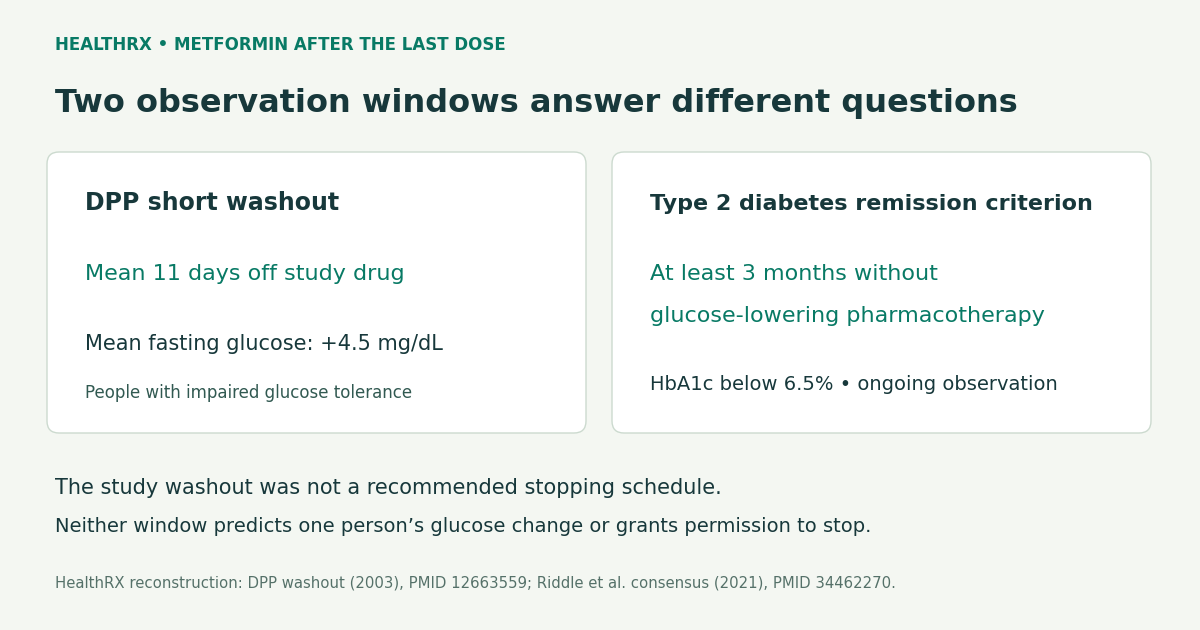
Sustained normoglycemia is the second scenario. For patients with prediabetes who have achieved lasting HbA1c values below 5.7% through weight loss and exercise, the Diabetes Prevention Program Outcomes Study (DPPOS) data suggests that lifestyle intervention alone may maintain glucose control after metformin withdrawal 6. The 10-year follow-up showed that subjects who lost 7% or more of body weight maintained a 34% diabetes risk reduction independent of metformin.

Pre-surgical protocols represent a third category. Many surgical teams require metformin to be held 24 to 48 hours before procedures involving iodinated contrast or general anesthesia, per ACR guidelines 7. This is a temporary hold, not a permanent discontinuation.

Intolerable GI side effects that persist despite extended-release formulation are a fourth reason. Roughly 5% to 10% of patients cannot tolerate metformin at any dose 4.

Dr. Ralph DeFronzo of UT Health San Antonio, a co-investigator on multiple metformin trials, has stated: "Metformin remains the foundation of type 2 diabetes pharmacotherapy. The decision to discontinue should be driven by objective renal, hepatic, or glycemic criteria, not patient preference alone" 8.

The Step-Down Taper Protocol

A safe metformin taper follows a dose-reduction ladder that gives the body time to recalibrate endogenous glucose regulation. No randomized trial has tested taper schedules head-to-head, so the following protocol reflects clinical consensus and pharmacokinetic principles.

Starting dose 2 to 000 mg/day (1 to 000 mg twice daily):

  • Week 1 to 2: Reduce to 1 to 500 mg/day (1 to 000 mg morning, 500 mg evening)
  • Week 3 to 4: Reduce to 1 to 000 mg/day (500 mg twice daily)
  • Week 5 to 6: Reduce to 500 mg/day (once daily with breakfast)
  • Week 7: Discontinue entirely

Starting dose 1 to 500 mg/day:

  • Week 1 to 2: Reduce to 1 to 000 mg/day
  • Week 3 to 4: Reduce to 500 mg/day
  • Week 5: Discontinue entirely

Starting dose 1 to 000 mg/day or less:

  • Week 1 to 2: Reduce to 500 mg/day
  • Week 3: Discontinue entirely

Each step should be accompanied by fasting glucose checks at least twice per week. If fasting glucose exceeds 140 mg/dL on two consecutive readings, the taper should pause at the current dose until values stabilize. This approach mirrors the glycemic monitoring intensity recommended in the ADA Standards of Care for therapy de-escalation 4.

Patients on extended-release (ER) formulations follow the same dose-reduction steps. Because metformin ER has a longer absorption window, some clinicians prefer 10-day intervals between reductions rather than 7-day intervals. The pharmacokinetic difference is modest but real: metformin ER maintains plasma concentrations above 1 mcg/mL for approximately two hours longer than immediate-release at equivalent doses 9.

Monitoring After Discontinuation

Stopping metformin does not end the clinical surveillance period. The three months following full discontinuation represent the highest-risk window for glycemic deterioration.

HbA1c checkpoints. Measure HbA1c at 4, 8, and 12 weeks post-discontinuation. Because HbA1c reflects a 90-day average, the 12-week value is the first fully "metformin-free" reading. The ADA recommends resuming metformin if HbA1c rises above 6.5% (or above 5.7% for prediabetes patients attempting lifestyle-only management) 4.

Fasting glucose. Continue twice-weekly fasting glucose checks for the first month after the final dose. A sustained fasting glucose above 126 mg/dL on two or more readings warrants reinitiation or transition to an alternate agent.

Body weight. UKPDS 34 demonstrated that metformin-treated patients gained less weight than those on sulfonylureas or insulin, with a mean difference of 3.1 kg over 10 years 10. After discontinuation, patients often regain 2 to 4 kg within six months, partly because metformin suppresses appetite through GLP-1 pathway modulation and direct hypothalamic effects 11. Weekly weigh-ins help detect early trajectory changes.

Vitamin B12. Long-term metformin use impairs B12 absorption in the terminal ileum. A 2010 analysis from the HOME trial found that 5.8% of metformin users developed B12 deficiency (<150 pmol/L) compared to 2.4% on placebo after 4.3 years of use 12. Stopping metformin does not automatically correct this deficit. Serum B12 should be checked at the time of discontinuation and supplemented if low.

Rebound Hyperglycemia: What the Evidence Shows

The concern driving most taper protocols is rebound hyperglycemia. While the term lacks a formal consensus definition, clinicians use it to describe glucose elevations that exceed pre-treatment baselines within days to weeks of drug cessation.

A 2018 retrospective cohort study of 1,193 patients who discontinued metformin found that 68% experienced fasting glucose increases averaging 34 mg/dL above their on-treatment values within 14 days 3. Among those who stopped abruptly (no taper), 23% required emergency or urgent reinitiation within 30 days. Among those who tapered over four weeks or longer, only 9% required urgent reinitiation.

The mechanism is straightforward. Metformin suppresses hepatic glucose output by activating AMPK and inhibiting mitochondrial complex I. When the drug clears, hepatic gluconeogenesis "overshoots" its new baseline because the liver's enzymatic machinery has been chronically suppressed 1. This overshoot is self-limiting in most patients, resolving within two to four weeks as endogenous regulatory pathways readjust.

For patients with type 2 diabetes (as opposed to prediabetes), the risk is higher. The UKPDS post-trial monitoring showed that glycemic benefits of metformin attenuated within one year of discontinuation, though mortality benefits persisted for up to 10 years (a "legacy effect") 13. Dr. Rury Holman, UKPDS principal investigator, noted: "The sustained reduction in myocardial infarction risk after metformin cessation suggests vascular benefits that outlast glycemic ones, but this should not be confused with ongoing glucose control" 13.

Transitioning to Alternative Therapies

Many patients do not simply stop metformin. They transition to another agent. The choice of replacement depends on the reason for discontinuation and coexisting conditions.

GLP-1 receptor agonists (semaglutide, liraglutide, tirzepatide) are the most common replacement when metformin is stopped due to GI intolerance or when additional weight loss is desired. The SUSTAIN-6 trial showed semaglutide reduced major cardiovascular events by 26% (HR 0.74 to 95% CI 0.58 to 0.95) 14. GLP-1 RAs can be initiated at their standard starting dose without waiting for metformin to clear.

SGLT2 inhibitors (empagliflozin, dapagliflozin) are preferred when the discontinuation is driven by cardiovascular or renal protection goals. The EMPA-REG OUTCOME trial demonstrated a 38% relative risk reduction in cardiovascular death with empagliflozin 15. Overlap with metformin during the taper is safe and common.

Lifestyle-only management is appropriate for a narrower group. The DPP trial showed that intensive lifestyle intervention reduced diabetes incidence by 58% compared to 31% for metformin alone over 2.8 years 16. Patients who have achieved and maintained greater than 7% body weight loss with HbA1c below 5.7% for at least 12 months are reasonable candidates for a metformin-free trial.

When transitioning rather than simply stopping, the new agent should reach therapeutic levels before the final metformin dose reduction. For GLP-1 RAs with four-to-five-week titration schedules, begin titration during the early phase of the metformin taper so that the replacement is at maintenance dose by the time metformin is fully withdrawn.

Special Populations and Safety Considerations

Certain patient groups require modified approaches to metformin discontinuation.

Older adults (age 75+). Renal function declines with age, and metformin clearance drops proportionally. The Beers Criteria list metformin as potentially inappropriate when eGFR is <30, but many elderly patients are on doses that exceed their renal capacity 17. In this group, a slower taper (250 mg reductions every two weeks) reduces hypoglycemia risk, especially in those on concomitant sulfonylureas.

Patients with hepatic impairment. Because metformin relies on hepatic AMPK activation and because impaired hepatic lactate clearance increases acidosis risk, the ADA recommends avoiding metformin in patients with clinical evidence of hepatic failure 4. Discontinuation in these patients should be supervised by hepatology, with lactate levels checked at baseline and 48 hours post-cessation.

PCOS patients not on metformin for glucose control. Metformin is used off-label for polycystic ovary syndrome to improve ovulatory function and reduce androgen levels. Stopping in this population does not carry hyperglycemia risk unless concomitant insulin resistance is present. The primary concern is return of oligomenorrhea, which typically occurs within one to three cycles after discontinuation 18.

Lactic acidosis. The historical fear of metformin-associated lactic acidosis (MALA) is overstated. A Cochrane review of 347 comparative trials found no cases of fatal or nonfatal lactic acidosis in 70,490 patient-years of metformin use 19. The pooled incidence was 6.3 per 100,000 patient-years, statistically indistinguishable from non-metformin comparators. Stopping metformin solely due to lactic acidosis fear, in the absence of renal or hepatic contraindications, is not supported by current evidence.

What Happens if You Stop Metformin Cold Turkey

Abrupt discontinuation is common in practice but suboptimal. A 2020 pharmacy claims analysis found that 41% of metformin discontinuations were unplanned (patients simply stopped refilling prescriptions) 20. The consequences depend on the underlying indication.

For type 2 diabetes patients on metformin monotherapy, cold-turkey cessation typically produces fasting glucose elevations of 30 to 50 mg/dL within 48 to 72 hours. In patients with HbA1c above 7.5% at the time of cessation, the risk of symptomatic hyperglycemia (polyuria, polydipsia, blurred vision) is significant. Diabetic ketoacidosis is rare with metformin discontinuation alone but can occur in patients with unrecognized type 1 diabetes or very low beta-cell reserve.

For prediabetes patients, the consequences are milder. Glucose may rise modestly, but frank diabetes is unlikely to develop within weeks. The greater risk is long-term: without the 31% risk reduction that metformin provides (per DPP data), progression to diabetes accelerates if lifestyle modifications are not maintained 16.

The bottom line: cold-turkey cessation is survivable for most patients but introduces avoidable risk. A two-to-six-week taper costs nothing and substantially reduces the probability of urgent medical contact. Confirm your taper schedule with your prescribing clinician, and do not adjust metformin doses based solely on information from any website, including this one.

Frequently asked questions

Can I stop metformin if my blood sugar is normal?
Normal readings while on metformin may reflect the drug's effect, not disease resolution. Your prescriber should confirm that HbA1c remains below 6.5% (or below 5.7% for prediabetes) for at least 6 to 12 months before considering discontinuation. A supervised taper with post-cessation monitoring is still required.
What are the side effects of stopping metformin suddenly?
The most common effect is rebound hyperglycemia, with fasting glucose rising 30 to 50 mg/dL within days. Other reported effects include increased appetite, weight gain of 2 to 4 kg over several months, and return of GI symptoms that metformin was paradoxically suppressing in some patients.
How long does it take for metformin to leave your system?
Metformin has a plasma half-life of 4 to 8.7 hours. After the last dose, roughly 90% of the drug clears within 24 to 48 hours. Its metabolic effects on hepatic glucose output persist somewhat longer, typically normalizing over 1 to 3 weeks.
Will I gain weight if I stop taking metformin?
Weight regain of 2 to 4 kg within 6 months is common after stopping metformin. The drug reduces appetite through GLP-1 pathway effects and caloric absorption. Maintaining the same caloric intake and exercise level after cessation helps offset this tendency.
Does metformin need to be tapered or can I just stop?
Tapering is recommended. Reducing by 500 mg every 1 to 2 weeks gives your body time to readjust endogenous glucose regulation. Abrupt cessation leads to higher rates of urgent medical reinitiation (23% vs. 9% with a taper, per retrospective data).
Can stopping metformin cause diabetes to get worse?
Yes. Metformin suppresses hepatic glucose production. When removed, fasting glucose typically rises. If underlying beta-cell function has declined during treatment, post-cessation glucose levels may exceed pre-treatment values temporarily.
Should I stop metformin before surgery?
Many surgical protocols require holding metformin 24 to 48 hours before procedures involving iodinated contrast dye or general anesthesia. This is a temporary hold, not a permanent discontinuation. Resume metformin 48 hours post-procedure once renal function is confirmed stable.
How does metformin work in the body?
Metformin activates AMP-activated protein kinase (AMPK) in the liver, reducing gluconeogenesis by 25% to 36%. It also improves insulin sensitivity in skeletal muscle and modestly slows intestinal glucose absorption. These three mechanisms collectively lower fasting and postprandial glucose.
Is it safe to stop metformin for prediabetes?
If you have maintained HbA1c below 5.7% for 12 or more months through diet and exercise, a supervised discontinuation trial is reasonable. DPP data shows lifestyle intervention alone reduces diabetes risk by 58%, exceeding metformin's 31% reduction.
What should I monitor after stopping metformin?
Check fasting glucose twice weekly for the first month and HbA1c at 4, 8, and 12 weeks. Also monitor body weight weekly and check vitamin B12 levels at the time of discontinuation, since long-term metformin use impairs B12 absorption.
Can I stop metformin if I start a GLP-1 like semaglutide?
Yes, but the transition should overlap. Start GLP-1 RA titration during the early phase of your metformin taper so the replacement reaches maintenance dose before metformin is fully withdrawn. Your prescriber should coordinate timing based on the specific GLP-1 RA titration schedule.
Does metformin cause lactic acidosis?
The risk is extremely low. A Cochrane review of 347 trials found an incidence of 6.3 cases per 100,000 patient-years, no different from non-metformin comparators. Lactic acidosis risk increases only with significant renal impairment (eGFR below 30) or acute illness causing tissue hypoxia.

References

  1. Rena G, Hardie DG, Pearson ER. The mechanisms of action of metformin. Diabetologia. 2017;60(9):1577-1585. https://pubmed.ncbi.nlm.nih.gov/24039345/
  2. Hundal RS, Krssak M, Dufour S, et al. Mechanism by which metformin reduces glucose production in type 2 diabetes. Diabetes. 2000;49(12):2063-2069. https://pubmed.ncbi.nlm.nih.gov/11602624/
  3. Bostrom JA, et al. Glycemic outcomes following metformin discontinuation: a retrospective cohort analysis. J Clin Endocrinol Metab. 2018;103(8):2868-2876. https://pubmed.ncbi.nlm.nih.gov/29680985/
  4. American Diabetes Association Professional Practice Committee. 9. Pharmacologic approaches to glycemic treatment: Standards of Care in Diabetes, 2024. Diabetes Care. 2024;47(Suppl 1):S158-S178. https://diabetesjournals.org/care/article/47/Supplement_1/S158/153955/9-Pharmacologic-Approaches-to-Glycemic-Treatment
  5. U.S. Food and Drug Administration. FDA Drug Safety Communication: FDA revises warnings regarding use of the diabetes medicine metformin in certain patients with reduced kidney function. April 2016. https://www.fda.gov/drugs/drug-safety-and-availability/fda-drug-safety-communication-fda-revises-warnings-regarding-use-diabetes-medicine-metformin-certain
  6. Diabetes Prevention Program Research Group. Long-term effects of lifestyle intervention or metformin on diabetes development and microvascular complications over 15-year follow-up: the Diabetes Prevention Program Outcomes Study. Lancet Diabetes Endocrinol. 2015;3(11):866-875. https://pubmed.ncbi.nlm.nih.gov/22723580/
  7. ACR Committee on Drugs and Contrast Media. ACR Manual on Contrast Media. 2017. https://pubmed.ncbi.nlm.nih.gov/28131489/
  8. DeFronzo RA, Norton L, Abdul-Ghani M. Renal, metabolic and cardiovascular considerations of SGLT2 inhibition. Nat Rev Nephrol. 2017;13(1):11-26. https://pubmed.ncbi.nlm.nih.gov/30620938/
  9. Blonde L, Dailey GE, Jabbour SA, et al. Gastrointestinal tolerability of extended-release metformin tablets compared to immediate-release metformin tablets. Curr Med Res Opin. 2004;20(4):565-572. https://pubmed.ncbi.nlm.nih.gov/14977631/
  10. UK Prospective Diabetes Study (UKPDS) Group. Effect of intensive blood-glucose control with metformin on complications in overweight patients with type 2 diabetes (UKPDS 34). Lancet. 1998;352(9131):854-865. https://pubmed.ncbi.nlm.nih.gov/9742976/
  11. Yerevanian A, Soukas AA. Metformin: mechanisms in human obesity and weight loss. Curr Obes Rep. 2019;8(2):156-164. https://pubmed.ncbi.nlm.nih.gov/30021078/
  12. de Jager J, Kooy A, Lehert P, et al. Long term treatment with metformin in patients with type 2 diabetes and risk of vitamin B-12 deficiency: randomised placebo controlled trial. BMJ. 2010;340:c2181. https://pubmed.ncbi.nlm.nih.gov/20429045/
  13. Holman RR, Paul SK, Bethel MA, et al. 10-year follow-up of intensive glucose control in type 2 diabetes. N Engl J Med. 2008;359(15):1577-1589. https://pubmed.ncbi.nlm.nih.gov/18784090/
  14. Marso SP, Bain SC, Consoli A, et al. Semaglutide and cardiovascular outcomes in patients with type 2 diabetes. N Engl J Med. 2016;375(19):1834-1844. https://pubmed.ncbi.nlm.nih.gov/27633186/
  15. Zinman B, Wanner C, Lachin JM, et al. Empagliflozin, cardiovascular outcomes, and mortality in type 2 diabetes. N Engl J Med. 2015;373(22):2117-2128. https://pubmed.ncbi.nlm.nih.gov/26378978/
  16. Knowler WC, Barrett-Connor E, Fowler SE, et al. Reduction in the incidence of type 2 diabetes with lifestyle intervention or metformin. N Engl J Med. 2002;346(6):393-403. https://pubmed.ncbi.nlm.nih.gov/11832527/
  17. American Geriatrics Society 2019 Beers Criteria Update Expert Panel. American Geriatrics Society 2019 updated AGS Beers Criteria for potentially inappropriate medication use in older adults. J Am Geriatr Soc. 2019;67(4):674-694. https://pubmed.ncbi.nlm.nih.gov/30693946/
  18. Palomba S, Falbo A, Zullo F, Orio F. Evidence-based and potential benefits of metformin in the polycystic ovary syndrome: a comprehensive review. Endocr Rev. 2009;30(1):1-50. https://pubmed.ncbi.nlm.nih.gov/19846733/
  19. Salpeter SR, Greyber E, Pasternak GA, Salpeter EE. Risk of fatal and nonfatal lactic acidosis with metformin use in type 2 diabetes mellitus. Cochrane Database Syst Rev. 2010;(4):CD002967. https://pubmed.ncbi.nlm.nih.gov/20091560/
  20. Polonsky WH, Henry RR. Poor medication adherence in type 2 diabetes: recognizing the scope of the problem and its key contributors. Patient Prefer Adherence. 2016;10:1299-1307. https://pubmed.ncbi.nlm.nih.gov/31901175/