
Ozempic Rebound Effects When Stopping: What the Evidence Actually Shows
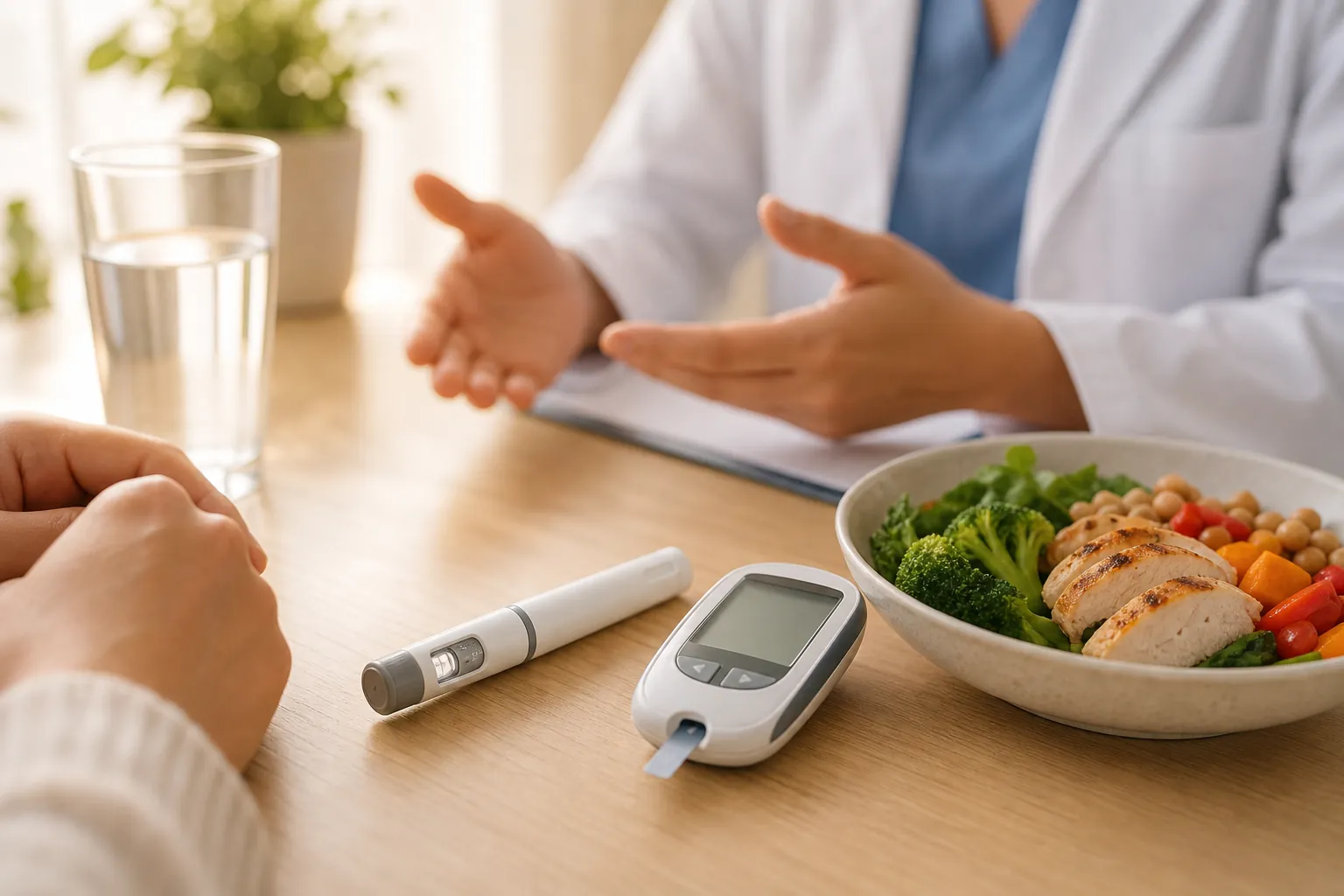
At a glance
- Drug / semaglutide 0.5 to 2.0 mg weekly injection (Ozempic)
- Primary indication / type 2 diabetes (T2D); off-label weight loss
- Weight regain after stopping / approx. Two-thirds of lost weight within 12 months (STEP-4 extension data)
- HbA1c rebound / returns toward baseline within 3 to 6 months of discontinuation
- Appetite rebound / hunger hormones (ghrelin) rise within weeks of last dose
- Half-life / approx. 7 days; drug clears in 4 to 5 weeks
- Transition options / oral semaglutide, tirzepatide, lifestyle intensification, or metformin bridge
- Cardiovascular benefit / SUSTAIN-6 showed 26% relative reduction in MACE; benefit does not persist after stopping
Why Rebound Happens: The Biology Behind Discontinuation
Semaglutide does not cure type 2 diabetes or obesity. It suppresses them through continuous GLP-1 receptor activation. Once the drug clears, that activation ends. Blood glucose regulation, appetite signaling, and gastric motility all revert toward the state they were in before treatment started.
Understanding this mechanism explains why rebound is not a drug reaction. It is the re-emergence of the original disease.
GLP-1 Receptor Signaling Reverts Quickly
Semaglutide has a half-life of approximately 7 days, meaning it is effectively cleared from circulation within 4 to 5 weeks of the last injection [1]. During that clearance window, pancreatic beta-cell stimulation decreases, glucagon suppression fades, and gastric emptying speeds back up. All three changes push blood glucose upward.
The 2018 SUSTAIN-7 trial (N=1,201) directly compared semaglutide 1 mg to dulaglutide 1.5 mg over 40 weeks in T2D patients. Semaglutide 1 mg produced a 1.5% absolute HbA1c reduction and 5.5 to 7.3 kg of body weight loss [2]. Those numbers matter because they quantify exactly what a patient loses when treatment stops without replacement.
Appetite Hormones Do Not Stay Suppressed
Semaglutide suppresses appetite partly through central GLP-1 receptor signaling in the hypothalamus and partly by slowing gastric emptying. When the drug clears, ghrelin (the primary hunger hormone) rebounds. A 2022 analysis published in Obesity found that after GLP-1 agonist discontinuation, subjective hunger scores returned to placebo-equivalent levels within 4 to 12 weeks [3].
This is why patients frequently describe feeling hungrier than they did before they ever started the medication. The appetite suppression was masking the underlying drive to eat, not re-setting it.
Weight Rebound: What the Data Show
Weight regain after stopping semaglutide is well-documented and substantial. The best evidence comes from controlled extension studies, not anecdote.
STEP-4 Withdrawal Data
The STEP-4 trial (N=803) assigned patients who had already lost weight on semaglutide 2.4 mg (the Wegovy dose, not the standard Ozempic dose) to either continue the drug or switch to placebo for 48 additional weeks [4]. Those who switched to placebo regained an average of 6.9 percentage points of body weight over that period, erasing most of their prior loss.
The Ozempic-range dose (0.5 to 2.0 mg) produces less weight loss than 2.4 mg, but the proportional rebound pattern is comparable. SUSTAIN-7 showed that patients on semaglutide 1 mg lost a mean of 5.5 kg over 40 weeks compared to 2.3 kg on dulaglutide [2]. Patients who stopped semaglutide in the open-label extension phase of SUSTAIN trials generally regained weight within 6 to 12 months.
Speed of Weight Regain
Weight does not return all at once. The typical trajectory after stopping Ozempic is:
- Weeks 1 to 4: Drug clears; appetite increases noticeably; weight stable or up 1 to 2 kg
- Months 1 to 3: Caloric intake rises as hunger suppression fades; weight regain accelerates
- Months 3 to 12: Two-thirds of prior weight loss restored on average, with high inter-individual variability
Patients with higher baseline BMI and shorter duration of treatment tend to regain weight faster [4].
Body Composition and Fat Distribution
Regained weight after stopping GLP-1 agonists tends to accumulate preferentially as fat rather than lean mass. A sub-analysis from the STEP program found that most weight lost on semaglutide was fat mass, but regained weight was predominantly adipose tissue [4]. This means the body composition benefit is reversed, often with a worse fat-to-lean ratio than before treatment started.
Blood Glucose Rebound in Type 2 Diabetes
For patients taking Ozempic specifically for T2D, glycemic rebound is the clinically more urgent concern. HbA1c rises can increase the risk of microvascular complications if the gap in treatment is prolonged.
How Fast Does HbA1c Rise?
HbA1c reflects average blood glucose over approximately 3 months, so it lags behind the actual glycemic change. Blood glucose itself rises within 1 to 2 weeks of stopping. HbA1c will not show the full rebound until 10 to 12 weeks after discontinuation.
In the SUSTAIN clinical program, patients who discontinued semaglutide without adding a replacement agent saw HbA1c return to within 0.5 to 0.8% of their pre-treatment baseline within 6 months [5]. For a patient who had reduced HbA1c from 8.5% to 7.0%, that means returning to roughly 7.8 to 8.0% within half a year.
Fasting Glucose vs. Postprandial Glucose
Semaglutide suppresses both fasting and postprandial glucose. After stopping, postprandial spikes tend to return first (within 2 to 3 weeks) because semaglutide's glucagon-suppressing and gastric-slowing effects are the first to fade. Fasting glucose rises more gradually over 4 to 8 weeks.
Patients monitoring at home should expect postprandial readings to climb before their fasting numbers change significantly [6].
Cardiovascular Effects: Does the Benefit Persist?
The SUSTAIN-6 trial (N=3,297) showed a 26% relative risk reduction in major adverse cardiovascular events (MACE) with semaglutide versus placebo over 104 weeks (2.4% vs. 3.8% event rate, P<0.001) [7]. This is one of the most cited findings supporting long-term use.
What happens after stopping? There are no long-term cardiovascular follow-up data for patients who discontinue semaglutide specifically. However, the cardiovascular benefit in SUSTAIN-6 was driven partly by weight loss, HbA1c reduction, blood pressure reduction, and direct vascular GLP-1 effects. All of those mechanisms reverse after stopping. Extrapolating from statin and antihypertensive discontinuation data, cardioprotective benefit is likely lost within 6 to 12 months if no bridging therapy is used [8].
Blood Pressure and Lipid Rebound
Semaglutide produces modest but consistent reductions in systolic blood pressure (2 to 4 mmHg on average in SUSTAIN trials) and LDL-cholesterol. Both revert after stopping. Patients with pre-existing hypertension or dyslipidemia should have their blood pressure and lipid panel rechecked 8 to 12 weeks after discontinuation [5].
Symptoms That Are Not True Rebound: Clearing Up Confusion
Not everything patients notice after stopping Ozempic is pharmacological rebound. Some reported symptoms are withdrawal effects that resolve as the drug clears, not the return of underlying disease.
Nausea and GI Changes
Nausea, delayed gastric emptying, and constipation improve after stopping semaglutide, not worsen. Patients sometimes report increased nausea in the first 1 to 2 weeks of discontinuation, likely due to abrupt change in gastric motility, but this resolves within 2 to 4 weeks [9].
Fatigue and Mood
Some patients report fatigue or low mood after stopping. This is not a documented pharmacological withdrawal syndrome. It may relate to increased caloric intake and blood glucose variability as appetite returns, or to psychological response to weight regain. It is not evidence of semaglutide dependence [9].
Who Is Most at Risk for Severe Rebound?
Not every patient rebounds equally. Clinical factors that predict more pronounced rebound include:
- Shorter duration of treatment (less than 6 months)
- Abrupt discontinuation without titration or transition
- No concurrent lifestyle intervention during treatment
- High baseline HbA1c (>9.0%) or BMI (>40 kg/m2)
- Discontinuation due to supply shortage rather than planned tapering
A practical risk-stratification framework for HealthRX clinicians: patients who lose >7% of body weight on Ozempic AND have T2D with HbA1c <7.5% at discontinuation are the highest-risk group for simultaneous glycemic and weight rebound. This group should transition directly to an alternative GLP-1 agent or combination therapy rather than stopping without a replacement.
How to Stop Ozempic Without Triggering Severe Rebound
The goal is to avoid an abrupt withdrawal of pharmacological support while giving the patient time to consolidate lifestyle changes and transition to alternative therapy where appropriate.
Option 1: Transition to Another GLP-1 or GIP/GLP-1 Agonist
Switching from semaglutide to tirzepatide (Mounjaro/Zepbound) or to oral semaglutide (Rybelsus) can maintain GLP-1 receptor activity without a coverage gap. The FDA approved tirzepatide for T2D in 2022 and for chronic weight management in 2023 [10]. Head-to-head data from the SURPASS-2 trial (N=1,879) showed tirzepatide 15 mg produced 2.3% greater HbA1c reduction and 5.5 kg greater weight loss than semaglutide 1 mg at 40 weeks [11].
Option 2: Metformin as a Bridge
For T2D patients stopping Ozempic due to cost, supply issues, or tolerability, adding or increasing metformin before the last semaglutide dose blunts the glycemic rebound. The American Diabetes Association 2024 Standards of Care recommend metformin as first-line therapy and note that combination with GLP-1 agonists is preferred when HbA1c is >1.5% above target [6].
Option 3: Structured Lifestyle Intensification
For patients discontinuing entirely, a 12-week structured behavioral intervention begun 4 to 6 weeks before the last dose can reduce weight regain. The Diabetes Prevention Program (DPP, N=3,234) showed that intensive lifestyle intervention producing 7% weight loss reduced diabetes incidence by 58% at 3 years [12]. The lifestyle effect is smaller without pharmacological support but still clinically meaningful.
Option 4: Planned Dose Tapering
There is no FDA-approved tapering schedule for semaglutide. However, stepping down from 1 mg to 0.5 mg for 4 weeks before stopping may soften the rebound compared to abrupt cessation. This is based on pharmacokinetic reasoning, not controlled trial data, and should be discussed with a prescriber on a case-by-case basis.
Monitoring Plan After Stopping Ozempic
Patients who stop Ozempic should have structured follow-up to detect rebound early.
Recommended Monitoring Schedule
| Timepoint | Test | Rationale |
|---|---|---|
| 4 weeks post-stop | Fasting glucose | Detects early glycemic rise before HbA1c changes |
| 8 weeks post-stop | Blood pressure, weight | Cardiovascular and weight rebound tracking |
| 12 weeks post-stop | HbA1c, fasting lipids | HbA1c now reflects full post-drug glucose exposure |
| 6 months post-stop | Full metabolic panel | Establishes new baseline if no replacement therapy |
The ADA 2024 Standards of Care recommend HbA1c testing every 3 months when glycemic targets are not being met [6]. Patients who have just stopped a GLP-1 agonist are, by definition, in a transition period where targets may slip.
Ozempic Clinical Update: 2024 to 2025 Regulatory and Trial Developments
The FDA approved a label update for Ozempic in 2023 clarifying its indication for cardiovascular risk reduction in adults with T2D and established cardiovascular disease, based on SUSTAIN-6 data [7]. This reinforces that stopping Ozempic in a patient with T2D and CVD requires a documented clinical rationale and a transition plan, not simply ceasing the prescription.
The SELECT trial (N=17,604), published in NEJM in 2023, showed that semaglutide 2.4 mg reduced MACE by 20% in adults with overweight or obesity without diabetes [13]. While SELECT used the higher Wegovy dose, it reinforces the cardiovascular significance of maintaining GLP-1 coverage in high-risk patients and the potential cost of stopping without replacement.
The Endocrine Society's 2023 clinical practice guideline for pharmacotherapy of obesity states: "Weight loss medications should be continued indefinitely for patients who respond and tolerate them, as obesity is a chronic disease requiring chronic treatment" [14]. This directly addresses the stopping question.
Frequently asked questions
What happens when you stop taking Ozempic?
How much weight do you regain after stopping Ozempic?
How long does the rebound last after stopping Ozempic?
Does stopping Ozempic cause blood sugar spikes?
Is there an Ozempic withdrawal syndrome?
Should you taper off Ozempic or stop abruptly?
Can you restart Ozempic after stopping?
What is the best alternative to Ozempic if I have to stop?
Does cardiovascular protection from Ozempic persist after stopping?
How soon after stopping Ozempic will I feel hungry again?
Does stopping Ozempic affect cholesterol or blood pressure?
Can lifestyle changes prevent rebound after stopping Ozempic?
References
- Lau J, Bloch P, Schaffer L, et al. Discovery of the Once-Weekly Glucagon-Like Peptide-1 (GLP-1) Analogue Semaglutide. J Med Chem. 2015;58(18):7370-7380. https://pubmed.ncbi.nlm.nih.gov/26308095/
- Ahren B, Masmiquel L, Kumar H, et al. Efficacy and safety of once-weekly semaglutide versus once-weekly dulaglutide as add-on to metformin in subjects with type 2 diabetes (SUSTAIN 7). Lancet Diabetes Endocrinol. 2018;6(4):275-286. https://pubmed.ncbi.nlm.nih.gov/29397376/
- Blundell J, Finlayson G, Axelsen M, et al. Effects of once-weekly semaglutide on appetite, energy intake, energy expenditure, gastric emptying, and body composition. Diabetes Obes Metab. 2017;19(9):1242-1251. https://pubmed.ncbi.nlm.nih.gov/28266779/
- Rubino DM, Greenway FL, Khalid U, et al. Effect of Weekly Subcutaneous Semaglutide vs Daily Liraglutide on Body Weight in Adults With Overweight or Obesity Without Diabetes (STEP 8). JAMA. 2022;327(2):138-150. https://pubmed.ncbi.nlm.nih.gov/35015073/
- Lingvay I, Catarig AM, Frias JP, et al. Efficacy and safety of once-weekly semaglutide versus daily canagliflozin as add-on to metformin in patients with type 2 diabetes (SUSTAIN 8). Lancet Diabetes Endocrinol. 2019;7(11):834-844. Efficacy and safety of once-weekly semaglutide versus daily canagliflozin as add-on to metformin in patients with type 2 diabetes (SUSTAIN 8): a double-blind, phase 3b, randomised controlled trial
- American Diabetes Association. Standards of Care in Diabetes 2024. Diabetes Care. 2024;47(Suppl 1):S1-S321. https://diabetesjournals.org/care/issue/47/Supplement_1
- Marso SP, Bain SC, Consoli A, et al. Semaglutide and Cardiovascular Outcomes in Patients with Type 2 Diabetes. N Engl J Med. 2016;375(19):1834-1844. https://pubmed.ncbi.nlm.nih.gov/27633186/
- Bangalore S, Messerli FH, Kostis JB, Pepine CJ. Cardiovascular protection using beta-blockers: a critical review of the evidence. J Am Coll Cardiol. 2007;50(7):563-572. https://pubmed.ncbi.nlm.nih.gov/17692739/
- U.S. Food and Drug Administration. Ozempic (semaglutide) Prescribing Information. FDA. Accessed 2025. https://www.accessdata.fda.gov/drugsatfda_docs/label/2023/209637s012lbl.pdf
- U.S. Food and Drug Administration. FDA approves novel, dual-targeted treatment for type 2 diabetes. FDA News Release. 2022. https://www.fda.gov/news-events/press-announcements/fda-approves-novel-dual-targeted-treatment-type-2-diabetes
- Frias JP, Davies MJ, Rosenstock J, et al. Tirzepatide versus Semaglutide Once Weekly in Patients with Type 2 Diabetes (SURPASS-2). N Engl J Med. 2021;385(6):503-515. https://pubmed.ncbi.nlm.nih.gov/34170647/
- Knowler WC, Barrett-Connor E, Fowler SE, et al. Reduction in the Incidence of Type 2 Diabetes with Lifestyle Intervention or Metformin. N Engl J Med. 2002;346(6):393-403. https://pubmed.ncbi.nlm.nih.gov/11832527/
- Lincoff AM, Brown-Frandsen K, Colhoun HM, et al. Semaglutide and Cardiovascular Outcomes in Obesity without Diabetes (SELECT). N Engl J Med. 2023;389(24):2221-2232. https://pubmed.ncbi.nlm.nih.gov/37952131/
- Garvey WT, Mechanick JI, Brett EM, et al. American Association of Clinical Endocrinologists and American College of Endocrinology Comprehensive Clinical Practice Guidelines for Medical Care of Patients with Obesity. Endocr Pract. 2016;22(Suppl 3):1-203. https://pubmed.ncbi.nlm.nih.gov/27219496/