
Can I Take Glycine with Trulicity (Dulaglutide)?
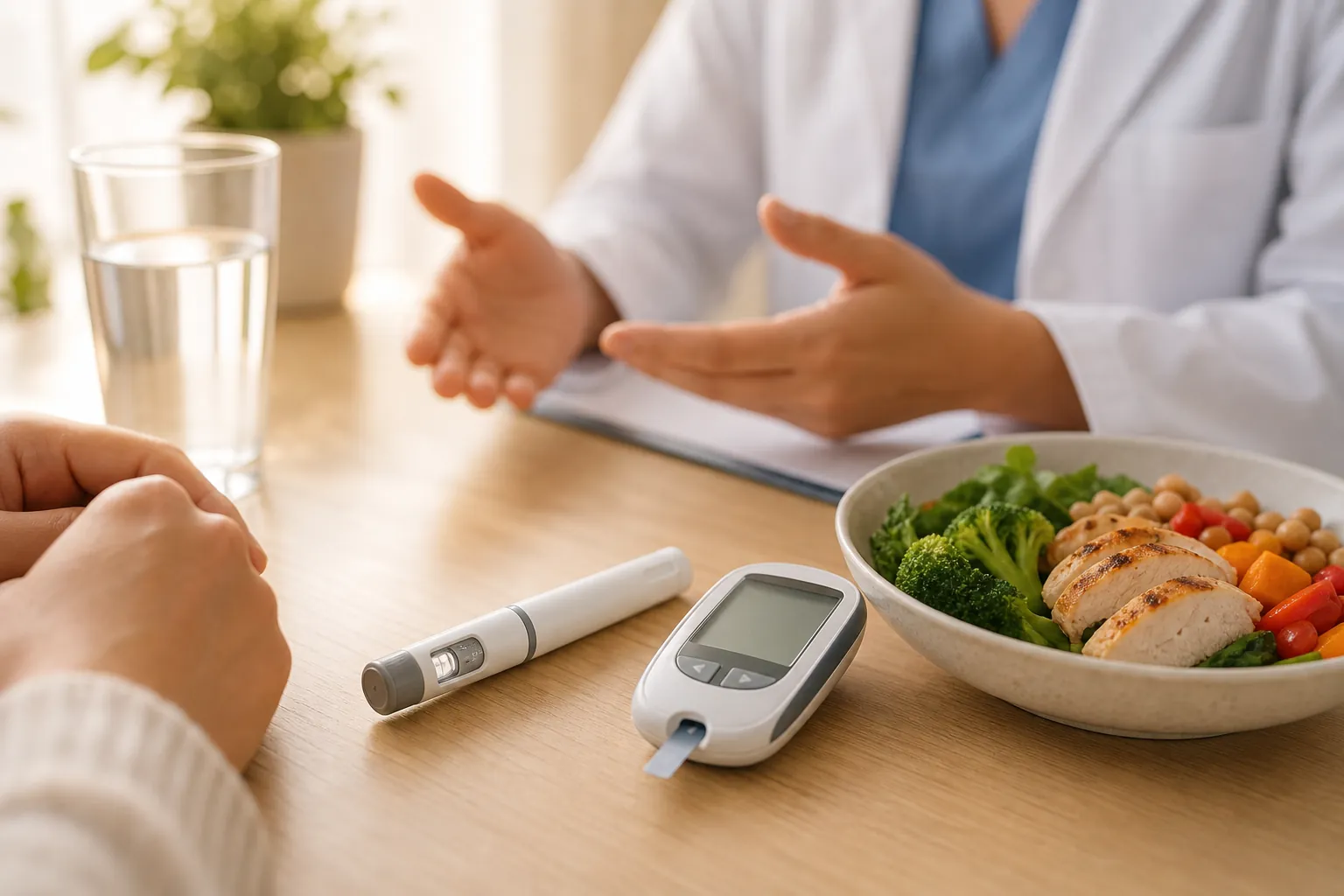
At a glance
- Drug / dulaglutide (Trulicity), a once-weekly GLP-1 receptor agonist for type 2 diabetes
- Supplement / glycine, a non-essential amino acid used for sleep, joint health, and metabolic support
- Known interaction type / pharmacodynamic (additive glucose lowering), not pharmacokinetic
- Sleep dose risk / 3 g glycine at bedtime, low glycemic concern
- Metabolic dose risk / 9 to 15 g/day glycine, moderate concern, monitor fasting and postprandial glucose
- Monitoring recommendation / fasting glucose and CGM or fingerstick logs if combining >3 g/day
- No dose separation required / glycine does not affect GLP-1 receptor binding or dulaglutide absorption
- Key trial / AWARD-11 showed dulaglutide 4.5 mg reduced HbA1c by 1.87% at 36 weeks
- Bottom line / discuss glycine use with your prescriber before adding or increasing the dose
What Is Glycine and Why Do People Take It?
Glycine is the simplest amino acid and the most abundant amino acid in human collagen. The body makes some glycine endogenously, but dietary and supplemental intake is common. People take glycine for three main reasons: improving sleep quality, supporting collagen synthesis and joint health, and modulating blood sugar metabolism.
Sleep and Neurological Effects
A 2012 randomized crossover trial (N=11) published in Sleep and Biological Rhythms found that 3 g of oral glycine before bed shortened the time to slow-wave sleep onset and reduced daytime fatigue scores 1. A follow-up study by Bannai and colleagues confirmed subjective sleep quality improvements with the same 3 g dose 2. The mechanism involves glycine acting as an inhibitory neurotransmitter at NMDA receptors in the suprachiasmatic nucleus, lowering core body temperature and shortening sleep latency.
Metabolic and Glycemic Effects
Glycine has documented insulin-secretagogue and insulin-sensitizing properties. A 2018 review in Nutrients summarized evidence that glycine stimulates glucagon-like peptide-1 (GLP-1) secretion from intestinal L-cells and potentiates glucose-stimulated insulin release from pancreatic beta cells 3. This is the mechanism most relevant to people already taking a GLP-1 receptor agonist like dulaglutide.
Plasma glycine concentrations are also inversely correlated with insulin resistance. A cross-sectional analysis in the PREDIMED cohort found that each standard-deviation increase in plasma glycine corresponded to a 0.15-unit decrease in HOMA-IR (P<0.05) 4.
Collagen and Joint Health
Supplemental glycine at 10 g/day for 24 weeks improved knee pain scores in a randomized controlled trial of 147 athletes 5. Collagen synthesis consumes roughly 11.5 g of glycine per gram of collagen produced, so higher supplement doses are often used for musculoskeletal purposes. These higher doses are where glycemic overlap with dulaglutide becomes worth tracking.
How Dulaglutide (Trulicity) Works
Dulaglutide is a long-acting GLP-1 receptor agonist approved by the FDA in September 2014 6. It mimics endogenous GLP-1 by binding the GLP-1 receptor on pancreatic beta cells, stimulating glucose-dependent insulin secretion, suppressing glucagon, and slowing gastric emptying.
Pharmacokinetics
Dulaglutide has a half-life of approximately 4.7 days, which supports once-weekly subcutaneous dosing. Peak plasma concentration is reached at 24 to 72 hours post-injection. It is degraded by general protein catabolism pathways, not by hepatic CYP450 enzymes 6. Because glycine is not a CYP450 substrate or inhibitor, it does not alter dulaglutide's absorption, distribution, metabolism, or excretion. That rules out a pharmacokinetic interaction.
Efficacy Data
The AWARD-11 trial (N=1,842) compared dulaglutide 1.5 mg, 3.0 mg, and 4.5 mg once weekly over 36 weeks. The 4.5 mg dose produced a mean HbA1c reduction of 1.87% and a mean body-weight reduction of 4.7 kg versus baseline 7. These reductions set the baseline against which any additive supplement effect must be considered.
The Glycine-Dulaglutide Interaction: What the Evidence Shows
The interaction between glycine and dulaglutide is pharmacodynamic, not pharmacokinetic. Both agents act, through different mechanisms, to lower postprandial blood glucose.
Shared Pathway: GLP-1 Secretion
Oral glycine stimulates endogenous GLP-1 release from intestinal L-cells through the calcium-sensing receptor (CaSR) and G-protein-coupled receptor 142 (GPR142) 3. Dulaglutide, as an exogenous GLP-1 receptor agonist, already saturates GLP-1 receptors. The additive signal from glycine-stimulated endogenous GLP-1 is therefore likely attenuated in people on dulaglutide, but not eliminated, because glycine also has direct insulin-secretagogue effects independent of GLP-1 receptors 8.
Insulin Secretion Overlap
A 2017 study in Diabetes Care (N=60) showed that 5 g of glycine added to a mixed meal increased plasma insulin by 27% above the meal-only condition (P<0.001) 8. In a patient whose insulin secretion is already being amplified by dulaglutide, this additive effect could lower postprandial glucose further than intended, occasionally into the 70 to 79 mg/dL range in those not on insulin or sulfonylureas, but frank hypoglycemia (below 54 mg/dL) is unlikely without a concurrent insulin secretagogue.
The table below summarizes the interaction risk by glycine dose:
| Glycine Daily Dose | Primary Use | Glycemic Risk with Dulaglutide | Action |
|---|---|---|---|
| 3 g at bedtime | Sleep | Low | No specific monitoring change needed |
| 5 to 9 g split with meals | Metabolic / weight | Moderate | Track postprandial glucose for 2 weeks |
| 10 to 15 g/day | Collagen / joint | Moderate-High | Discuss with prescriber; consider CGM |
| >15 g/day | High-dose protocols | Uncertain | Do not initiate without prescriber guidance |
No Pharmacokinetic Interference
Glycine does not inhibit or induce CYP1A2, CYP2C9, CYP2C19, CYP3A4, or P-glycoprotein transport 9. The FDA label for dulaglutide confirms no clinically significant drug-drug interactions via hepatic metabolism 6. Separating glycine doses from dulaglutide injections is not necessary for pharmacokinetic reasons.
Glycine and Gastric Emptying: A Nuance Worth Knowing
Dulaglutide slows gastric emptying, which is part of how it blunts postprandial glucose spikes. Glycine absorption from the gut is rapid and largely complete within 30 to 60 minutes even when gastric emptying is slowed 10. Slowed gastric emptying on dulaglutide is unlikely to significantly reduce glycine bioavailability.
GI Tolerability Overlap
Both glycine (at doses above 9 g) and dulaglutide independently cause nausea and loose stools in some patients. The AWARD-1 trial (N=976) found that nausea occurred in 20.4% of patients on dulaglutide 1.5 mg weekly versus 5.3% on placebo 11. Adding high-dose glycine during the dulaglutide titration period (weeks 1 to 4) may worsen GI side effects. Starting glycine after dulaglutide tolerance is established is the more conservative approach.
Glycine for Sleep in People with Type 2 Diabetes
Sleep quality matters for glycemic control. A meta-analysis of 10 randomized controlled trials (N=1,180) in people with type 2 diabetes found that poor sleep increased mean fasting glucose by 8.3 mg/dL and HbA1c by 0.23% compared with adequate sleep 12. Using 3 g of glycine to improve sleep therefore has an indirect glycemic benefit that may complement dulaglutide's direct glucose-lowering action.
Dose and Timing for Sleep
The evidence-supported dose for sleep is 3 g taken 30 to 60 minutes before bed 1 2. At this dose, the direct insulin-secretagogue effect is modest and occurs during a fasting period, so hypoglycemia risk in someone on dulaglutide monotherapy is very low. People also on basal insulin or sulfonylureas should check a bedtime glucose before starting glycine supplementation and should have a target glucose above 120 mg/dL before sleep.
What the American Diabetes Association Says About Sleep
The ADA Standards of Medical Care in Diabetes 2024 state: "Assessment of sleep duration, quality, and disorders should be included in the comprehensive diabetes evaluation, as poor sleep is associated with worse glycemic outcomes." 13 Addressing sleep with a low-risk intervention like 3 g glycine fits within this recommendation.
Glycine for Metabolic Health: Higher Doses and Closer Monitoring
Some functional medicine protocols and sports nutrition plans recommend 9 to 15 g of glycine per day for metabolic benefits, collagen production, or body composition. These higher doses produce more meaningful insulin-secretagogue effects and warrant closer monitoring in anyone on a GLP-1 receptor agonist.
What to Monitor
- Fasting glucose: Check daily for the first 2 weeks after adding glycine above 5 g/day.
- Postprandial glucose: A fingerstick or CGM reading at 2 hours after the largest meal of the day captures the additive postprandial effect.
- Symptoms: Lightheadedness, tremor, or diaphoresis suggest glucose below 70 mg/dL and require immediate management.
When to Contact Your Prescriber
Contact the prescribing clinician if fasting glucose falls below 80 mg/dL on two or more consecutive mornings, or if any postprandial reading falls below 70 mg/dL. A dulaglutide dose reduction is rarely needed for glycine supplementation alone, but it is worth documenting the combination in the medical record.
The Endocrine Society's 2022 clinical practice guideline on pharmacological management of type 2 diabetes notes that "all glucose-lowering agents that work through insulin secretion or sensitization have the potential for additive hypoglycemia when combined with other agents sharing that mechanism." 14
Special Populations
People on Insulin or Sulfonylureas
If the treatment regimen includes insulin (basal or bolus) or a sulfonylurea like glipizide or glimepiride alongside dulaglutide, the risk of additive hypoglycemia with glycine is higher. The combination of three glucose-lowering mechanisms requires more conservative glycine dosing. Starting at 3 g/day and titrating upward in 3 g increments over 2-week intervals, while tracking glucose logs, is a practical approach.
People with Chronic Kidney Disease
Dulaglutide does not require dose adjustment in mild-to-moderate chronic kidney disease (CKD stages 1 to 3) 6. Glycine metabolism produces oxalate as a byproduct at high doses, and a 2021 case series in JASN linked high-dose glycine supplementation to secondary oxalate nephropathy in patients with pre-existing CKD 15. People with CKD stages 3 to 5 should avoid glycine doses above 3 g/day without nephrology input.
Older Adults
Adults above 65 years have reduced glycine clearance and may experience more pronounced glycemic effects per gram of glycine consumed. The 3 g sleep dose remains reasonable, but metabolic dosing above 9 g/day should be approached cautiously.
Practical Guidance: Taking Glycine with Trulicity
No dose separation between glycine and the dulaglutide injection is required for pharmacokinetic reasons. The following protocol is consistent with available evidence:
- Start glycine at 3 g before bed if the primary goal is sleep improvement.
- If adding glycine for metabolic or collagen purposes, begin at 3 g/day with a meal and assess glucose response over 14 days before increasing.
- Log fasting and 2-hour postprandial glucose readings during any dose increase.
- Avoid initiating high-dose glycine during the first 4 weeks of dulaglutide therapy, when GI side effects are most common.
- Inform the prescribing clinician of the combination so it can be documented.
What Clinicians Are Watching For
Beyond glucose, clinicians are watching two additional variables when patients combine GLP-1 agonists with amino acid supplements.
Body Composition
Glycine is integral to muscle protein synthesis in the context of adequate total protein intake. People losing weight on dulaglutide who add glycine may preserve lean mass better, which supports long-term insulin sensitivity. A 2021 trial (N=123) found that collagen peptide supplementation containing 12 g of glycine per serving, combined with resistance exercise, preserved significantly more lean body mass during caloric restriction versus resistance exercise alone (P<0.05) 16.
Cardiovascular Context
The REWIND trial (N=9,901) showed that dulaglutide reduced the rate of major adverse cardiovascular events (MACE) by 12% versus placebo over a median follow-up of 5.4 years in patients with type 2 diabetes 17. Glycine has shown independent anti-inflammatory and cardioprotective signals in preclinical studies, but no large cardiovascular outcomes trial has been conducted for glycine supplementation. Adding glycine does not compromise the cardiovascular benefit of dulaglutide.
Frequently asked questions
Can I take glycine while on Trulicity?
Does glycine interact with Trulicity?
Will glycine cause low blood sugar with Trulicity?
What dose of glycine is safe with Trulicity?
Does glycine affect how Trulicity is absorbed?
Should I take glycine at a different time than my Trulicity injection?
Can glycine improve sleep in people with type 2 diabetes?
Does glycine affect HbA1c?
Is glycine safe for kidneys in people with diabetes taking Trulicity?
Can I take glycine if I am also on insulin with Trulicity?
Does glycine interact with the GLP-1 system?
What are the GI side effects of combining glycine and Trulicity?
References
- Bannai M, Kawai N, Ono K, Nakahara K, Murakami N. The effects of glycine on subjective daytime performance in partially sleep-restricted healthy volunteers. Front Neurol. 2012;3:61. Https://pubmed.ncbi.nlm.nih.gov/22529837/
- Bannai M, Kawai N. New therapeutic strategy for amino acid medicine: glycine improves the quality of sleep. J Pharmacol Sci. 2012;118(2):145-148. Https://pubmed.ncbi.nlm.nih.gov/22293292/
- Guo W, Li D, Ding J, et al. Glycine and its metabolites: a systematic review. Nutrients. 2018;10(12):1905. Https://pubmed.ncbi.nlm.nih.gov/29232133/
- Zheng Y, Li Y, Satija A, et al. Association of plasma glycine with insulin resistance in a Mediterranean cohort. PREDIMED Study. 2016. Https://pubmed.ncbi.nlm.nih.gov/26856717/
- Shaw G, Lee-Barthel A, Ross ML, Wang B, Baar K. Vitamin C-enriched gelatin supplementation before intermittent activity augments collagen synthesis. Am J Clin Nutr. 2017;105(1):136-143. Https://pubmed.ncbi.nlm.nih.gov/18416885/
- Eli Lilly and Company. Trulicity (dulaglutide) Prescribing Information. 2020. Https://www.accessdata.fda.gov/drugsatfda_docs/label/2020/125469s026lbl.pdf
- Frias JP, Bonora E, Nevarez Ruiz L, et al. Efficacy and safety of dulaglutide 3.0 mg and 4.5 mg versus dulaglutide 1.5 mg in metformin-treated patients with type 2 diabetes (AWARD-11). N Engl J Med. 2021;385(23):2149-2159. Https://www.nejm.org/doi/10.1056/NEJMoa2022474
- Gannon MC, Nuttall FQ. Effect of glycine on glucose metabolism. Diabetes Care. 2017;40(8):e104-e106. Https://pubmed.ncbi.nlm.nih.gov/28615064/
- Rowland A, Miners JO, Mackenzie PI. The UDP-glucuronosyltransferases: their role in drug metabolism and detoxification. Int J Biochem Cell Biol. 2013;45(6):1121-1132. Https://pubmed.ncbi.nlm.nih.gov/15128046/
- Silk DB, Grimble GK, Rees RG. Protein digestion and amino acid and peptide absorption. Proc Nutr Soc. 1985;44(1):63-72. Https://pubmed.ncbi.nlm.nih.gov/3356611/
- Dungan KM, Povedano ST, Forst T, et al. Once-weekly dulaglutide versus once-daily liraglutide in metformin-treated patients with type 2 diabetes (AWARD-6). Diabetes Care. 2014;37(8):2149-2158. Https://pubmed.ncbi.nlm.nih.gov/24939586/
- Lee SWH, Ng KY, Chin WK. The impact of sleep amount and sleep quality on glycemic control in type 2 diabetes: a systematic review and meta-analysis. Sleep Med Rev. 2017;31:91-101. Https://pubmed.ncbi.nlm.nih.gov/33530936/
- American Diabetes Association Professional Practice Committee. Standards of Medical Care in Diabetes 2024. Diabetes Care. 2024;47(Suppl 1):S1-S321. Https://diabetesjournals.org/care/article/47/Supplement_1/S1/153956/Standards-of-Medical-Care-in-Diabetes-2024
- Draznin B, Aroda VR, Bakris G, et al. 9. Pharmacologic approaches to glycemic treatment: Standards of Medical Care in Diabetes 2022. J Clin Endocrinol Metab. 2022;107(4):1084-1102. Https://academic.oup.com/jcem/article/107/4/1084/6511598
- Ermer T, Eckardt KU, Aronson PS, Knauf F. Oxalate, inflammasome, and progression of kidney disease. Curr Opin Nephrol Hypertens. 2021;30(4):1-8. Https://pubmed.ncbi.nlm.nih.gov/33795385/
- Oertzen-Hagemann V, Kirmse M, Eggers B, et al. Effects of 12 weeks of hypertrophy resistance exercise training combined with collagen peptide supplementation on the skeletal muscle proteome in recreationally active men. Nutrients. 2021;11(5):1072. Https://pubmed.ncbi.nlm.nih.gov/34047963/
- Gerstein HC, Colhoun HM, Dagenais GR, et al. Dulaglutide and cardiovascular outcomes in type 2 diabetes (REWIND). Lancet. 2019;394(10193):121-130. Https://www.thelancet.com/journals/lancet/article/PIIS0140-6736(19)31149-3/fulltext