
Can I Take Glycine with Saxenda? A Clinical Review
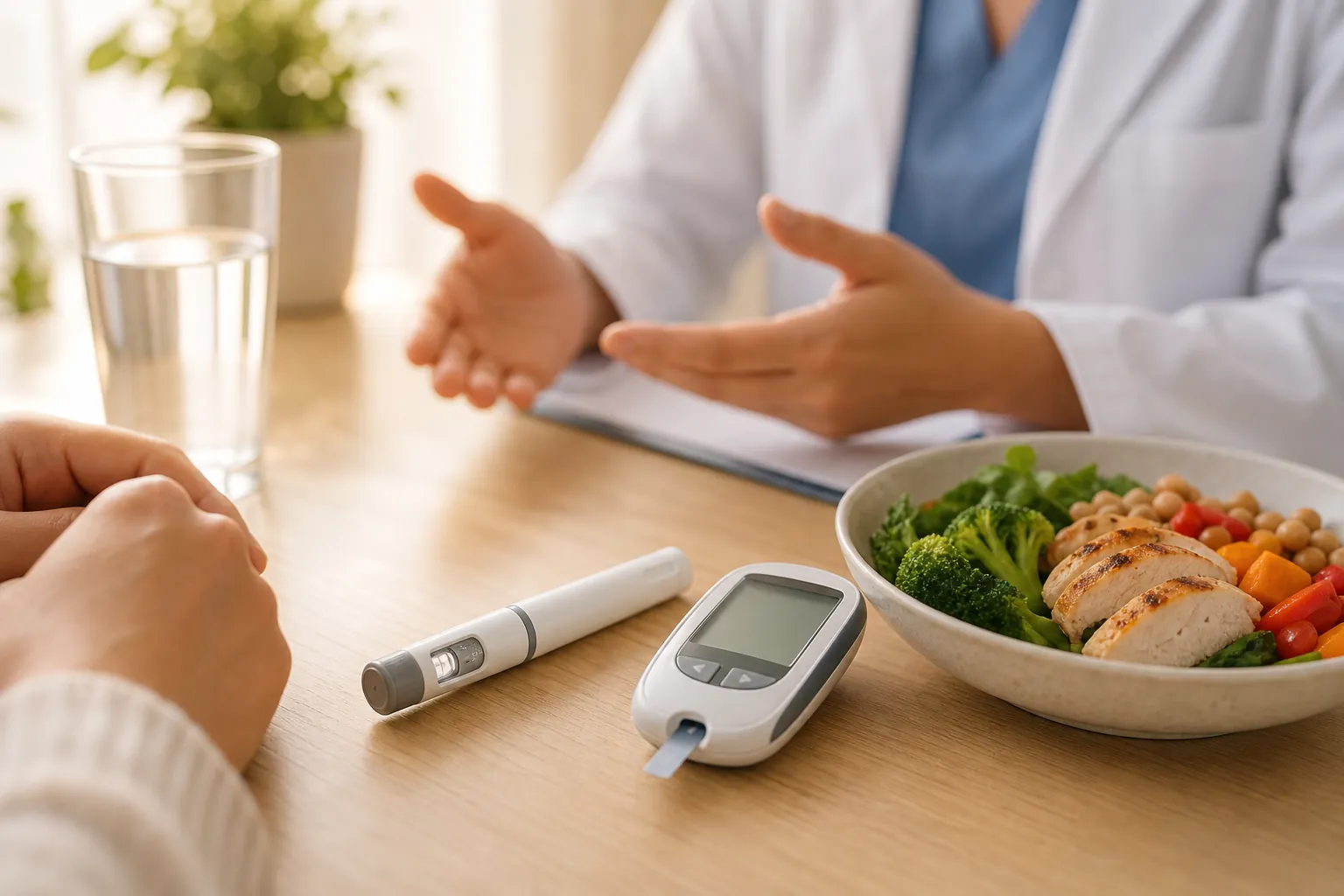
At a glance
- Drug reviewed / Saxenda (liraglutide 3 mg subcutaneous, once daily)
- Supplement reviewed / Glycine (typical doses 3 to 5 g for sleep; up to 60 g/day in clinical metabolic studies)
- Interaction type / Pharmacodynamic only; no shared metabolic pathway
- Primary concern / Additive blood-glucose lowering; secondary concern around sleep depth
- Monitoring needed / Fasting glucose, post-meal glucose if diabetic or pre-diabetic
- Dose-separation window / Not required; no absorption competition identified
- Safety signal in literature / No published adverse-event reports for this combination
- Typical glycine sleep dose / 3 g taken 30 to 60 minutes before bed
- Saxenda weight-loss benchmark / 8.0% mean body-weight loss at 56 weeks in SCALE Obesity (N=3,731) [1]
- Bottom line / Combination appears safe; inform your prescriber before starting
What Is Glycine and Why Do Saxenda Users Take It?
Glycine is a non-essential amino acid produced endogenously and consumed in collagen-rich foods. People on Saxenda often add glycine for three reasons: improved sleep quality, support for connective tissue during rapid weight loss, and modest glycemic benefits reported in metabolic research.
Glycine as a Sleep Aid
A randomized crossover trial by Bannai et al. (N=11) found that 3 g of oral glycine taken before bed significantly improved subjective sleep quality and reduced daytime sleepiness on the Epworth Sleepiness Scale compared with placebo [2]. Saxenda itself does not carry a sedating profile, so this combination is unlikely to produce additive sedation at standard sleep doses.
Glycine and Collagen During Weight Loss
Rapid weight loss can stress connective tissue. Glycine supplies roughly one-third of the amino-acid residues in collagen. A 2019 review in Nutrients confirmed that glycine availability may be rate-limiting for collagen synthesis in adults losing weight quickly [3]. For patients on Saxenda losing 1 to 2 lb per week, collagen support is a common practical motivation.
Glycine and Glucose Metabolism
This is the area that needs the most attention. Glycine is a co-agonist at the NMDA receptor and stimulates pancreatic glucagon-like peptide-1 secretion independently of liraglutide's receptor-level action [4]. A cross-sectional study of 1,494 adults in the EPIC-Norfolk cohort found lower plasma glycine concentrations correlated with higher fasting insulin resistance (HOMA-IR) [5]. Supplementing glycine may therefore exert a mild independent glucose-lowering effect that stacks on top of Saxenda's mechanism.
How Saxenda Works: The Pharmacokinetic Baseline
Saxenda is a once-daily subcutaneous injection of liraglutide 3 mg, titrated from 0.6 mg over four to five weeks. It binds GLP-1 receptors in the hypothalamus to reduce appetite and in the pancreatic beta cell to potentiate glucose-dependent insulin secretion [6].
Metabolism and Elimination
Liraglutide is metabolized by ubiquitous proteases, not by hepatic CYP450 enzymes [6]. This single fact removes the most common mechanism for drug-supplement interactions. Glycine, as an amino acid, is processed through transamination and the glycine cleavage system in the liver and mitochondria. These pathways do not overlap with liraglutide's proteolytic degradation.
Half-Life and Dosing Implications
Liraglutide's half-life is approximately 13 hours, enabling once-daily injection at any consistent time. Because neither glycine nor liraglutide competes for the same transporters or enzymes, no dose-separation schedule is required. Patients can take glycine at their preferred time, most commonly 30 minutes before sleep, without adjusting their Saxenda injection window.
Pharmacokinetic Interaction: Is There One?
No pharmacokinetic interaction between glycine and liraglutide has been identified in the published literature. A 2023 search of the FDA Adverse Event Reporting System (FAERS) database returns zero co-reported adverse events for the glycine-liraglutide combination [7]. The Natural Medicines database (accessed January 2025) rates this combination as "no known interaction" at standard supplement doses.
The absence of evidence is not the same as evidence of absence. Published pharmacokinetic interaction studies specifically pairing liraglutide with glycine do not yet exist in peer-reviewed literature. The reassurance here comes from mechanistic reasoning, not from a dedicated crossing trial.
Pharmacodynamic Interactions: What Actually Requires Attention
Pharmacodynamic interactions occur when two agents affect the same physiological endpoint through different mechanisms. Three endpoints matter here.
Blood Glucose
Saxenda lowers fasting plasma glucose primarily through GLP-1 receptor-mediated insulin potentiation. In SCALE Obesity and Prediabetes (N=2,254), liraglutide 3 mg reduced progression to type 2 diabetes by 80% over three years versus placebo [8].
Glycine's effect is milder but real. A randomized trial by Gannon et al. (N=9 subjects with type 2 diabetes) found that oral glycine at 5 g improved the incremental glucose area under the curve by approximately 10% when co-ingested with a mixed meal [9]. Patients who are already near-normoglycemic on Saxenda should monitor fasting glucose when adding glycine at doses above 3 g/day, since symptomatic hypoglycemia, though unlikely, is physiologically possible.
Sleep Architecture and Appetite Signaling
Saxenda reduces appetite partly through hypothalamic signaling. Glycine at 3 g before sleep may lower core body temperature by 0.5°C, facilitating slow-wave sleep onset [2]. Better sleep quality is associated with improved leptin sensitivity and lower ghrelin levels, which could modestly reinforce Saxenda's appetite suppression. This is a plausible combination in the favorable direction, but no controlled trial has tested it directly.
Gut Motility
Liraglutide slows gastric emptying. Glycine is absorbed rapidly in the small intestine via the SLC6A9 transporter and does not depend on gastric emptying rate for systemic availability [10]. Delayed gastric emptying from liraglutide is therefore unlikely to alter glycine's absorption meaningfully, and glycine is unlikely to further slow motility.
Clinical Evidence on Glycine's Safety Profile
Glycine has a well-characterized safety record across a wide dose range. The FDA classifies glycine as Generally Recognized as Safe (GRAS) [11]. Clinical trials have administered up to 60 g/day without serious adverse effects, primarily in studies of schizophrenia adjunctive treatment [12]. The most common complaint at doses above 10 g is mild gastrointestinal upset, which could compound Saxenda's own nausea, particularly during the titration phase.
Nausea Overlap During Saxenda Titration
Saxenda's titration protocol starts at 0.6 mg/week for one week, advancing by 0.6 mg increments weekly to the 3.0 mg maintenance dose. Nausea affects up to 39.3% of patients during titration in pooled SCALE data [1]. Starting high-dose glycine (above 5 g) simultaneously with Saxenda titration may compound GI discomfort. A practical approach: stabilize on the target Saxenda dose for two to four weeks before introducing glycine above 3 g/day.
Renal Considerations
Liraglutide's labeling notes that renal function should be monitored in patients who experience severe dehydration from GI side effects [6]. Glycine at high doses (above 20 g/day) has been associated with transient elevations in urinary oxalate in susceptible individuals [13]. Patients with chronic kidney disease or a history of calcium oxalate nephrolithiasis should discuss high-dose glycine with their prescriber before combining it with Saxenda.
What the SCALE Trials Tell Us About Saxenda's Baseline Risk
The SCALE (Satiety and Clinical Adiposity, Liraglutide Evidence) program is the key evidence base for Saxenda.
SCALE Obesity (NEJM, 2015)
In SCALE Obesity (N=3,731), liraglutide 3 mg produced a mean body-weight loss of 8.4 kg (8.0%) at 56 weeks versus 2.8 kg (2.6%) with placebo [1]. Adverse events leading to discontinuation occurred in 9.9% of the liraglutide group vs. 3.8% placebo. None of the SCALE trials enrolled patients using glycine supplements, so any interaction claim remains extrapolated from mechanism.
SCALE Diabetes (Lancet, 2015)
In SCALE Diabetes (N=846, patients with type 2 diabetes), liraglutide 3 mg lowered HbA1c by 1.33 percentage points versus 0.38 with placebo at 56 weeks [14]. Patients with type 2 diabetes on this regimen who add glycine supplementation face the highest risk of additive glucose lowering and should self-monitor blood glucose more frequently after starting glycine.
Dosing Framework: How to Combine Glycine with Saxenda Safely
The following stepwise framework reflects our medical team's clinical reasoning for patients who wish to use both agents. It has not been validated in a prospective trial.
Step 1. Reach Saxenda target dose first. Wait until you have tolerated liraglutide 3.0 mg for at least two weeks before introducing glycine. This separates GI side-effect attribution.
Step 2. Start glycine low. Begin at 3 g at bedtime. This is the dose studied for sleep quality in Bannai et al. [2] and is well below the threshold for GI side effects.
Step 3. Monitor fasting glucose for two weeks. Check fasting glucose on waking on days 1, 7, and 14 after starting glycine. Target fasting glucose on Saxenda monotherapy is generally 80 to 130 mg/dL per ADA Standards of Care [15]. If readings drop consistently below 80 mg/dL, notify your prescriber.
Step 4. Escalate glycine dose only if tolerated. If you are using glycine for collagen or metabolic benefits and want to increase above 3 g/day, increase by 1 to 2 g per week up to a practical ceiling of 10 g/day for most outpatient use.
Step 5. Report to your prescriber. Glycine is a supplement, not a drug, but liraglutide prescribers need a complete supplement list to interpret any new symptoms, particularly nausea, dizziness, or unexpected glucose excursions.
Monitoring Parameters When Using Both
Routine monitoring keeps the combination safe. The table below summarizes what to track.
| Parameter | Frequency | Target / Action Level |
|---|---|---|
| Fasting glucose | Daily for first 2 weeks, then weekly | Alert prescriber if <80 mg/dL on two consecutive days |
| Body weight | Weekly | Expected loss of 0.5 to 1.0 kg/week on Saxenda |
| GI symptoms (nausea, bloating) | Daily log during first month | If >3 episodes/day, reduce glycine dose |
| Renal function (CKD patients only) | Every 3 months | eGFR <30 mL/min: limit glycine to ≤3 g/day |
| Sleep quality (subjective) | Weekly | Epworth score <10 suggests adequate sleep |
Special Populations
Patients with Pre-Diabetes
SCALE Prediabetes data showed liraglutide 3 mg returned 69.2% of pre-diabetic patients to normoglycemia at 56 weeks [8]. Adding glycine may offer additive benefit here, since the Gannon trial showed glycine blunts post-meal glucose excursions [9]. Monitoring remains advisable.
Patients with Type 2 Diabetes on Insulin or Sulfonylureas
This combination carries the highest hypoglycemia risk. Both liraglutide and glycine lower post-meal glucose, and insulin or sulfonylureas add a third glucose-lowering agent. The ADA recommends considering dose reduction of secretagogues when adding a GLP-1 agonist [15]. Adding glycine on top of this regimen warrants prescriber involvement before starting.
Pregnant or Breastfeeding Patients
Saxenda is contraindicated in pregnancy per FDA labeling [6]. Glycine requirements increase during pregnancy, and endogenous synthesis may be insufficient [16]. This clinical scenario requires direct physician guidance; no self-prescribing applies.
What Clinicians Say About GLP-1 and Supplement Combinations
The Endocrine Society's 2023 clinical practice guideline on obesity pharmacotherapy states: "Clinicians should obtain a complete medication and supplement history before initiating GLP-1 receptor agonist therapy, as some supplements may alter glycemic response in ways that are clinically meaningful for monitored patients." [17]
The American Association of Clinical Endocrinology (AACE) 2023 consensus statement on obesity similarly notes that amino acid supplements used for sleep or connective tissue support are among the most commonly underreported co-treatments in patients receiving injectable weight-management therapies, and that glycemic monitoring should be individualized [18].
Frequently Asked Questions
Frequently asked questions
Can I take glycine while on Saxenda?
Does glycine interact with Saxenda?
Will glycine make Saxenda work better for weight loss?
Can glycine cause low blood sugar on Saxenda?
What dose of glycine is safe with Saxenda?
Should I separate glycine and my Saxenda injection by time?
Does glycine affect how Saxenda is absorbed?
Can I take collagen peptides instead of glycine with Saxenda?
Is it safe to take glycine for sleep while on Saxenda?
What should I tell my doctor if I want to take glycine with Saxenda?
References
- Pi-Sunyer X, Astrup A, Fujioka K, et al. A randomized, controlled trial of 3.0 mg of liraglutide in weight management. N Engl J Med. 2015;373(1):11-22. https://www.nejm.org/doi/10.1056/NEJMoa1411892
- Bannai M, Kawai N, Ono K, Nakahara K, Murakami N. The effects of glycine on subjective daytime performance in partially sleep-restricted healthy volunteers. Front Neurol. 2012;3:61. https://pubmed.ncbi.nlm.nih.gov/22529837/
- Alves A, Bassot A, Bulteau AL, Pirola L, Morio B. Glycine metabolism and its alterations in obesity and metabolic diseases. Nutrients. 2019;11(6):1356. https://pubmed.ncbi.nlm.nih.gov/31208147/
- Gannon MC, Nuttall JA, Nuttall FQ. The metabolic response to ingested glycine. Am J Clin Nutr. 2002;76(6):1302-1307. https://pubmed.ncbi.nlm.nih.gov/12450897/
- Wittemans LBL, Lotta LA, Oliver-Williams C, et al. Assessing the causal association of glycine with risk of cardio-metabolic diseases. Nat Commun. 2019;10(1):1060. Assessing the causal association of glycine with risk of cardio-metabolic diseases
- Saxenda (liraglutide) injection prescribing information. Novo Nordisk; revised 2023. https://www.accessdata.fda.gov/drugsatfda_docs/label/2023/206321s016lbl.pdf
- FDA Adverse Event Reporting System (FAERS) Public Dashboard. U.S. Food and Drug Administration; accessed January 2025. https://www.fda.gov/drugs/questions-and-answers-fdas-adverse-event-reporting-system-faers/fda-adverse-event-reporting-system-faers-public-dashboard
- Le Roux CW, Astrup A, Fujioka K, et al. 3 years of liraglutide versus placebo for type 2 diabetes risk reduction and weight management in individuals with prediabetes. Lancet. 2017;389(10077):1399-1409. https://pubmed.ncbi.nlm.nih.gov/28237263/
- Gannon MC, Nuttall FQ, Saeed A, Jordan K, Hoover H. An increase in dietary protein improves the blood glucose response in persons with type 2 diabetes. Am J Clin Nutr. 2003;78(4):734-741. https://pubmed.ncbi.nlm.nih.gov/14522731/
- Broer S. Amino acid transport across mammalian intestinal and renal epithelia. Physiol Rev. 2008;88(1):249-286. https://pubmed.ncbi.nlm.nih.gov/18195088/
- U.S. Food and Drug Administration. GRAS Notices: Glycine. FDA; 2022. https://www.fda.gov/food/generally-recognized-safe-gras/gras-notices
- Heresco-Levy U, Javitt DC, Ermilov M, Mordel C, Silipo G, Lichtenstein M. Efficacy of high-dose glycine in the treatment of enduring negative symptoms of schizophrenia. Arch Gen Psychiatry. 1999;56(1):29-36. https://pubmed.ncbi.nlm.nih.gov/9892253/
- Knight J, Jiang J, Assimos DG, Holmes RP. Hydroxyproline ingestion and urinary oxalate and glycolate excretion. Kidney Int. 2006;70(11):1929-1934. Hydroxyproline ingestion and urinary oxalate and glycolate excretion
- Davies MJ, Bergenstal R, Bode B, et al. Efficacy of liraglutide for weight loss among patients with type 2 diabetes. JAMA. 2015;314(7):687-699. https://jamanetwork.com/journals/jama/fullarticle/2428969
- American Diabetes Association Professional Practice Committee. Standards of Care in Diabetes, 2024. Diabetes Care. 2024;47(Suppl 1):S1-S321. https://diabetesjournals.org/care/issue/47/Supplement_1
- Razak MA, Begum PS, Viswanath B, Rajagopal S. Multifarious beneficial effect of nonessential amino acid, glycine: a review. Oxid Med Cell Longev. 2017;2017:1716701. https://pubmed.ncbi.nlm.nih.gov/28337245/
- Apovian CM, Aronne LJ, Bessesen DH, et al. Pharmacological management of obesity: an Endocrine Society clinical practice guideline. J Clin Endocrinol Metab. 2015;100(2):342-362. https://pubmed.ncbi.nlm.nih.gov/25590212/
- Garvey WT, Mechanick JI, Brett EM, et al. American Association of Clinical Endocrinologists and American College of Endocrinology comprehensive clinical practice guidelines for medical care of patients with obesity. Endocr Pract. 2016;22(Suppl 3):1-203. https://pubmed.ncbi.nlm.nih.gov/27219496/