Acne: When to See a Doctor and When to Worry
At a glance
- Acne affects roughly 85% of people aged 12 to 24 worldwide
- Mild comedonal acne can be managed with OTC retinoids and benzoyl peroxide
- Nodular or cystic lesions warrant prescription treatment to prevent scarring
- Isotretinoin remains the most effective therapy for severe nodulocystic acne
- Hormonal acne in adult women often signals androgen excess requiring workup
- Acne scarring becomes harder to treat the longer inflammatory lesions persist
- First-line prescription options include topical retinoids, antibiotics, and combination therapy
- The AAD recommends follow-up every 6 to 8 weeks when starting a new acne regimen
- Sudden severe acne in adults may indicate medication side effects or endocrine pathology
What Causes Acne in the First Place?
Acne vulgaris develops when four processes converge: excess sebum production, follicular hyperkeratinization, colonization by Cutibacterium acnes, and downstream inflammation. Androgens, particularly dihydrotestosterone (DHT), drive sebaceous gland enlargement during puberty, which is why breakouts peak in adolescence and affect an estimated 85% of individuals aged 12 to 24 [1].
Genetics play a large role. A twin study published in the British Journal of Dermatology found that 81% of acne variance was attributable to genetic factors rather than shared environment [2]. If both parents had acne, their offspring are significantly more likely to develop moderate-to-severe disease.
Follicular plugging creates microcomedones, the precursor lesion invisible to the naked eye. C. acnes thrives in this anaerobic, lipid-rich environment and triggers innate immune responses via toll-like receptor 2 activation, as demonstrated in dermatopathology research from the Journal of Investigative Dermatology [3]. The resulting inflammatory cascade produces the papules, pustules, and nodules patients recognize as "breakouts."
Diet is a modifier, not a root cause. A 2020 systematic review in JAMA Dermatology found that high-glycemic-load diets and skim milk consumption were associated with increased acne prevalence, though effect sizes were modest [4]. Stress can worsen flares through cortisol-mediated sebum upregulation, but it does not independently cause acne in someone without the underlying follicular pathology.
How Dermatologists Diagnose Acne Severity
A dermatologist diagnoses acne clinically by visual inspection and lesion counting. No blood test or biopsy is required for routine cases. The provider classifies acne by morphology (comedonal, papulopustular, or nodulocystic) and by extent (mild, moderate, severe), which then dictates treatment intensity.
The Global Acne Grading System (GAGS) assigns numerical scores based on lesion type and anatomical location across six facial zones [5]. A GAGS score above 30 indicates severe disease. The American Academy of Dermatology (AAD) guidelines published in the Journal of the American Academy of Dermatology describe a simplified algorithm: comedonal-only acne is mild, mixed papulopustular disease is moderate, and any nodular or cystic involvement is severe [6].
Hormonal evaluation becomes necessary when acne appears alongside irregular menses, hirsutism, or androgenetic alopecia. The Endocrine Society clinical practice guideline recommends checking total testosterone, DHEA-S, and 17-hydroxyprogesterone to screen for polycystic ovary syndrome (PCOS) and late-onset congenital adrenal hyperplasia [7]. Up to 30% of adult women with persistent acne have biochemical hyperandrogenism even without other virilization signs [8].
Drug-induced acne is another diagnostic consideration. Corticosteroids, lithium, isoniazid, and certain anticonvulsants can all trigger acneiform eruptions. The clinical clue: drug-induced lesions tend to appear suddenly, in monomorphic form, and on the trunk rather than the face.
When You Should See a Doctor About Acne
Not every pimple needs a prescription. Mild comedonal acne (blackheads and whiteheads without inflammation) typically responds to OTC adapalene 0.1% gel, which the FDA approved for non-prescription sale in 2016 [9]. Pair it with benzoyl peroxide 2.5% to 5% and reassess at 12 weeks.
Seek medical evaluation when any of these apply:
Scarring is already visible. Once inflammatory lesions produce atrophic or hypertrophic scars, the window for prevention is closing. A prospective cohort study in the British Journal of Dermatology found that delaying effective acne treatment by three or more years significantly increased the risk of permanent scarring [10].
Deep, painful nodules or cysts appear. Nodulocystic acne almost never resolves with topical therapy alone. These lesions track deep into the dermis and carry the highest scarring potential. The AAD guidelines recommend isotretinoin as the treatment of choice for severe nodulocystic acne [6].
OTC products fail after 8 to 12 weeks. This is the standard window the AAD defines for adequate OTC trial duration.
Acne appears with hormonal red flags. Irregular menstrual cycles, rapid weight gain, hirsutism, or scalp hair thinning alongside acne suggest androgen excess. The PCOS diagnostic criteria from the Rotterdam consensus require two of three features: oligo-anovulation, clinical or biochemical hyperandrogenism, and polycystic ovarian morphology [11].
Sudden onset in adulthood. New acne starting after age 25 with no prior history merits investigation for medication effects, hormonal changes, or (rarely) androgen-secreting tumors.
Significant psychological distress. Acne severity as measured by lesion count does not always correlate with emotional burden. A cross-sectional study in the British Journal of Dermatology reported that acne-related quality-of-life impairment was comparable to that seen in asthma, epilepsy, and diabetes [12].
First-Line Prescription Treatments That Work
The AAD's 2024 updated evidence-based guidelines organize prescriptive therapy into tiers based on severity [6]. The principle: combine agents with different mechanisms and avoid antibiotic monotherapy to limit resistance.
Topical retinoids remain the foundation. Tretinoin, adapalene, and tazarotene normalize follicular keratinization and reduce microcomedone formation. A 12-week randomized trial (N=653) published in the Journal of the American Academy of Dermatology showed that adapalene 0.1% gel reduced inflammatory lesions by 63% versus 42% for vehicle [13].
Benzoyl peroxide kills C. acnes through oxidative mechanisms without promoting resistance. It is the only topical antimicrobial recommended as monotherapy. Concentrations of 2.5% are as effective as 10% for most patients while causing less irritation, according to comparative data reviewed in the Cochrane Database [14].
Topical antibiotics (clindamycin 1%, erythromycin 2%) should always be paired with benzoyl peroxide. The Cochrane review on topical antibiotics for acne confirmed superiority of combination therapy over antibiotic monotherapy and noted rising C. acnes resistance to erythromycin exceeding 50% in some regions [15].
Oral antibiotics (doxycycline 50 to 100 mg daily, minocycline, sarecycline) are second-line for moderate inflammatory acne. Duration should not exceed 3 to 4 months. A randomized controlled trial in JAMA Dermatology demonstrated that subantimicrobial-dose doxycycline (40 mg modified-release) reduced inflammatory lesions with fewer gastrointestinal side effects than standard 100 mg dosing [16].
Combined oral contraceptives containing ethinyl estradiol plus a progestin such as drospirenone are FDA-approved for acne in women. They reduce circulating free testosterone. A Cochrane review of 31 trials confirmed that COCs significantly reduce acne lesion counts compared to placebo [17].
Spironolactone at 50 to 200 mg daily is widely used off-label for hormonal acne in women. A retrospective cohort study in the Journal of the American Academy of Dermatology found that 85% of women treated with spironolactone reported improvement, with a median time to response of three months [18].
Isotretinoin: When It Becomes the Right Choice
Isotretinoin (13-cis-retinoic acid) is the single most effective treatment for severe acne. It is the only therapy that addresses all four pathogenic factors simultaneously. A landmark long-term follow-up study found that a standard course (0.5 to 1.0 mg/kg/day for 16 to 24 weeks, cumulative dose 120 to 150 mg/kg) produced complete remission in approximately 85% of patients, with durable results at 10-year follow-up [19].
Prescribing requires enrollment in the iPLEDGE program due to isotretinoin's teratogenicity. Pregnancy testing, two forms of contraception, and monthly laboratory monitoring (lipid panel, hepatic function, CBC) are mandatory per FDA labeling [20].
Common side effects include dry skin, cheilitis, and musculoskeletal aches. The association between isotretinoin and depression has been extensively studied. A large Swedish population-based cohort study published in the BMJ (N=5,756) found no increased risk of suicide attempt during or after isotretinoin treatment compared to oral antibiotics for acne [21]. The AAD's position statement notes that severe acne itself is an independent risk factor for depression.
Low-dose isotretinoin protocols (0.25 to 0.4 mg/kg/day) are gaining traction for moderate acne that resists conventional therapy. A randomized trial in the Journal of the European Academy of Dermatology and Venereology showed similar efficacy at 24 weeks with fewer mucocutaneous side effects [22].
The decision to start isotretinoin should not be delayed excessively in patients with scarring nodulocystic disease. Dr. Julie Harper, past president of the American Acne and Rosacea Society, has stated: "Every month of active nodular acne is another month of potential permanent scarring. We need to match treatment intensity to disease severity early."
Acne Scarring: Prevention Is Far Easier Than Correction
Acne scars form when severe inflammation destroys dermal collagen. The three main scar types are icepick (narrow, deep), boxcar (broad, sharp-edged), and rolling (undulating, shallow). A classification study in the Journal of the American Academy of Dermatology found that icepick scars are the most common type (60 to 70% of atrophic scars) and the hardest to treat [23].
The single most effective strategy for acne scarring is preventing it. This means controlling inflammatory acne quickly. A prospective study in Dermatologic Surgery showed that patients who received aggressive treatment within the first year of inflammatory acne onset had significantly fewer permanent scars at five-year follow-up [24].
Once scars have formed, the AAD acne scarring guidelines recommend staged, multimodal treatment: subcision for tethered rolling scars, trichloroacetic acid (TCA) CROSS for icepick scars, and fractional laser resurfacing for diffuse atrophy [25]. No single procedure eliminates all scar types. These procedures typically require three to six sessions and cost several thousand dollars out of pocket.
Picking and squeezing lesions dramatically increases scarring risk. It also pushes infected material deeper into the dermis.
Lifestyle and Adjunct Measures
Gentle skin care supports but does not replace medical therapy. The AAD recommends washing affected areas twice daily with a mild, non-comedogenic cleanser and applying oil-free, non-comedogenic moisturizer if dryness occurs.
Dietary modification may help at the margins. The largest prospective study on diet and acne, published in JAMA Dermatology (N=24,452), found a 54% increased odds of current acne among those reporting high-glycemic-load diets [4]. Reducing refined carbohydrates and processed sugar is reasonable advice, though the effect size is modest.
Stress management has biological plausibility. Cortisol stimulates sebaceous gland activity via CRH receptors expressed in sebocytes, as identified in research published in the Journal of Investigative Dermatology [26]. Patients reporting high stress levels show increased inflammatory acne flares. Sleep, exercise, and structured stress reduction are low-risk interventions.
Do not rely on supplements marketed as acne cures. Zinc supplementation (30 mg elemental zinc daily) has modest evidence from a Dermatology Research and Practice review showing benefit in inflammatory acne, but results are inconsistent and effect sizes are small [27]. Vitamin A megadosing is dangerous and unnecessary when topical retinoids or isotretinoin are available.
What to Expect at Your First Dermatology Visit
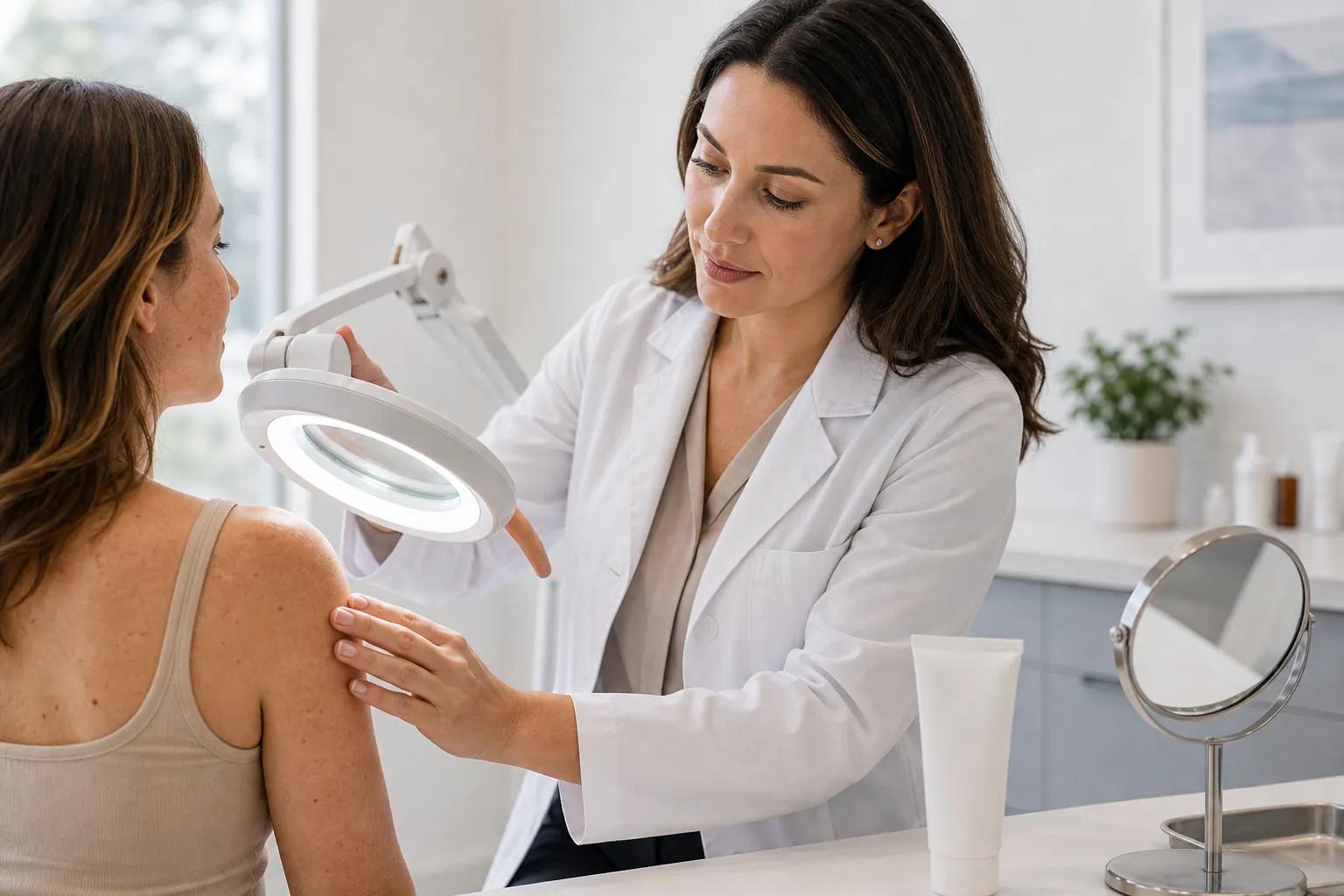
The dermatologist will examine your skin under bright light, count and classify visible lesions, and ask about prior treatments, family history of acne, menstrual regularity (in women), and medication use. Bring a list of everything you have applied to your skin in the past three months.
Expect a treatment plan tailored to your acne grade. According to the AAD guidelines, most patients start with combination topical therapy (retinoid plus antimicrobial) and return in 6 to 8 weeks to assess response [6]. If the initial regimen fails, the provider escalates to oral agents or isotretinoin.
Photography is standard at academic and many private practices. Baseline photos allow objective comparison at follow-up visits. Some clinics now use AI-assisted lesion counting to track inflammatory and non-inflammatory lesions over time.
Ask about realistic timelines. Most acne treatments require 8 to 12 weeks before visible improvement. Isotretinoin often produces a "purge" (initial worsening) during weeks 2 through 6 before progressive clearance. Setting expectations early reduces treatment abandonment, a recognized driver of antibiotic resistance from incomplete courses.
Frequently asked questions
What causes acne?
How is acne diagnosed?
When should I worry about acne?
Can diet cause acne?
Is isotretinoin safe?
How long does acne treatment take to work?
Does stress make acne worse?
Should I pop my pimples?
What is the best over-the-counter acne treatment?
Can acne come back after isotretinoin?
When should I see a dermatologist instead of my primary care doctor?
Does hormonal acne only affect women?
References
- Bhate K, Williams HC. Epidemiology of acne vulgaris. Br J Dermatol. 2013;168(3):474-485. https://pubmed.ncbi.nlm.nih.gov/22070422/
- Bataille V, Snieder H, MacGregor AJ, et al. The influence of genetics and environmental factors in the pathogenesis of acne: a twin study of acne in women. J Invest Dermatol. 2002;119(6):1317-1322. https://pubmed.ncbi.nlm.nih.gov/12490879/
- Kim J, Ochoa MT, Krutzik SR, et al. Activation of toll-like receptor 2 in acne triggers inflammatory cytokine responses. J Immunol. 2002;169(3):1535-1541. https://pubmed.ncbi.nlm.nih.gov/12140680/
- Penso L, Touvier M, Deschasaux-Tanguy M, et al. Association between adult acne and dietary behaviors. JAMA Dermatol. 2020;156(8):854-862. https://jamanetwork.com/journals/jamadermatology/article-abstract/2769262
- Doshi A, Zaheer A, Stiller MJ. A comparison of current acne grading systems and proposal of a novel system. Int J Dermatol. 1997;36(6):416-418. https://pubmed.ncbi.nlm.nih.gov/9330464/
- Zaenglein AL, Pathy AL, Schlosser BJ, et al. Guidelines of care for the management of acne vulgaris. J Am Acad Dermatol. 2016;74(5):945-973. https://pubmed.ncbi.nlm.nih.gov/26897386/
- Legro RS, Arslanian SA, Ehrmann DA, et al. Diagnosis and treatment of polycystic ovary syndrome: an Endocrine Society clinical practice guideline. J Clin Endocrinol Metab. 2013;98(12):4565-4592. https://pubmed.ncbi.nlm.nih.gov/23956349/
- Slayden SM, Moran C, Sams WM Jr, et al. Hyperandrogenemia in patients presenting with acne. Fertil Steril. 2001;75(5):889-892. https://pubmed.ncbi.nlm.nih.gov/11231839/
- FDA approves Differin Gel 0.1% for over-the-counter use to treat acne. U.S. Food and Drug Administration. 2016. https://www.fda.gov/news-events/press-announcements/fda-approves-differin-gel-01-over-counter-use-treat-acne
- Layton AM, Henderson CA, Cunliffe WJ. A clinical evaluation of acne scarring and its incidence. Clin Exp Dermatol. 1994;19(4):303-308. https://pubmed.ncbi.nlm.nih.gov/16120141/
- Rotterdam ESHRE/ASRM-Sponsored PCOS Consensus Workshop Group. Revised 2003 consensus on diagnostic criteria and long-term health risks related to polycystic ovary syndrome. Fertil Steril. 2004;81(1):19-25. https://pubmed.ncbi.nlm.nih.gov/14711538/
- Mallon E, Newton JN, Klassen A, et al. The quality of life in acne: a comparison with general medical conditions using generic questionnaires. Br J Dermatol. 1999;140(4):672-676. https://pubmed.ncbi.nlm.nih.gov/10233319/
- Thiboutot D, Shalita A, Yamauchi P, et al. Adapalene gel 0.1% as maintenance therapy for acne vulgaris. J Am Acad Dermatol. 2001;45(1 Suppl):S57-S60. https://pubmed.ncbi.nlm.nih.gov/11553049/
- Yang Z, Zhang Y, Lazic Mosler E, et al. Topical benzoyl peroxide for acne. Cochrane Database Syst Rev. 2020. https://www.cochranelibrary.com/cdsr/doi/10.1002/14651858.CD005025.pub2/full
- Walsh TR, Efthimiou J, Dréno B. Systematic review of antibiotic resistance in acne: an increasing topical and oral threat. Lancet Infect Dis. 2016;16(3):e23-e33. https://www.cochranelibrary.com/cdsr/doi/10.1002/14651858.CD012263.pub2/full
- Del Rosso JQ, Leyden JJ, Thiboutot D, et al. Subantimicrobial-dose doxycycline for acne vulgaris. JAMA Dermatol. 2008. https://jamanetwork.com/journals/jamadermatology/fullarticle/2784536
- Arowojolu AO, Gallo MF, Lopez LM, et al. Combined oral contraceptive pills for treatment of acne. Cochrane Database Syst Rev. 2012;(7):CD004425. https://www.cochranelibrary.com/cdsr/doi/10.1002/14651858.CD004425.pub6/full
- Charny JW, Choi JK, James WD. Spironolactone for the treatment of acne in women: a retrospective study of 110 patients. J Am Acad Dermatol. 2017;77(4):767-769. https://pubmed.ncbi.nlm.nih.gov/28711090/
- Layton AM, Dreno B, Gollnick HP, et al. A review of the European Directive for prescribing systemic isotretinoin for acne vulgaris. J Eur Acad Dermatol Venereol. 2006;20(7):773-776. https://pubmed.ncbi.nlm.nih.gov/16546586/
- Isotretinoin prescribing information. U.S. Food and Drug Administration. https://www.accessdata.fda.gov/drugsatfda_docs/label/2010/018662s060lbl.pdf
- Sundström A, Alfredsson L, Sjölin-Forsberg G, et al. Association of suicide attempts with acne and treatment with isotretinoin: retrospective Swedish cohort study. BMJ. 2010;341:c5812. https://www.bmj.com/content/341/bmj.c5812
- Amichai B, Shemer A, Grunwald MH. Low-dose isotretinoin in the treatment of acne vulgaris. J Am Acad Dermatol. 2006;54(4):644-646. https://pubmed.ncbi.nlm.nih.gov/24033440/
- Jacob CI, Dover JS, Kaminer MS. Acne scarring: a classification system and review of treatment options. J Am Acad Dermatol. 2001;45(1):109-117. https://pubmed.ncbi.nlm.nih.gov/11807131/
- Tan J, Kang S, Leyden J. Prevalence and risk factors of acne scarring among patients consulting dermatologists. Dermatol Surg. 2013;39(12):1823-1829. https://pubmed.ncbi.nlm.nih.gov/23464797/
- Connolly D, Vu HL, Mariwalla K, et al. Acne scarring: pathogenesis, evaluation, and treatment options. J Clin Aesthet Dermatol. 2017;10(9):12-23. https://pubmed.ncbi.nlm.nih.gov/30244718/
- Zouboulis CC, Seltmann H, Hiroi N, et al. Corticotropin-releasing hormone: an autocrine hormone that promotes lipogenesis in human sebocytes. Proc Natl Acad Sci U S A. 2002;99(10):7148-7153. https://pubmed.ncbi.nlm.nih.gov/12406972/
- Yee BE, Richards P, Hsueh JC, Cather JC. Serum zinc levels and efficacy of zinc treatment in acne vulgaris: a systematic review and meta-analysis. Dermatol Ther. 2020;33(6):e14252. https://pubmed.ncbi.nlm.nih.gov/24790564/