Tadalafil Microdosing Protocols: What the Evidence Actually Says
At a glance
- Regulatory term / Once-daily tadalafil, not “microdosing”
- ED once-daily label / 2.5 mg at about the same time daily; may increase to 5 mg based on efficacy and tolerability
- BPH or ED with BPH label / 5 mg once daily
- ED as-needed label / 10 mg before anticipated sexual activity; may decrease to 5 mg or increase to 20 mg
- Maximum frequency / No more than once per day for most patients
- Food / May be taken without regard to food
- Absolute contraindications / Nitrates and guanylate-cyclase stimulators such as riociguat
- Evidence boundary / Trials support labeled daily regimens; they do not validate sub-2.5 mg “microdoses” or self-directed stacking
- Publication status / Medical and urology review required before publication
First, separate a labeled daily regimen from an invented microdose
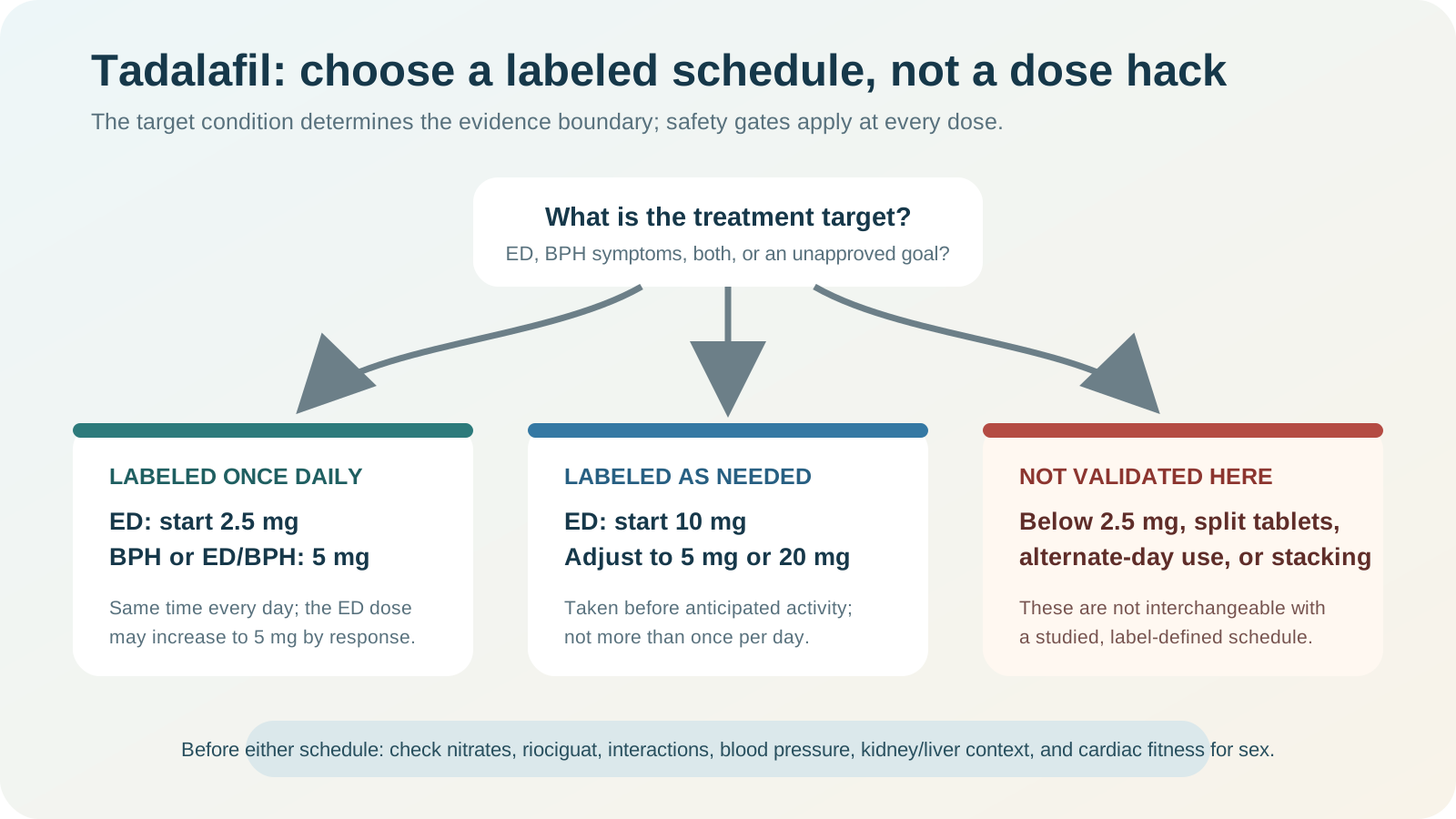
The current U.S. tadalafil label uses two ED schedules. The as-needed schedule starts at 10 mg before anticipated sexual activity and may be adjusted to 5 mg or 20 mg. The once-daily ED schedule starts at 2.5 mg at about the same time every day and may be increased to 5 mg based on efficacy and tolerability. For BPH alone or ED with BPH, the once-daily dose is 5 mg. [1]
Section 2.2 states: “The recommended starting dose of tadalafil tablets for once daily use is 2.5 mg, taken at approximately the same time every day.” [1] This is label language, not an individualized recommendation or an endorsement of HealthRX.com's framework.
Calling 2.5 mg or 5 mg “microdosing” can obscure the most important distinction: these are studied, labeled doses. The label does not establish a protocol below 2.5 mg for ED, does not tell patients to split tadalafil tablets, and says the entire dose should be taken. It also tells patients not to use other ED medicines or ED treatments while taking tadalafil. Those boundaries make self-directed dose splitting or stacking materially different from labeled once-daily treatment.
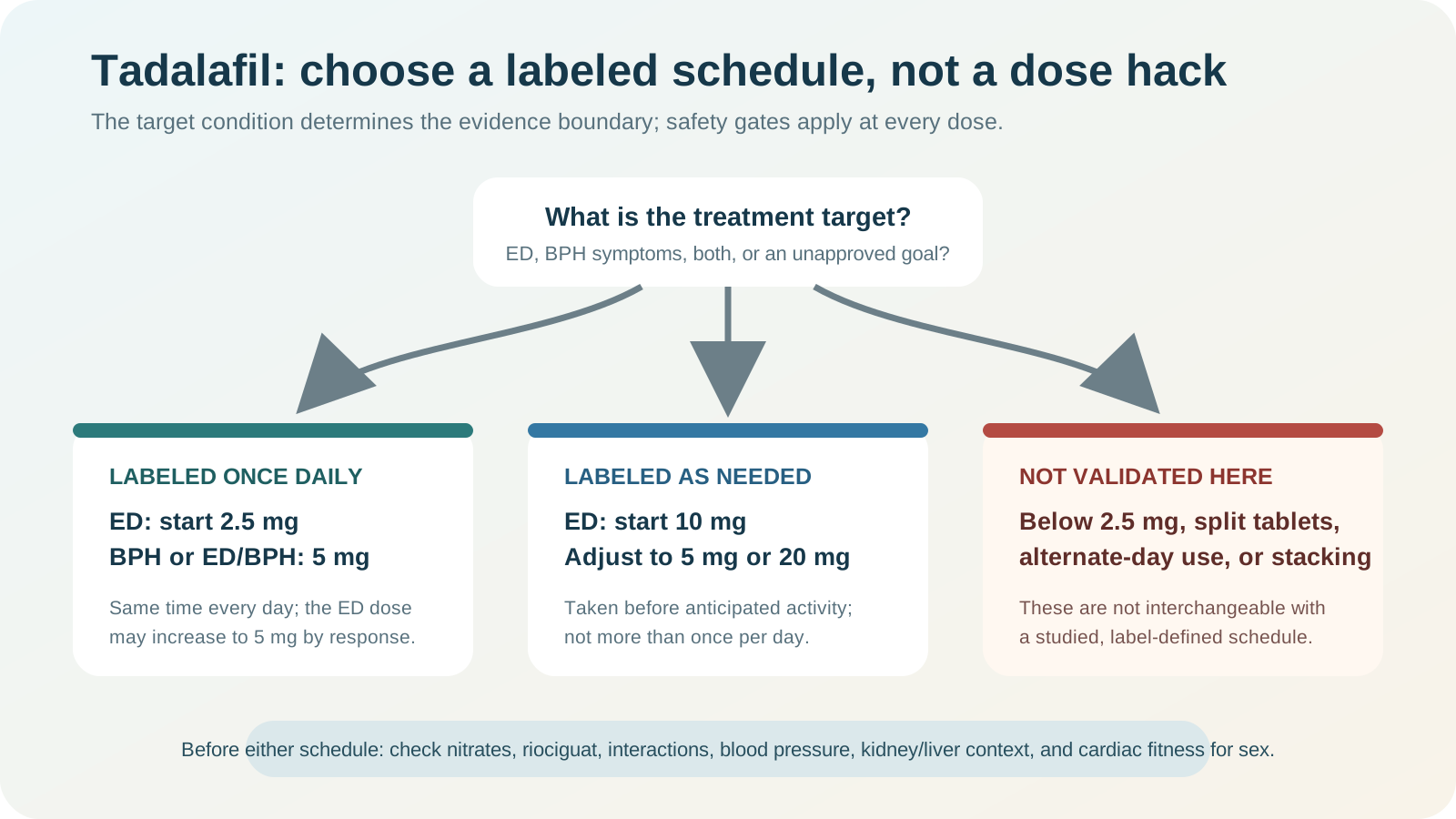
Figure 1. Tadalafil schedule decision map. HealthRX.com editorial synthesis of the current U.S. tadalafil label and the evidence summarized below. It is a discussion aid, not a prescription. Medical and urology review is pending.
What each labeled schedule is designed to do
| Treatment question | Label-defined schedule | What the evidence supports | What it does not settle |
|---|---|---|---|
| ED with a preference for medication availability between doses | 2.5 mg once daily; may increase to 5 mg based on response and tolerability | Placebo-controlled trials show improvement in erectile-function outcomes with 2.5 mg and 5 mg daily | Whether daily use is better for a particular person than as-needed use |
| ED treated around anticipated sexual activity | 10 mg as needed; may decrease to 5 mg or increase to 20 mg | Trials support efficacy up to 36 hours after a dose; sexual stimulation is still required | A guaranteed response window or permission to repeat a dose the same day |
| BPH symptoms | 5 mg once daily | Trials support symptom improvement at 5 mg | Whether urinary symptoms are actually caused by BPH |
| ED and BPH together | 5 mg once daily | A 12-week randomized trial found improvement in both ED and BPH outcomes at 5 mg | Whether tadalafil should replace evaluation for urinary retention, cancer, infection, or neurologic disease |
| A proposed dose below 2.5 mg, tablet splitting, alternate-day “microdosing,” or daily-plus-as-needed stacking | No labeled protocol | No cited trial here validates these as equivalent to the approved schedules | Safety, effectiveness, dose uniformity, and interaction risk |
The distinction between “available every day” and “causes an automatic erection” also matters. Tadalafil does not create an erection without sexual stimulation. Once-daily dosing changes when medication is present; it does not remove the need for arousal or resolve every vascular, neurologic, hormonal, medication-related, or relationship contributor to ED.
What the daily-dose trials actually show
An integrated analysis combined six randomized, double-blind, placebo-controlled studies involving 1,913 men with ED. Participants received placebo, tadalafil 2.5 mg once daily, or tadalafil 5 mg once daily for 12 weeks. Both tadalafil groups improved erectile-function and successful-intercourse measures compared with placebo. The analysis was useful for describing responses across clinical subgroups, but the authors cautioned that the integrated subgroup results were descriptive. [3]
A separate 28-day study randomized 372 men to placebo, tadalafil 2.5 mg daily, or tadalafil 5 mg daily for 14 days before an open-label extension. More men in the 5 mg group reported a successful intercourse attempt than placebo by day 2; the 2.5 mg group separated from placebo on a secondary analysis by day 3. [4] This supports the possibility of benefit within days. It does not establish a universal “full effect” day, and steady-state pharmacokinetics should not be converted into a guaranteed clinical-response deadline.
For men with both ED and BPH symptoms, a 12-week randomized trial compared placebo with tadalafil 2.5 mg and 5 mg once daily. Both doses improved the ED measure, but only 5 mg significantly improved the BPH symptom score versus placebo. [5] That difference matches the label: 2.5 mg is an ED once-daily starting dose, while 5 mg is the once-daily dose for BPH or ED with BPH.
Daily versus as-needed is a preference-sensitive choice
A 2017 systematic review identified six randomized trials with 1,534 participants comparing once-daily and as-needed tadalafil. The pooled erectile-function score did not differ statistically between schedules; two sexual-encounter measures favored daily use, and reported complication rates were similar. [6] The studies varied in dose and design, so this does not prove that daily use is clinically superior.
The defensible conclusion is narrower: both schedules can work. Daily treatment may reduce the need to coordinate a dose with anticipated sexual activity, while as-needed treatment reduces continuous exposure and daily pill burden. Frequency of sexual activity can inform the conversation, but the evidence does not create a universal “two times per week” cutoff.
A safety gate comes before schedule preference
The same contraindications and precautions apply whether someone calls the regimen daily dosing, low-dose treatment, or microdosing.
Do not use tadalafil with nitrates or riociguat
Tadalafil is contraindicated with nitrates in any form and with guanylate-cyclase stimulators such as riociguat because the combinations can lower blood pressure dangerously. [1] This includes prescribed nitroglycerin and recreational nitrites or “poppers.” A smaller tadalafil dose does not erase the contraindication.
If chest pain occurs after tadalafil, tell emergency clinicians when the last dose was taken. Do not self-administer a nitrate while waiting for advice. The label says that, if nitrate treatment is medically necessary in a life-threatening situation, at least 48 hours should have elapsed after the last tadalafil dose and nitrates should be given only under close medical supervision.
Review kidney, liver, blood-pressure, and interacting-drug context
Once-daily tadalafil is not recommended when creatinine clearance is below 30 mL/min or in hemodialysis. For BPH or ED/BPH with creatinine clearance 30 to 50 mL/min, the label starts at 2.5 mg and allows consideration of 5 mg based on individual response. Once-daily use has not been extensively evaluated in mild or moderate hepatic impairment and is not recommended in severe hepatic impairment. [1]
Potent CYP3A4 inhibitors such as ketoconazole or ritonavir can substantially increase tadalafil exposure; the label caps once-daily tadalafil at 2.5 mg in that context. Alpha-blockers, antihypertensives, and substantial alcohol intake can add to blood-pressure lowering. For ED, a patient taking an alpha-blocker should be stable on that therapy before tadalafil is initiated at the lowest recommended dose. For BPH treatment, the label does not recommend tadalafil in combination with an alpha-blocker.
These are prescribing decisions, not a checklist for self-adjustment. A medication list should include prescription drugs, over-the-counter products, supplements, and recreational substances.
Know the symptoms that override routine follow-up
- An erection lasting more than four hours requires immediate medical help.
- Sudden loss or marked decrease of vision requires stopping the PDE5 inhibitor and urgent medical assessment.
- Sudden decrease or loss of hearing, sometimes with ringing in the ears or dizziness, requires stopping tadalafil and prompt medical attention.
- Chest pain, fainting, or severe hypotension symptoms require urgent assessment.
A reproducible way to evaluate a daily-dose proposal
Instead of copying an online “protocol,” bring six questions to the prescriber:
- What is the target? ED, BPH symptoms, both, or an unapproved goal?
- Which labeled schedule is being considered? Once daily or as needed?
- What outcome will be tracked? A defined erectile-function goal, successful attempts, urinary symptom score, adverse effects, or adherence burden?
- What safety gates have been checked? Nitrates, riociguat, alpha-blockers, blood pressure, cardiovascular fitness for sexual activity, kidney and liver function, and CYP3A4 interactions?
- When will the result be reassessed? The date should be long enough to observe a pattern but should not be an invented promise that benefit must occur by a particular day.
- What is the stopping or escalation rule? Lack of benefit, unacceptable adverse effects, a new interacting drug, or a red-flag symptom should produce a defined next action.
A simple record is more useful than changing several variables at once:
| Date | Dose schedule actually used | Sexual or urinary outcome | Headache, back pain, dyspepsia, dizziness, or other effect | New medicine or illness |
|---|---|---|---|---|
| Day recorded | Once daily or as needed; no extra dose | Use the same outcome definition each time | Record severity and timing | Include nitrates, alpha-blockers, CYP3A4 inhibitors, and blood-pressure changes |
This log cannot determine a dose. It can show whether a prescriber is evaluating the schedule that was actually taken rather than a changing mixture of daily, skipped, and extra doses.
What the evidence does not support
The sources reviewed for this page do not support:
- calling doses below 2.5 mg an evidence-based ED protocol;
- assuming a split tablet delivers a validated or uniform “microdose”;
- adding an as-needed tadalafil dose on top of daily tadalafil without prescriber direction;
- mandatory cycling or drug holidays to prevent tolerance;
- using tadalafil as a cardiovascular-performance, workout, cognition, or longevity intervention;
- assuming 2.5 mg is the BPH dose because it is the lowest tablet strength;
- promising that daily use will work by a fixed day or outperform as-needed use for everyone.
The label and trials answer a narrower question: tadalafil has studied once-daily schedules for ED and BPH. They do not turn every low-dose experiment into a medical protocol.
Frequently asked questions
Is 2.5 mg tadalafil a microdose?
Is 5 mg tadalafil every day FDA-approved?
Can I add 10 mg or 20 mg before sex if I already take tadalafil daily?
How quickly does daily tadalafil work?
Is daily tadalafil better than taking it as needed?
Can tadalafil be taken daily with nitrates or poppers if the dose is low?
Does 2.5 mg daily treat BPH?
References
- DailyMed. Tadalafil tablets, U.S. prescribing information. Tadalafil tablets label
- Burnett AL, Nehra A, Breau RH, et al. Erectile Dysfunction: AUA Guideline. American Urological Association. Erectile Dysfunction: AUA Guideline
- Porst H, Gacci M, Büttner H, Henneges C, Boess F. Tadalafil once daily in men with erectile dysfunction: an integrated analysis of data obtained from 1913 patients from six randomized, double-blind, placebo-controlled, clinical studies. Eur Urol. 2014 Feb;65(2):455-64. doi:10.1016/j.eururo.2013.09.037. PMID:24119319. NCT:NCT00381732,NCT00422734,NCT00547183,NCT00836693,NCT00855582. PubMed record
- Seftel A, Goldfischer E, Kim ED, Dula E, Zeigler H, Burns P. Onset of efficacy of tadalafil once daily in men with erectile dysfunction: a randomized, double-blind, placebo controlled trial. J Urol. 2011 Jan;185(1):243-8. doi:10.1016/j.juro.2010.09.035. PMID:21074803. PubMed record
- Egerdie RB, Auerbach S, Roehrborn CG, Costa P, Garza MS, Esler AL, Wong DG, Secrest RJ. Tadalafil 2.5 or 5 mg administered once daily for 12 weeks in men with both erectile dysfunction and signs and symptoms of benign prostatic hyperplasia: results of a randomized, placebo-controlled, double-blind study. J Sex Med. 2012 Jan;9(1):271-81. doi:10.1111/j.1743-6109.2011.02504.x. PMID:21981682. PubMed record
- Peng Z, Yang L, Dong Q, Wei Q, Liu L, Yang B. Efficacy and Safety of Tadalafil Once-a-Day versus Tadalafil On-Demand in Patients with Erectile Dysfunction: A Systematic Review and Meta-Analyses. Urol Int. 2017;99(3):343-352. doi:10.1159/000477496. PMID:28628914. PubMed record