Stopping Vyvanse: Separate Withdrawal From ADHD and Binge-Eating Relapse
What the withdrawal warning actually means
Vyvanse contains lisdexamfetamine, which the body converts to dextroamphetamine. Repeated use can produce physical dependence, including when the prescription is taken as directed. Physical adaptation alone does not establish addiction. [1]
After prolonged stimulant use, an abrupt stop or significant dose reduction can bring low mood, fatigue, disturbed sleep or increased appetite. Some people experience unpleasant dreams or changes in activity and agitation. The label does not give a number of days when these symptoms must start or end. [1]
The reason for a proposed change matters. Appetite loss during treatment, a new mood problem and a question about whether ADHD treatment still helps are different problems. Bring the reason, current prescription and any other medicine changes to the review. A taper copied from another person's experience cannot account for those differences. [1,2]
Why the stopping studies can appear to disagree
A trial can use the word “withdrawal” to describe its design: researchers replace active treatment with placebo. That does not mean its main outcome is a physical withdrawal syndrome.
| Evidence | What it measured | What the result cannot establish |
|---|---|---|
| Adult ADHD randomized withdrawal trial | Return of ADHD symptoms over six weeks in established treatment responders | A six-week withdrawal duration or an individual stopping schedule |
| Adult binge-eating randomized withdrawal trial | Binge-eating relapse over 26 weeks after an initial response | Expected weight gain or the best taper |
| Analysis of three adult binge-eating studies | Self-reported cessation symptoms after therapeutic-dose treatment | That withdrawal never occurs after longer use or in other populations |
| Current prescribing information | Symptoms that can follow prolonged stimulant use and a substantial reduction or stop | A deadline for an individual's recovery |
ADHD symptom return: the six-week study
Brams and colleagues enrolled adults aged 18–55 who had already tolerated and responded to lisdexamfetamine for at least six months. After a three-week open-label phase, 116 participants entered a six-week comparison: 56 continued their dose and 60 received placebo. [3]
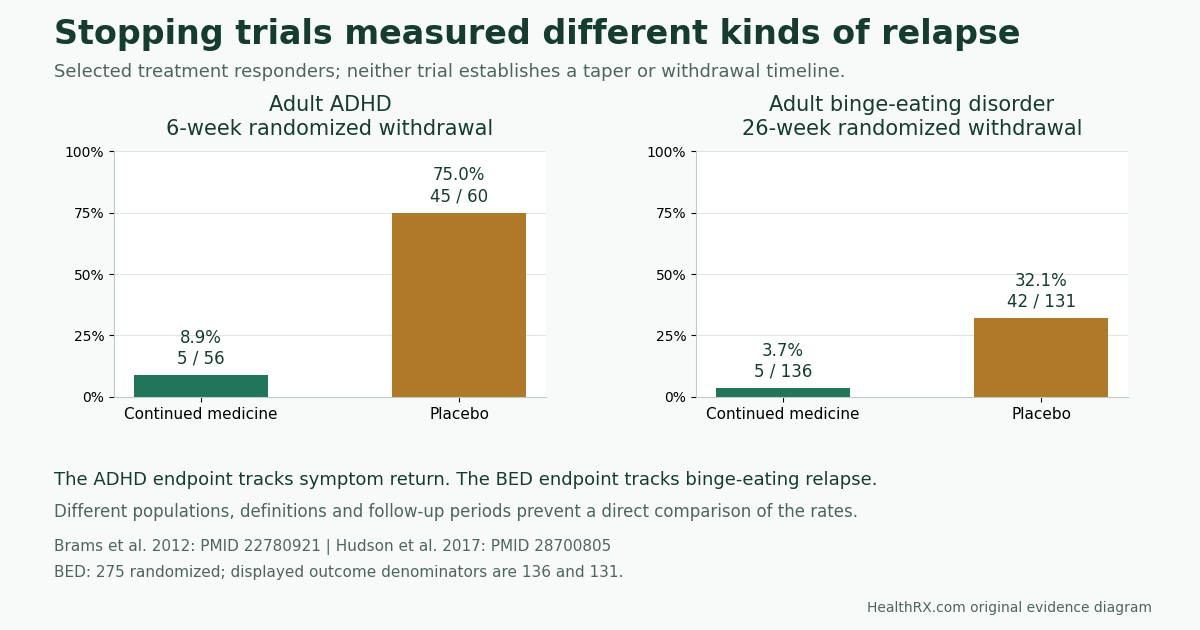
The study's ADHD relapse criteria were met by 5 of 56 participants continuing medicine, or 8.9%, and 45 of 60 receiving placebo, or 75.0%. Most placebo-group relapses appeared by two weeks. Those figures describe a selected responder population and a defined symptom endpoint. They are not a forecast that three quarters of all people who stop Vyvanse will have withdrawal. [3]
Binge-eating relapse: a different endpoint
Hudson and colleagues began with 418 adults in an open-label phase. After 12 weeks, 275 responders were randomized to continued lisdexamfetamine or placebo for 26 weeks. Relapse required worsening in both binge-eating frequency and the study's clinical severity rating. [4]
In the outcome analysis, relapse occurred in 5 of 136 participants continuing medicine, or 3.7%, and 42 of 131 receiving placebo, or 32.1%. Those analysis denominators differ from the 137 and 138 originally randomized. The trial supports planning for binge-eating recurrence after a treatment change; it supplies no personal weight forecast. [4]
Cessation symptoms: a third measurement
A separate analysis by Robertson and colleagues examined three adult binge-eating studies using a self-report cessation-symptom questionnaire. Treatment was at therapeutic doses of 50 or 70 mg, with exposure lasting 12 weeks or up to 38 weeks. The authors found that abrupt termination was not associated with amphetamine withdrawal symptoms at the doses and durations analyzed. [5]
That finding belongs beside the label warning. It describes the studied circumstances; it does not erase the possibility of withdrawal after prolonged use, establish safety for every patient or explain every symptom after stopping. Binge-eating relapse and cessation symptoms also remain separate outcomes. [1,4,5]
A useful review begins before changing the prescription
NICE recommends reviewing ADHD medicine at least annually, considering benefits, adverse effects, work or education, and what happens during missed doses or planned breaks. It supports trials of stopping or reducing treatment when the balance of benefit and harm makes that appropriate. It does not prescribe one taper for everyone. [2]
An annual review is not a reason to wait when a new problem develops. Agree how the prescription will change, which symptoms to track, who to contact and when to reassess. An ADHD alternative also needs its own selection and transition plan; it does not automatically address binge-eating disorder. [1,2,4]
Keep a short record that makes the next conversation concrete:
- The prescribed dose, last dose and date of each agreed change.
- Sleep, mood and appetite changes, with when they began.
- For ADHD, changes in completing tasks, concentration and daily functioning.
- For binge-eating disorder, recurrence of binge episodes and the support already arranged.
- Other prescription or supplement changes and the agreed follow-up date.
The record helps distinguish overlapping explanations. It is not a scoring rule for deciding on a new dose. Severe or worsening symptoms should not be dismissed because an online timeline says the adjustment ought to be temporary. [1,2]
When the next step is assessment, rather than another dose change
Chest pain, shortness of breath or fainting during Vyvanse treatment require urgent medical assessment. New hallucinations, manic symptoms or severe mood changes also need prompt attention. Thoughts of self-harm require immediate help. Do not assume these problems are ordinary withdrawal or manage them by repeatedly stopping and restarting medicine. [1]
A return of familiar ADHD difficulties or binge episodes still deserves follow-up, even without an emergency. The decision may involve revising the treatment plan, adding support or reconsidering whether stopping remains useful. The randomized trials help explain why follow-up matters; they do not determine the right next prescription for an individual. [2–4]
Frequently asked questions
Can I stop Vyvanse cold turkey?
The label warns that an abrupt stop or significant reduction after prolonged stimulant use can produce withdrawal symptoms. It does not give one stopping method for everyone. Agree the change and follow-up with the prescriber, including why you want to stop and how mood, sleep and the treated condition will be monitored. [1,2]
How long does Vyvanse withdrawal last?
The current label does not establish a fixed duration. The six-week ADHD trial measured symptom relapse, and the 26-week binge-eating trial measured recurrence of binge eating; neither supplies a withdrawal clock. Persistent or worsening symptoms need assessment rather than an assumption that they will end on a set day. [1,3,4]
What does a typical Vyvanse taper schedule look like?
These sources do not establish a universal milligram reduction, weekly schedule or alternate-day plan. The label's starting-dose adjustment instructions are not a tested stopping protocol. A single dose must not be divided. Ask for a prescription-specific plan instead of turning capsule contents into an improvised taper. [1,2]
Will I gain weight after stopping Vyvanse?
Increased appetite can occur after prolonged stimulant use is stopped or reduced, but that does not predict how much weight an individual will gain. Vyvanse is not indicated for weight loss. If it treats binge-eating disorder, track binge episodes and arrange support for possible recurrence; the relapse trial did not establish a personal weight forecast. [1,4]
How does Vyvanse work in the brain?
Lisdexamfetamine is a prodrug converted in the body, mainly through activity in red blood cells, to dextroamphetamine. The label states that the exact therapeutic action in ADHD and binge-eating disorder is not known. That mechanism does not establish a dopamine-receptor recovery deadline after stopping. [1]
Are there medications that help with Vyvanse withdrawal symptoms?
The sources here do not establish a specific medicine that reliably shortens withdrawal after prescribed Vyvanse. A new sleep or mood problem needs assessment of its cause. Adding a sedative, supplement or higher antidepressant dose from an online stopping guide can complicate that assessment. [1,2,5]
Can my doctor switch me to a non-stimulant ADHD medication during the taper?
A different ADHD treatment may be considered, but its selection and timing depend on age, previous response, adverse effects and the reason for changing. NICE supports discussing treatment preferences and the balance of benefit and harm. It does not establish a universal overlap schedule for every Vyvanse switch. [2]
Is Vyvanse withdrawal dangerous?
Do not treat a blanket 'harmless' label as a reason to ignore severe symptoms. The prescribing information includes depression and other mood or activity changes among possible withdrawal symptoms. Serious mood changes, thoughts of self-harm, hallucinations or chest symptoms need prompt or urgent assessment, rather than reassurance based on an average timeline. [1]
What is the difference between Vyvanse withdrawal and ADHD symptom return?
Withdrawal can involve mood, sleep, appetite and energy changes after a substantial reduction or stop. ADHD symptom return means renewed problems such as inattention and impaired functioning. They can overlap. The adult ADHD stopping trial measured symptom relapse; it did not establish a waiting period that reliably separates the two in every person. [1,3]
Should I tell my employer or school that I am tapering off Vyvanse?
Disclosure is a personal choice. Before a planned change, consider whether concentration or task completion may be affected and which practical supports would help. You can discuss work or study demands at the medication review without assuming that everyone needs to disclose a prescription or follow the same schedule. [2]
Can I restart Vyvanse if the taper does not go well?
Returning symptoms are a reason to contact the prescriber and reassess the plan. They do not establish that restarting the last tolerated dose is automatically appropriate, particularly if the original reason for stopping was an adverse effect or a new health problem. Record what changed and when instead of repeatedly adjusting the prescription yourself. [1,2]
Does Vyvanse cause physical dependence?
It may, including after prolonged use as directed. Physical dependence describes adaptation that can produce symptoms after an abrupt stop or significant reduction. It does not by itself establish addiction. The adult binge-eating cessation analysis found no associated withdrawal symptoms in its studied circumstances; that result does not negate the label's broader warning. [1,5]
References
Sources checked October 14, 2026.
- DailyMed. VYVANSE prescribing information, revised April 2026. Current brand label.
- NICE. NG87, review of medication and discontinuation. Recommendations.
- Brams M et al. Maintenance of efficacy of lisdexamfetamine in adults with ADHD: randomized withdrawal design. 2012. PubMed.
- Hudson JI et al. Efficacy of lisdexamfetamine in adults with moderate to severe binge-eating disorder: a randomized clinical trial. 2017. PubMed.
- Robertson B et al. Assessment of amphetamine withdrawal symptoms of lisdexamfetamine treatment for adults with binge-eating disorder. 2020. PubMed.