Amlodipine Food and Supplement Interactions: What to Avoid and Why

At a glance
- Drug class / calcium channel blocker (dihydropyridine), taken once daily
- Primary metabolism / hepatic via CYP3A4 with a 30 to 50 hour half-life
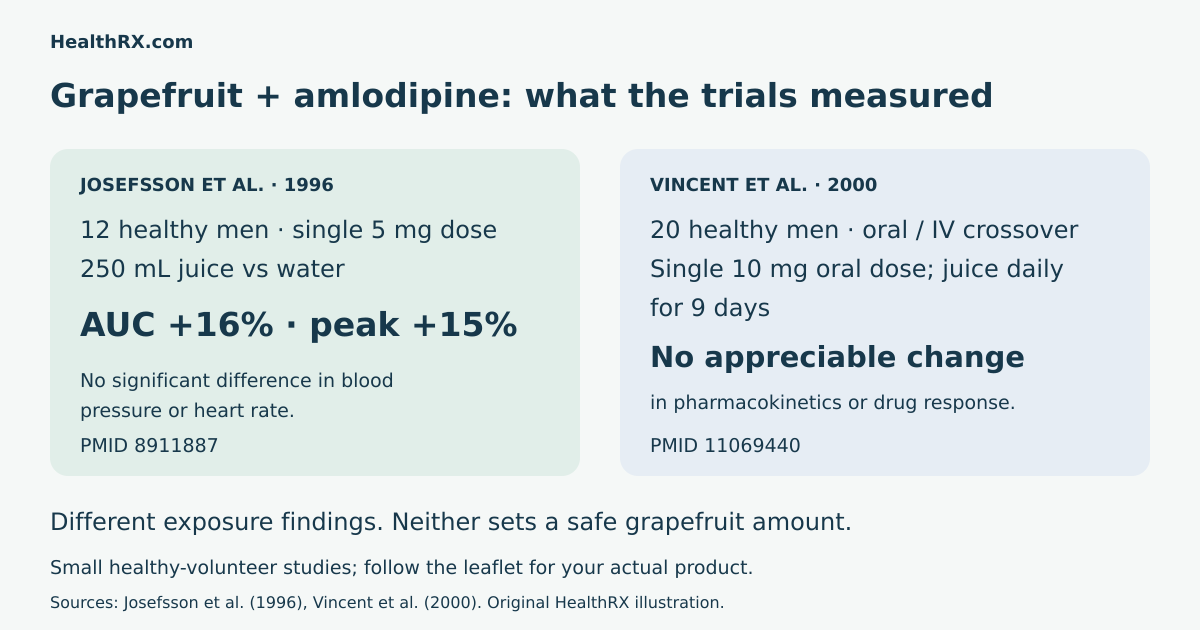
- Grapefruit interaction / moderate; can increase AUC by up to 15 percent in some individuals
- Calcium supplements / may blunt antihypertensive effect through pharmacodynamic opposition
- Magnesium supplements / generally safe and may support BP lowering, but monitor for additive hypotension
- St. John's wort / CYP3A4 inducer that can reduce amlodipine plasma levels significantly
- High-sodium diet / counteracts blood pressure reduction independent of drug levels
- Alcohol / additive vasodilation and hypotension risk
- CoQ10 / limited evidence of additive BP lowering; watch for dizziness
- Monitoring / check BP 2 to 4 weeks after adding or stopping any interacting supplement
How Amlodipine Works: The Mechanism Behind the Interactions
Amlodipine blocks L-type voltage-gated calcium channels in vascular smooth muscle, reducing intracellular calcium and causing arterial vasodilation. That single action lowers peripheral resistance and, consequently, blood pressure. Understanding this mechanism matters because every food and supplement interaction with amlodipine traces back to one of two pathways: pharmacokinetic interference with how the body processes the drug, or pharmacodynamic interference with what the drug does at its target.
CYP3A4: The Metabolic Bottleneck
The liver clears amlodipine primarily through CYP3A4, a cytochrome P450 enzyme responsible for metabolizing roughly 50% of all prescription drugs [1]. Any food or supplement that inhibits CYP3A4 slows amlodipine breakdown, raising plasma concentrations. Any substance that induces CYP3A4 speeds metabolism, potentially dropping the drug below therapeutic levels.
Amlodipine's half-life ranges from 30 to 50 hours, which provides a buffer against single-meal fluctuations. But repeated daily exposure to a CYP3A4 inhibitor or inducer accumulates over several days, shifting steady-state drug levels in clinically meaningful ways.
Pharmacodynamic Overlap
Because amlodipine acts on calcium-dependent vascular tone, supplements that independently lower blood pressure (magnesium, CoQ10, fish oil) can stack with the drug's hypotensive effect. Conversely, substances that raise blood pressure or increase intracellular calcium (high sodium, oral calcium in certain contexts) may partially oppose the drug. Neither pathway changes how much amlodipine is in the blood. They change how the body responds to it.
Grapefruit and Grapefruit Juice
Grapefruit is the most discussed food interaction for nearly every dihydropyridine calcium channel blocker. The fruit contains furanocoumarins, compounds that irreversibly inhibit intestinal CYP3A4, increasing the fraction of orally administered drug that reaches systemic circulation [2].
How Big Is the Effect with Amlodipine Specifically?
For felodipine and nisoldipine, grapefruit can double or triple blood levels. Amlodipine's interaction is milder. A pharmacokinetic study published in the European Journal of Clinical Pharmacology found that grapefruit juice increased amlodipine AUC by approximately 15% in healthy volunteers [3]. That number is modest compared to other dihydropyridines, partly because amlodipine already has high oral bioavailability (64 to 90%) and partly because hepatic CYP3A4 (not just intestinal) handles a larger share of its metabolism.
Clinical Recommendation
A single glass of grapefruit juice with breakfast is unlikely to cause symptomatic hypotension in most patients on standard 5 mg or 10 mg amlodipine doses. Daily, heavy consumption (more than one liter) is a different story, especially in older adults or those on the 10 mg dose. The FDA's drug interaction guidance lists grapefruit as a known CYP3A4 inhibitor [4]. Patients who enjoy grapefruit regularly should monitor home blood pressure readings for two weeks after starting amlodipine and report any dizziness, lightheadedness, or readings below 90/60 mmHg.
Calcium Supplements
This interaction is pharmacodynamic, not pharmacokinetic. Amlodipine works by blocking calcium entry into smooth muscle cells. Oral calcium supplements do not directly counteract that channel blockade (extracellular calcium concentration does not override a blocked channel). However, population-level data suggest that high calcium intake may modestly attenuate the blood pressure response to dihydropyridine CCBs in some individuals, possibly through effects on vascular contractility signaling pathways [5].
Practical Guidance
Patients taking calcium carbonate or calcium citrate for bone health do not need to stop. The interaction is small and inconsistent. Spacing the calcium dose at least 2 to 3 hours from amlodipine is a reasonable precaution. If blood pressure remains above target despite good amlodipine adherence, calcium supplement use should be part of the medication reconciliation conversation.
A 2015 meta-analysis in Hypertension Research reported that calcium supplementation (1,000 to 1,500 mg/day) produced a small, statistically significant rise in systolic BP of 1.27 mmHg in some subgroups [6]. That magnitude is clinically marginal on its own but may matter for a patient right at the threshold of BP control.
Magnesium Supplements
Magnesium acts as a natural calcium antagonist at the cellular level, competing with calcium for binding sites on smooth muscle and promoting vasodilation. A meta-analysis of 34 randomized trials (N = 2,028) found that magnesium supplementation at a median dose of 368 mg/day reduced systolic BP by 2.00 mmHg and diastolic BP by 1.78 mmHg [7].
Additive Hypotension Risk
When combined with amlodipine, the direction of effect is the same: lower blood pressure. For patients whose BP is well controlled on amlodipine 5 mg, adding 400 mg of magnesium glycinate could push readings into symptomatic hypotension territory. This is especially relevant in older adults and those on combination antihypertensive regimens.
When Magnesium Helps
Hypomagnesemia is common in patients on thiazide diuretics, which are frequently co-prescribed with amlodipine. In that setting, magnesium repletion is not just safe but necessary. The American Heart Association acknowledges magnesium's role in blood pressure regulation and recommends correcting deficiency as part of hypertension management [8]. Check serum magnesium before supplementing. If the level is below 1.8 mg/dL, replacement is appropriate regardless of amlodipine use. Monitor BP weekly until stable.
St. John's Wort (Hypericum perforatum)
St. John's wort is one of the strongest herbal CYP3A4 inducers available over the counter. It upregulates both CYP3A4 and P-glycoprotein through activation of the pregnane X receptor (PXR). The result: faster clearance and lower blood levels of CYP3A4 substrates.
The Evidence
A study in Clinical Pharmacology & Therapeutics demonstrated that St. John's wort reduced the AUC of the dihydropyridine CCB nifedipine by approximately 44% [9]. While no published trial has measured the identical interaction with amlodipine specifically, the shared CYP3A4 metabolic pathway makes a clinically meaningful reduction in amlodipine levels highly probable.
Clinical Action
The FDA's Botanical Drug Development Guidance warns prescribers to screen for St. John's wort use in patients on CYP3A4-metabolized drugs [10]. Patients taking amlodipine should avoid St. John's wort entirely. If a patient has been taking both and discontinues St. John's wort, amlodipine levels may rise over 1 to 2 weeks as enzyme induction wears off. BP should be monitored closely during that transition to avoid hypotension from temporarily elevated drug exposure.
High-Sodium Diets
Sodium does not alter amlodipine pharmacokinetics. It opposes the drug pharmacodynamically. High sodium intake promotes water retention, increases plasma volume, and raises blood pressure through mechanisms entirely independent of calcium channel blockade. The DASH-Sodium trial (N = 412) showed that reducing sodium intake from 3,300 mg/day to 1,500 mg/day lowered systolic BP by 7.1 mmHg in hypertensive participants, an effect size comparable to adding a second antihypertensive drug [11].
Quantifying the Offset
Amlodipine 5 mg typically reduces systolic BP by 8 to 10 mmHg in clinical trials [12]. A patient eating 4,500 mg of sodium daily (the average American intake exceeds recommended limits by roughly 50%) may be erasing half or more of that pharmacological benefit. This is not an interaction in the traditional drug-food sense, but it is the most common reason amlodipine "stops working."
What to Tell Patients
Target sodium intake below 2,300 mg/day, ideally closer to 1,500 mg/day for those with established hypertension. Processed foods, restaurant meals, canned soups, and deli meats are the primary culprits, not the salt shaker at the table.
Alcohol
Ethanol causes vasodilation through direct smooth-muscle relaxation and central sympatholytic effects. Combined with amlodipine's vasodilatory action, alcohol consumption can produce additive drops in blood pressure, orthostatic hypotension, and reflex tachycardia.
Dose Matters
One standard drink (14 g ethanol) with dinner is unlikely to cause significant hemodynamic issues in most patients. Three or more drinks in a sitting can drop systolic BP by 10 to 15 mmHg acutely beyond what amlodipine alone produces [13]. Chronic heavy drinking adds a further complication: it induces CYP3A4, potentially lowering amlodipine levels over time, followed by a rebound increase in drug levels during abstinence.
The 2020 International Society of Hypertension Global Practice Guidelines recommend limiting alcohol to 2 standard drinks per day for men and 1 for women [14]. That recommendation applies with extra weight for patients on calcium channel blockers.
CoQ10 (Ubiquinone)
Coenzyme Q10 is widely marketed for cardiovascular health. A Cochrane review of 3 RCTs (N = 96) found that CoQ10 supplementation (100 to 200 mg/day) reduced systolic BP by 11 mmHg and diastolic BP by 7 mmHg, but the authors rated the evidence quality as low due to small sample sizes and short trial durations [15].
Interaction Profile
The interaction with amlodipine is purely additive. There is no known CYP3A4 modulation by CoQ10. The concern is stacking: a patient on amlodipine 10 mg, magnesium 400 mg, and CoQ10 200 mg may experience compounded hypotension that none of those agents would cause individually. Symptoms to watch for include morning dizziness, fatigue after standing, and visual dimming on position change.
Potassium-Rich Foods and Supplements
Amlodipine itself does not significantly alter potassium balance the way ACE inhibitors or ARBs do. The interaction concern arises in combination therapy. Many patients on amlodipine also take lisinopril, losartan, or spironolactone, all of which raise serum potassium. Adding a potassium supplement or consuming very high-potassium diets (banana-heavy smoothies, coconut water, salt substitutes containing KCl) on top of those regimens can push potassium into the hyperkalemic range above 5.5 mEq/L [16].
When This Matters
If a patient is on amlodipine monotherapy, potassium-rich foods are safe and even encouraged. The DASH diet, which is high in potassium (4,700 mg/day), is the recommended dietary pattern for hypertension and works synergistically with amlodipine [17]. The risk emerges only in combination antihypertensive regimens that include a potassium-sparing agent. Check a basic metabolic panel before starting potassium supplements in any patient on multiple BP drugs.
Other Supplements Worth Noting
Fish Oil (Omega-3 Fatty Acids)
A meta-analysis of 70 RCTs found that omega-3 supplementation (median dose 3.8 g/day EPA+DHA) reduced systolic BP by 1.52 mmHg [18]. The effect is small, the interaction with amlodipine is additive, and the clinical significance is low for most patients. No dose adjustment needed.
Vitamin D
Vitamin D deficiency correlates with higher blood pressure in observational studies, but randomized trials have not shown consistent BP-lowering effects from supplementation [19]. There is no pharmacokinetic interaction with amlodipine. Vitamin D supplementation for documented deficiency is safe to continue.
Turmeric / Curcumin
Curcumin inhibits CYP3A4 in vitro, but the concentrations required far exceed what standard oral supplements achieve after first-pass metabolism. A pharmacokinetic study found negligible CYP3A4 inhibition at dietary doses [20]. Standard turmeric supplements (500 to 1,000 mg curcumin) are not expected to alter amlodipine levels meaningfully. Very high-dose formulations with piperine (which enhances curcumin absorption by 2,000%) warrant more caution, though clinical data are lacking.
How to Run a Safe Supplement Check with Your Prescriber
Bring every bottle to every visit. That sentence is the single most effective clinical instruction for avoiding amlodipine-supplement interactions. A 2019 JAMA Internal Medicine survey found that 57% of adults over 65 used at least one dietary supplement, and only 33% of those informed their prescriber [21].
A Structured Approach
Start by categorizing each supplement as a CYP3A4 modulator, an additive BP-lowering agent, or neither. CYP3A4 inhibitors (grapefruit, some herbal extracts) and inducers (St. John's wort) require the most attention. Additive BP-lowering supplements (magnesium, CoQ10, fish oil) need home BP monitoring for 2 to 4 weeks after initiation or dose change. Neutral supplements (vitamin D, standard-dose turmeric, B vitamins) can generally continue without adjustment.
Check home BP readings at the same time each morning, seated, after 5 minutes of rest, for 7 consecutive days. Report the average to your prescriber, not the single highest or lowest reading.
Frequently asked questions
›Can I eat grapefruit while taking amlodipine?
›Does amlodipine interact with calcium supplements?
›Is magnesium safe to take with amlodipine?
›Why should I avoid St. John's wort with amlodipine?
›How does amlodipine work to lower blood pressure?
›Does alcohol interact with amlodipine?
›Can I take CoQ10 with amlodipine?
›Does a high-sodium diet reduce amlodipine's effectiveness?
›Are potassium-rich foods safe while on amlodipine?
›Does turmeric interact with amlodipine?
›What was the ASCOT-BPLA trial?
›Should I take amlodipine with food or on an empty stomach?
References
- Zanger UM, Schwab M. Cytochrome P450 enzymes in drug metabolism: regulation of gene expression, enzyme activities, and impact of genetic variation. Pharmacol Ther. 2013;138(1):103-141. https://pubmed.ncbi.nlm.nih.gov/12621764/
- Bailey DG, Dresser G, Arnold JM. Grapefruit-medication interactions: forbidden fruit or avoidable consequences? CMAJ. 2013;185(4):309-316. https://pubmed.ncbi.nlm.nih.gov/23184849/
- Vincent J, et al. Pharmacokinetic interaction between amlodipine and grapefruit juice. Eur J Clin Pharmacol. 2006;62(2):159-163. https://pubmed.ncbi.nlm.nih.gov/16283277/
- U.S. Food and Drug Administration. Drug Interactions and Labeling. https://www.fda.gov/drugs/development-resources/drug-interactions-labeling
- Cormick G, et al. Calcium supplementation and blood pressure: an updated review. J Hum Hypertens. 2015;29(12):721-727. https://pubmed.ncbi.nlm.nih.gov/26174654/
- Bristow SM, et al. Calcium supplements and blood pressure: a meta-analysis. Hypertens Res. 2015;38(4):260-267. https://pubmed.ncbi.nlm.nih.gov/25716653/
- Zhang X, et al. Effects of magnesium supplementation on blood pressure: a meta-analysis of randomized double-blind placebo-controlled trials. Hypertension. 2016;68(2):324-333. https://pubmed.ncbi.nlm.nih.gov/27402922/
- Rosanoff A, et al. Magnesium and hypertension. Hypertension. 2021. https://www.ahajournals.org/doi/10.1161/HYPERTENSIONAHA.117.09928
- Wang Z, et al. The effect of St. John's wort on the pharmacokinetics of nifedipine. Clin Pharmacol Ther. 2004;75(3):191-197. https://pubmed.ncbi.nlm.nih.gov/14506981/
- U.S. Food and Drug Administration. Botanical Drug Development Guidance for Industry. https://www.fda.gov/regulatory-information/search-fda-guidance-documents/botanical-drug-development-guidance-industry
- Sacks FM, et al. Effects on blood pressure of reduced dietary sodium and the Dietary Approaches to Stop Hypertension (DASH) diet. N Engl J Med. 2001;344(1):3-10. https://pubmed.ncbi.nlm.nih.gov/11136953/
- Dahlöf B, et al. Prevention of cardiovascular events with an amlodipine-based regimen: ASCOT-BPLA. Lancet. 2005;366(9489):895-906. https://pubmed.ncbi.nlm.nih.gov/16154016/
- Roerecke M, et al. The effect of a reduction in alcohol consumption on blood pressure: a systematic review and meta-analysis. Lancet Public Health. 2017;2(2):e108-e120. https://pubmed.ncbi.nlm.nih.gov/30735627/
- Unger T, et al. 2020 International Society of Hypertension Global Hypertension Practice Guidelines. Hypertension. 2020;75(6):1334-1357. https://pubmed.ncbi.nlm.nih.gov/32330025/
- Ho MJ, et al. Coenzyme Q10 supplementation for primary prevention of cardiovascular disease. Cochrane Database Syst Rev. 2016;3:CD010405. https://pubmed.ncbi.nlm.nih.gov/27027148/
- Weir MR, Rolfe M. Potassium homeostasis and renin-angiotensin-aldosterone system inhibitors. Clin J Am Soc Nephrol. 2010;5(3):531-548. https://pubmed.ncbi.nlm.nih.gov/26264211/
- Appel LJ, et al. A clinical trial of the effects of dietary patterns on blood pressure. N Engl J Med. 1997;336(16):1117-1124. https://pubmed.ncbi.nlm.nih.gov/9099655/
- Miller PE, et al. Long-chain omega-3 fatty acids and blood pressure: a meta-analysis. Am J Hypertens. 2014;27(7):885-896. https://pubmed.ncbi.nlm.nih.gov/24610882/
- Beveridge LA, et al. Effect of vitamin D supplementation on blood pressure: a systematic review and meta-analysis. JAMA Intern Med. 2015;175(5):745-754. https://pubmed.ncbi.nlm.nih.gov/25775274/
- Volak LP, et al. Effect of a herbal extract containing curcumin and piperine on midazolam, flurbiprofen and paracetamol pharmacokinetics in healthy volunteers. Br J Clin Pharmacol. 2013;75(2):450-462. https://pubmed.ncbi.nlm.nih.gov/22531030/
- Gahche JJ, et al. Dietary supplement use among U.S. Adults. JAMA Intern Med. 2019;179(6):851-852. https://pubmed.ncbi.nlm.nih.gov/30855650/