
Insulin Resistance: Causes, Symptoms, Diagnosis, and How to Reverse It
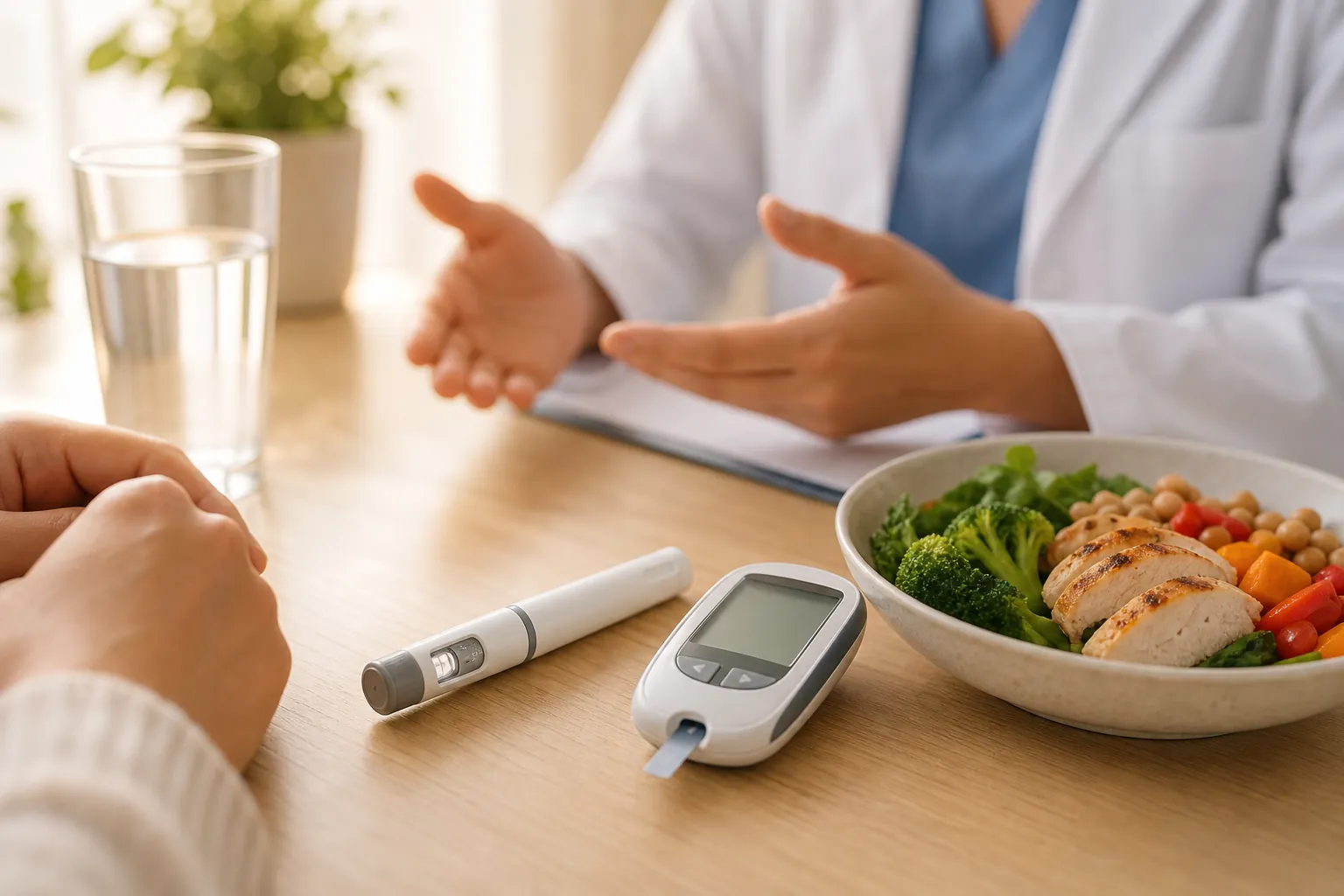
Insulin resistance, prediabetes, type 2 diabetes, gestational diabetes, and type 1 diabetes are related but distinct terms, and mixing them up leads to wrong expectations about treatment. Insulin resistance is a lab- and physiology-based description (often estimated with the HOMA-IR calculation). Prediabetes is a specific, guideline-defined glucose range. Type 2 diabetes is the diagnosis that follows when insulin resistance and declining beta-cell output push glucose past diagnostic thresholds. Type 1 diabetes is an autoimmune disease with a different mechanism and is not primarily a story of insulin resistance. This article focuses on insulin resistance and its most common downstream condition, prediabetes/type 2 diabetes, with a separate section on how the other populations differ.
The core, quotable answer: Insulin resistance means muscle, liver, and fat tissue need more insulin than normal to move glucose out of the blood and to suppress the liver's glucose output; the resulting compensatory rise in insulin (hyperinsulinemia) can keep fasting glucose looking normal for years before beta-cell output starts to fail. In the Diabetes Prevention Program (DPP), a large NIH-funded randomized trial in adults with prediabetes, a structured lifestyle intervention that produced modest weight loss reduced progression to type 2 diabetes by roughly 58% over about three years, outperforming metformin in the same trial. That result establishes lifestyle change as the best-evidenced first step for insulin resistance associated with prediabetes; it does not establish that lifestyle change alone reverses insulin resistance once beta-cell failure and overt type 2 diabetes have already set in, and individual response varies.
What insulin resistance actually is
Under normal conditions, pancreatic beta cells secrete enough insulin to keep fasting blood glucose in a normal range (roughly 70-99 mg/dL). When tissues become resistant to insulin's signal, the pancreas compensates by secreting substantially more insulin than usual. This compensatory hyperinsulinemia can mask the problem for years: fasting glucose may still look normal even though insulin levels required to achieve that result have climbed. Eventually beta-cell secretory capacity declines, insulin output can no longer fully compensate, and fasting glucose rises into the prediabetes range (100-125 mg/dL) or the diabetes range (126 mg/dL or higher).
The American Diabetes Association's Standards of Care defines prediabetes using any of three criteria: fasting plasma glucose 100-125 mg/dL, a 2-hour oral glucose tolerance test (OGTT) value of 140-199 mg/dL, or HbA1c 5.7-6.4%. Each of these ranges reflects underlying insulin resistance even before diabetes has developed (ADA Standards of Care).
Why insulin resistance develops
No single pathway explains every case; several overlapping mechanisms are described in the physiology and clinical literature:
- Ectopic fat accumulation. Triglycerides stored inside muscle fibers and liver cells (rather than in normal subcutaneous fat) generate lipid byproducts that interfere with insulin receptor signaling. Liver fat content in particular tracks closely with measures of insulin resistance, independent of total body weight.
- Chronic low-grade inflammation. In obesity, immune cells inside fat tissue release inflammatory signaling molecules that also interfere with insulin signaling. This is one reason visceral (abdominal) fat behaves differently, metabolically, than fat stored elsewhere.
- Reduced muscle mitochondrial capacity. Sedentary behavior and aging are associated with reduced capacity of muscle cells to burn fat, allowing lipid intermediates to accumulate rather than being used for energy.
- Hormonal shifts, particularly estrogen decline. Estrogen has known effects on glucose transporter expression in muscle and liver. Observational data describe measurably lower insulin-stimulated glucose uptake in postmenopausal women compared with premenopausal women of similar body mass index, though the exact magnitude varies across studies and should be confirmed against the primary literature before being quoted as a fixed figure.
- Poor or short sleep. Sleep-restriction studies have reported meaningful acute reductions in insulin sensitivity after even a single night of severely curtailed sleep, and chronic short sleep and shift work are independently associated with higher type 2 diabetes risk in cohort studies.
Who is at higher risk
Risk factors with reasonably consistent support across observational studies and guidelines include:
- Excess weight, especially visceral (abdominal) fat
- Physical inactivity, since skeletal muscle accounts for the large majority of insulin-stimulated glucose disposal
- A first-degree relative with type 2 diabetes
- Polycystic ovary syndrome (PCOS), where a majority of affected women show insulin resistance regardless of body weight
- A history of gestational diabetes, which is associated with a substantially higher lifetime risk of later type 2 diabetes
- Age over 45, reflecting age-related declines in muscle mass and mitochondrial function
- Certain medications, including glucocorticoids, some antipsychotics (notably olanzapine and clozapine), and some antiretrovirals
- Race and ethnicity: Black, Hispanic, Asian, and Native American individuals in US population studies tend to develop type 2 diabetes at lower BMI thresholds than white individuals, which is why some screening guidance uses lower BMI cutoffs for these groups
The CDC's National Diabetes Statistics Report has estimated that a large share of US adults have prediabetes and that most are unaware of it; because this figure is updated periodically, readers should check the current release rather than rely on a fixed number from an older cycle (CDC diabetes data, figures current as of the most recent published report).
How insulin resistance is diagnosed, and which test to ask about
There is no single, universally required test for insulin resistance itself; clinicians typically rely on a combination of standard glucose markers plus, in some settings, insulin-based calculations.
Fasting plasma glucose and HbA1c are the most commonly used first-line tests and are part of routine metabolic panels.
Fasting insulin and HOMA-IR. The Homeostatic Model Assessment of Insulin Resistance is calculated from fasting insulin and fasting glucose. Higher values suggest greater insulin resistance, and this calculation correlates reasonably well with the euglycemic clamp technique used in research, though HOMA-IR is not standardized across labs and assay methods, so a single cutoff should not be treated as diagnostic on its own.
Oral glucose tolerance test (OGTT). A 2-hour glucose value of 140-199 mg/dL identifies impaired glucose tolerance and can catch people whose fasting glucose looks normal because fasting suppresses liver glucose output even when muscle glucose uptake is impaired.
Lipid pattern. A high triglyceride-to-HDL ratio is associated with insulin resistance in several observational studies, though exact cutoffs differ by population and should not be treated as a stand-alone diagnostic threshold.
Imaging. Liver ultrasound or elastography-based tools can identify fatty liver, which is common alongside hepatic insulin resistance, though imaging findings alone do not diagnose insulin resistance.
The ADA recommends screening adults 35 and older, and adults of any age with a BMI of 25 kg/m2 or higher plus an additional risk factor, using fasting glucose or HbA1c, repeated periodically if normal (ADA Standards of Care).
Ongoing research is trying to move beyond fasting glucose and HbA1c toward broader biochemical panels that might flag prediabetes earlier. A recent analysis of health-examination data attempted to identify multivariable biochemical predictors of prediabetes beyond the standard glucose markers; this is exploratory work, not a validated clinical test, and any specific predictor from it should be verified against the full published study before being used to guide care (multivariable predictor analysis, 2026).
From insulin resistance to prediabetes to type 2 diabetes
Prediabetes is not a neutral waiting period. Observational data associate it with early microvascular changes and elevated cardiovascular risk even before a diabetes diagnosis. Cohort studies estimate that a meaningful share of people with prediabetes progress to type 2 diabetes within about a decade if untreated, though the exact annual conversion rate varies by population and by how aggressively lifestyle change is pursued.
By the time type 2 diabetes is diagnosed, a substantial portion of functional beta-cell mass has typically already been lost, which is one reason clinicians emphasize acting during the insulin-resistance and prediabetes stage rather than waiting for a diabetes diagnosis.
Type 1 diabetes is a different disease. It results from autoimmune destruction of beta cells, so insulin production largely stops regardless of insulin resistance; people with type 1 diabetes require exogenous insulin from diagnosis and cannot manage the condition through lifestyle change alone, though peripheral insulin resistance can additionally develop in people with long-standing type 1 diabetes, especially if they are overweight.
Gestational diabetes reflects a combination of pregnancy-related insulin resistance (driven by placental hormones, which physiologically reduce insulin sensitivity in the third trimester) and insufficient beta-cell reserve to fully compensate. It is typically diagnosed with a 75-gram OGTT at 24-28 weeks of pregnancy using ADA-specified glucose thresholds (ADA Standards of Care). Large observational data (the HAPO study) found a continuous relationship between maternal glucose level and adverse perinatal outcomes across the glucose range, not just above a fixed cutoff, which is part of why diagnostic thresholds were set relatively conservatively.
Does lifestyle change actually reverse it? What the trial evidence shows
This is the best-supported part of the evidence base, largely because of large, long-running randomized trials.
Weight loss. The Diabetes Prevention Program randomized adults with prediabetes to intensive lifestyle intervention, metformin, or placebo. The lifestyle group achieved modest average weight loss and roughly a 58% reduction in diabetes incidence over about 2.8 years, outperforming the metformin arm (about a 31% reduction). Long-term follow-up of the same cohort reported durable benefit even after structured coaching ended. Exact percentages and follow-up details should be checked against the original DPP and DPP Outcomes Study publications before being cited in a clinical context.
Aerobic exercise. Meta-analyses of structured aerobic exercise trials have reported meaningful reductions in HOMA-IR independent of weight change, with a dose-response pattern: about 150 minutes per week of moderate-intensity activity appears to be a reasonable minimum, with further benefit from more.
Resistance training. Randomized trials combining aerobic and resistance training in adults with prediabetes have reported greater improvement in glycemic measures than aerobic training alone, consistent with the idea that added muscle mass expands the body's capacity to take up glucose.
Dietary pattern. No single diet has been shown to be uniquely superior for insulin resistance, but the most consistent trial evidence favors reducing refined carbohydrates and ultra-processed foods and increasing fiber. The PREDIMED trial found a lower rate of new-onset type 2 diabetes with a Mediterranean dietary pattern compared with a low-fat control diet over several years of follow-up. Lower-carbohydrate approaches tend to produce faster early reductions in fasting glucose and may be useful for people who also have fatty liver, though long-term comparative data across dietary patterns are more limited than the Mediterranean-diet evidence.
Sleep. Because acute sleep restriction has been shown in controlled studies to reduce insulin sensitivity, prioritizing 7-9 hours of sleep is a low-cost intervention that is often underemphasized relative to diet and exercise.
When does medication make sense?
Medication is generally added when lifestyle change alone has not achieved an adequate result over a defined trial period, or when a clinician judges the person's overall risk (BMI, cardiovascular risk, HOMA-IR trend) warrants earlier pharmacologic support.
Metformin. Metformin is FDA-approved to treat type 2 diabetes; its use specifically for preventing or delaying diabetes in people with prediabetes or isolated insulin resistance is off-label, though ADA guidance supports considering it in certain higher-risk groups (for example younger adults with BMI above 35 kg/m2, or a history of gestational diabetes) based largely on DPP trial data. It reduces liver glucose output through AMPK activation, produces modest weight loss (roughly 1-2 kg over a year in trial populations), and has a long track record of cardiovascular safety data from follow-up of the UKPDS trial cohort.
GLP-1 receptor agonists. Semaglutide, liraglutide, and tirzepatide (a dual GIP/GLP-1 agonist) are FDA-approved for chronic weight management and/or type 2 diabetes depending on the specific product and dose; use for insulin resistance without diabetes is generally off-label unless prescribed under a weight-management indication. In the STEP-1 trial, weekly semaglutide 2.4 mg produced substantially greater weight loss than placebo at 68 weeks, with corresponding improvement in insulin-resistance measures; SURMOUNT-1 reported even larger average weight loss with tirzepatide. Exact percentages vary by dose and trial and should be checked against the primary publications rather than assumed to generalize to every patient.
Pioglitazone. This thiazolidinedione activates PPAR-gamma and improves insulin sensitivity, with trial evidence (the ACT NOW trial) showing a large relative reduction in progression from prediabetes to type 2 diabetes. Weight gain and fluid retention limit its use in some patients, and it is generally reserved for people who are not good candidates for, or have not responded to, first-line options.
SGLT-2 inhibitors. Empagliflozin and dapagliflozin lower blood glucose by increasing urinary glucose excretion, a mechanism independent of insulin signaling. Secondary analyses of large cardiovascular outcome trials suggest a possible reduction in liver fat that could indirectly improve insulin sensitivity, but this is a secondary, hypothesis-generating finding rather than a primary approved indication for insulin resistance.
A severity-and-trial-period decision framework
The single most common practical question is not "does treatment work" but "how long should I try lifestyle change before considering medication, and what should trigger that conversation." The framework below is an educational schematic built from the evidence above, not a validated clinical protocol, and it does not substitute for an individualized recommendation from a treating clinician.
| Situation | Reasonable next step | What would change the plan |
|---|---|---|
| Fasting glucose and HbA1c both normal, but HOMA-IR mildly elevated, no other risk factors | Structured lifestyle trial (diet, activity, sleep) for 3-6 months, recheck labs | New risk factor emerges (weight gain, new PCOS diagnosis, new medication known to worsen insulin resistance) |
| Confirmed prediabetes by ADA lab criteria, BMI under 30, first attempt at lifestyle change | Structured lifestyle program modeled on DPP components (roughly 150 minutes/week activity, resistance training, dietary changes, target 5-7% weight loss) for a defined trial, commonly 3-6 months, with a specific recheck date set in advance | No measurable improvement in glucose, HbA1c, or weight at the recheck; new cardiovascular risk factors identified |
| Confirmed prediabetes, BMI 30 or higher, or a history of gestational diabetes, or lifestyle change alone has not moved labs after a defined trial | Discuss metformin (off-label, ADA-supported in these subgroups) alongside continued lifestyle change | Contraindication to metformin (eGFR too low, certain acute illness), or patient prefers weight-focused therapy first |
| Prediabetes or associated insulin resistance with obesity, cardiovascular risk, or inadequate response to metformin and lifestyle change | Clinician-led discussion of a GLP-1 receptor agonist or pioglitazone, weighed against cost, side effects, and individual cardiovascular profile | Presence of a contraindication (personal/family history of medullary thyroid cancer for GLP-1 agents, heart failure or bladder cancer history for pioglitazone) |
| Any tier, with symptoms of markedly high glucose (excessive thirst, frequent urination, unexplained weight loss, blurred vision) | Same-day or urgent clinical evaluation, not a lifestyle trial | This always overrides the stepwise approach above |
The thresholds a clinician uses in practice (specific HOMA-IR cutoffs, exact trial length before escalation) vary by guideline body and individual judgment; treat the table as a way to organize the conversation with a clinician, not as a substitute for one.
Monitoring and follow-up
Because insulin resistance responds to lifestyle changes on a timescale of weeks to months, monitoring is both motivating and clinically useful. A common approach is to repeat fasting glucose, HbA1c, fasting insulin (for HOMA-IR), and a lipid panel every 3-6 months to track trajectory. A falling fasting triglyceride level after a period of dietary change can be an early sign of improving hepatic insulin sensitivity, sometimes visible before HbA1c moves.
Continuous glucose monitors (CGMs), now available in the US without a prescription for general wellness use, give real-time feedback on how specific foods and activity affect glucose. "Time in range" (commonly defined as readings between 70 and 140 or 70 and 180 mg/dL, depending on the reference used) is increasingly used alongside HbA1c, particularly in diabetes management; consensus reports from diabetes technology groups have proposed target ranges for people with diagnosed diabetes, and these targets should not be assumed to transfer unchanged to people who do not have diabetes.
For women whose insulin resistance appears to worsen during perimenopause despite appropriate lifestyle measures, a conversation with an endocrinologist or menopause specialist about hormone therapy is reasonable. Some trial data suggest that menopausal hormone therapy with estradiol can reduce fasting insulin and HOMA-IR in postmenopausal women with metabolic syndrome, but the effect size differs by route of administration and progestogen used, and hormone therapy carries its own risk profile that must be weighed individually; it is not a first-line insulin-resistance treatment.
ADA guidance calls for referring adults with prediabetes to structured lifestyle intervention programs modeled on the DPP, with a general target of meaningful weight loss and roughly 150 minutes per week of moderate-intensity activity; readers should consult the current ADA Standards of Care directly for the exact recommended wording and any updates (ADA Standards of Care).
Special populations
PCOS. Metformin is the most studied insulin-sensitizing medication in PCOS and is used, per Endocrine Society guidance, for menstrual irregularity linked to insulin resistance. GLP-1 receptor agonists are increasingly used off-label in this population and show early promise for weight and androgen-related outcomes, though this use is not FDA-approved specifically for PCOS.
Adolescents. Insulin resistance and type 2 diabetes are rising among adolescents in parallel with pediatric obesity trends. The TODAY trial found that metformin monotherapy failed to maintain glycemic control in a large share of youth with type 2 diabetes over several years, underscoring that the disease can progress faster in people diagnosed before adulthood.
Type 1 diabetes. Peripheral insulin resistance ("double diabetes") develops in a meaningful minority of people with long-standing type 1 diabetes, especially those who are overweight. SGLT-2 inhibitors are approved as adjuncts to insulin in some settings, with specific risk mitigation required for diabetic ketoacidosis; metformin has been used off-label in this group to reduce total insulin dose, though data on the size of that effect are limited and should be discussed with an endocrinologist.
Pregnancy. Management of gestational diabetes begins with diet and glucose monitoring. Insulin is generally the preferred pharmacologic therapy when targets are not met in pregnancy, because it does not cross the placenta in meaningful amounts. Metformin and glyburide are sometimes used but both cross the placenta; longer-term data on offspring outcomes after in-utero metformin exposure are still being studied and should not be treated as settled.
What "reversal" realistically looks like
For someone identified with insulin resistance through routine labs, a structured multi-week lifestyle program combining regular moderate aerobic activity, resistance training, and reduced intake of refined carbohydrates and ultra-processed food is the most consistently evidence-supported starting point, modeled loosely on the DPP's approach. Meaningful improvement in HOMA-IR is commonly associated with 5-7% body weight loss in trial populations, though individual results vary and "reversal" in a formal lab sense (HOMA-IR and glucose returning to and staying in a normal range) is not guaranteed for everyone, particularly once beta-cell decline is more advanced.
What is established, what is plausible, and what is not
Established: Insulin resistance underlies most prediabetes and type 2 diabetes. Structured lifestyle intervention, particularly weight loss through diet and exercise, reduces progression from prediabetes to type 2 diabetes in randomized trial populations. Metformin, GLP-1 receptor agonists, and pioglitazone each have trial evidence of improving weight and/or glycemic measures, though each has a different approval status for this specific use.
Plausible but not fully settled: The precise contribution of estrogen decline to perimenopausal insulin resistance, the degree to which SGLT-2 inhibitors improve insulin sensitivity through liver-fat reduction, the optimal dietary pattern beyond "less refined carbohydrate and ultra-processed food," and long-term offspring outcomes after in-utero metformin exposure.
Not established: A single validated blood test that diagnoses insulin resistance the way a fasting glucose diagnoses diabetes; a universally agreed HOMA-IR cutoff across labs and assay platforms; and use of most GLP-1 receptor agonists specifically as an approved insulin-resistance treatment in people who do not otherwise qualify for a diabetes or weight-management indication.
Frequently asked questions
What is insulin resistance in simple terms?
What are early signs that might suggest insulin resistance?
Can insulin resistance be reversed?
What is a normal HOMA-IR score?
How does insulin resistance relate to type 2 diabetes?
What is the difference between type 1 and type 2 diabetes?
Can metformin treat insulin resistance if I don't have diabetes?
Does insulin resistance cause weight gain, or does weight gain cause insulin resistance?
References
- American Diabetes Association. Standards of Care in Diabetes. https://diabetesjournals.org/care/issue/47/Supplement_1
- Centers for Disease Control and Prevention. National Diabetes Statistics Report. https://www.cdc.gov/diabetes/data/statistics-report/index.html
- Health-examination-based analysis of multivariable biochemical predictors of prediabetes (2026), exploratory findings requiring verification against the full published study before clinical use. https://pubmed.ncbi.nlm.nih.gov/42620707/
Other trial names referenced in this article (the Diabetes Prevention Program, STEP-1, SURMOUNT-1, PREDIMED, ACT NOW, TODAY, UKPDS, HAPO) are well-known published randomized trials, but the specific journal citations for them were not independently verified for this draft. An editor should confirm exact figures, dates, and citation links against the primary publications before this article is published.