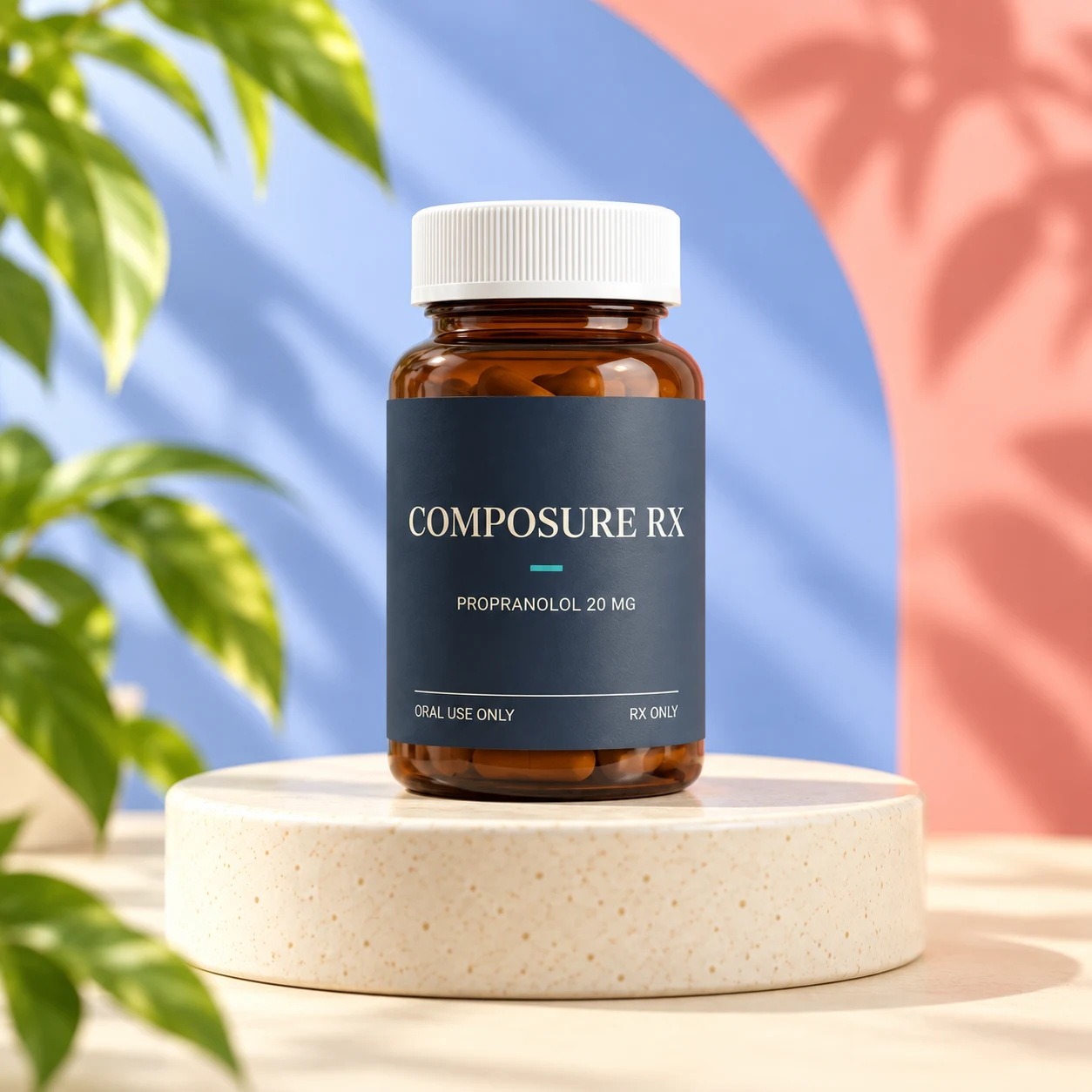
Taken about an hour before an event, propranolol blunts the physical symptoms of performance anxiety, the racing heart and shaking, within that window.
Is propranolol good for anxiety?+−
It is used for the physical symptoms of situational performance anxiety, not ongoing anxiety disorders. It does not sedate you or treat the mental side.
When should I take propranolol for anxiety?+−
About sixty minutes before the specific event, at the dose your provider sets. It is used situationally, not daily.
Propranolol
Steady hands, steady voice.
Propranolol 20 mg tablets. Explore beta receptors, adrenaline-related bodily symptoms and the distinction between physical steadiness and preparation.
Your provider confirms the strength and dose after intake. Payment does not guarantee a prescription.
After checkout you complete a short medical review in your member portal, and a US-licensed provider reviews it before your propranolol ships.
Meet the formula
Understand the physical side of performance nerves.
A presentation can feel different in the mind and in the body. You may know the material while noticing a racing heart or shaking hands. Propranolol is a beta blocker, a medication family that acts at beta-adrenergic receptors. That mechanism provides a focused explanation for its place in performance-related care. The HealthRX.com listing is propranolol 20 mg tablets, with a 90-tablet catalog option. Here is the pathway behind the ingredient and how it fits the broader experience of preparing for a demanding moment.
01
Trigger
A performance situation can activate an adrenaline response
02
Target
Propranolol blocks beta-adrenergic receptors
03
Context
Physical symptoms and mental preparation are separate pieces
Inside the formula
The names on the label, explained.
20 mg
Propranolol
Propranolol is a nonselective beta blocker, acting at beta-1 and beta-2 adrenergic receptors. Beta receptors respond to signals such as adrenaline. Blocking their activity explains the ingredient’s relationship to cardiovascular and other bodily responses. This is a pharmacologic explanation of the physical pathway, distinct from teaching presentation skills, changing the content of worried thoughts or preparing the material itself.
A closer look / 01
Why nerves can show up even when you are prepared.
The body’s stress response can include changes in heart rate and muscle-related physical sensations. Those changes can be noticeable during a recital, interview or presentation, even when you have practiced. Naming the bodily symptom gives the product discussion a more precise starting point than using anxiety as one undifferentiated experience.
Thoughts and bodily sensations can also feed into one another. Noticing a shaking hand may become distracting; anticipating a difficult moment can heighten bodily awareness. Propranolol’s beta-blocking mechanism belongs to the physical adrenergic part of this explanation. Preparation, rehearsal and the context of the event remain separate aspects of performance.
A closer look / 02
Physical steadiness and confidence are different measures.
A slower-feeling heartbeat, less visible tremor, a smoother delivery and a change in subjective confidence are different observations. A useful record separates them. That helps distinguish what happened in the body from how you felt about the event and how the performance itself went.
It also makes research easier to read. A study may measure physical signs, a performance rating or a subjective symptom score. Those measures answer different questions. Knowing which was assessed is more informative than treating every result as proof of one broad confidence effect.
A closer look / 03
What the performance research examined.
A double-blind study in musicians investigated propranolol and musical performance in a stage-fright setting. Researchers examined the performance and physical experience in that particular context. The study gives a relevant example of the beta-blocking pathway being investigated during a demanding event, rather than a general study of every form of anxiety.
That context matters for interpreting the evidence. A recital, a job interview and a written exam place different demands on a person. The ingredient’s mechanism can be explained consistently while the event and outcome being followed remain specific.
A closer look / 04
Read the tablet product clearly.
The 20 mg strength identifies the amount in a listed tablet. The 90-tablet quantity identifies the catalog option. Those are separate from the timing and amount described in product-specific treatment instructions. Propranolol also exists in other formulations, including extended-release products, so the ingredient name alone is not enough to identify every propranolol product.
Make an informed comparison
Compare the actual ingredients and formats.
The useful comparison is between different parts of the performance experience. Beta blockade concerns a physical signaling pathway. Rehearsal concerns familiarity and delivery. Skills practice concerns the task itself. They describe different roles, rather than interchangeable ways of measuring confidence.
Ingredient and product comparison
Option
Ingredient identity
What distinguishes it
Propranolol
Beta-blocker medication
Physical beta-adrenergic response
Rehearsal
Practice of the specific material
Familiarity, pacing and delivery
Performance skills
Task-specific preparation
Technique, organization and audience engagement
The useful details
A few questions worth answering.
Is propranolol a sedative?
Propranolol belongs to the beta-blocker family. Its defining mechanism is blockade of beta-adrenergic receptors. That is a different pharmacologic identity from sedative medication families, and explains why the physical adrenaline response is central to this guide.
What details help describe a performance concern?
Name the event and the physical symptom, then describe the thoughts and preparation separately. For example, knowing the material while noticing hand tremor is a more specific observation than simply saying the event felt stressful. Consistent descriptions make comparisons across similar events more useful.
Propranolol starts at $107 per month on 12-month plan; the lowest checkout charge is $134 (billed monthly). A prescription is never guaranteed. A licensed provider reviews each request before a pharmacy can dispense treatment.
Price
$107/month equivalent
Lowest checkout charge
$134, billed monthly
Prescription
Required; a licensed provider decides whether treatment is appropriate
Catalog verified August 26, 2026. Source: HealthRX.com checkout catalog and refund policy. Monthly equivalent divides the discounted plan charge by the number of months; checkout may collect a multi-month total.
A straightforward path to care
Select your plan
Choose your treatment options and complete secure checkout. Then complete the online health intake.
Provider review
A licensed physician (MD) reviews your completed intake and decides whether propranolol is right for you.
Ships to your door
If approved, a US-licensed pharmacy fills your prescription and ships it discreetly in 3 to 5 days.
Ongoing support
Message your care team any time. Your provider can adjust your dose or timing based on how you respond.
Blocks the physical symptoms, not your focus
Propranolol blunts adrenaline's physical effects, like a racing heart, shaking hands, and a trembling voice, without sedating you or clouding your thinking.
Take it before the moment
You take a tablet about an hour before a specific high-stakes event rather than every day.
Non-sedating and non-habit-forming
Propranolol is a beta blocker, not a sedative or benzodiazepine, so it is not habit forming and does not make you drowsy.
An FDA-approved medicine, used off-label
Propranolol is an FDA-approved beta blocker. For situational performance anxiety it is prescribed off-label after a provider reviews your history.
About Propranolol
Propranolol does not sedate you or change your mind; it blocks the physical side of anxiety, the racing heart, shaking hands and trembling voice, by blocking adrenaline's effect on the body. Taken before a specific high-stakes moment. Reviewed by a licensed provider, dispensed by a US-licensed pharmacy.
✓Blocks the physical symptoms, not your focus
✓Taken before a specific event
✓Non-sedating, non-habit-forming
✓Provider-reviewed, real pricing up front
Propranolol is a non-selective beta blocker that blunts adrenaline's peripheral effects like heart rate and tremor. Dispensed by a US-licensed pharmacy.
Stress releases adrenaline
Before a high-pressure moment, your body releases adrenaline that speeds your heart and shakes your hands.
Propranolol blocks beta receptors
As a beta blocker, it stops adrenaline from acting on the receptors that drive those physical symptoms.
The physical response settles
Your heart rate and tremor ease, while your mind stays clear.
Propranolol calms the physical signs of performance anxiety. It works on your body's adrenaline response, not on your mood or focus.
How it works, blocking the adrenaline response
What the research shows
Propranolol is a beta blocker long studied for the physical symptoms of situational performance anxiety, such as tremor and a racing heart. It is FDA approved for heart and blood pressure conditions and is used off-label here for performance anxiety.
Double-blind
In a double-blind trial in performing musicians, beta blockade with propranolol improved performance quality, as judged by expert music critics, compared with placebo.
Brantigan et al., Am J Med 1982
Physical only
In the same trial, propranolol reduced the physical signs of stage fright, such as tremor, without sedating the performers.
Taken about an hour before the moment. Most people feel the racing heart and shaking settle without feeling drugged or foggy.
About 1 hour before
You take it
Take a tablet roughly an hour before your high-stakes event, as directed by your provider.
Within the hour
It takes effect
As it takes hold, your heart rate and tremor begin to settle.
A few hours
Your window
The calming effect on physical symptoms lasts through a typical event window of several hours.
After a few uses
Dial in your dose
Your provider can adjust the dose or timing based on how you respond in real situations.
Safety and side effects
Reviewed by a licensed provider. Not for people with asthma or certain heart conditions, and it can mask the warning signs of low blood sugar in people on diabetes medication. Tell your provider about all conditions and medications.
Common
Fatigue or tiredness
Cold hands and feet
Slower heart rate
Lightheadedness or dizziness
Less common
Nausea
Vivid dreams or trouble sleeping
Feeling faint when standing up
Seek care
Trouble breathing or wheezing in people with asthma
Very slow heartbeat, fainting, or worsening heart failure
Not for people with asthma or other reactive airway disease, or with certain heart conditions such as a very slow heart rate, heart block, or uncontrolled heart failure. Do not stop propranolol suddenly, since stopping abruptly can strain your heart. Tell your provider about all heart and lung conditions and all medicines. This is an off-label use for performance anxiety.
Frequently asked questions
Is propranolol habit-forming?+−
No. It is not sedating or habit-forming, which is part of why it is used for performance situations.
Approval is never automatic.
An independent US-licensed clinician reviews every request. If they decide the treatment is not right for you, you get a full refund for the medication.
Prescriptions are filled by a US-licensed pharmacy and shipped free, in discreet packaging, on every plan.
LegitScript-certified · Cert 50087439
Compounded medications are prepared by a US-licensed pharmacy and are not reviewed by the FDA for safety or effectiveness. Products are dispensed only after a licensed provider determines they are appropriate. Information here is educational and is not a substitute for medical advice.