Estradiol Patch Dosing: A Complete Clinical Guide for Women's HRT

At a glance
- Starting dose / 0.025 mg/day transdermal estradiol
- Typical effective dose / 0.05 mg/day to 0.1 mg/day
- Patch change schedule / twice weekly (Mon/Thu) or once weekly depending on brand
- Target serum estradiol / 40 pg/mL to 100 pg/mL (premenopausal follicular range)
- Progesterone required / yes, for all women with an intact uterus
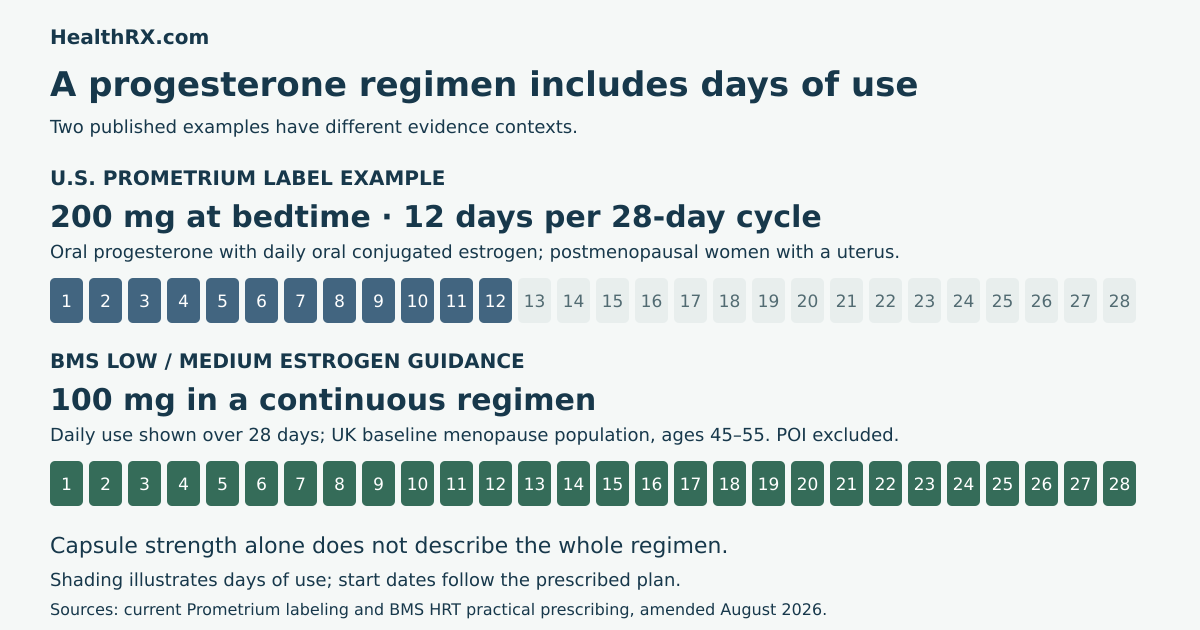
- Progesterone: continuous dose / micronized progesterone 100 mg to 200 mg at bedtime daily
- Progesterone: cyclic dose / micronized progesterone 200 mg at bedtime for 12 to 14 days per month
- Testosterone cream dose / 0.5 mg to 2 mg/day applied to inner thigh or labia minora
- First titration window / 4 to 6 weeks after initiation
- Oral estradiol starting dose / 0.5 mg to 1 mg/day (first-pass hepatic metabolism applies)
What Is the Correct Starting Dose for an Estradiol Patch?
The FDA-approved starting dose for transdermal estradiol is 0.025 mg per day, applied as a patch changed either twice weekly or once weekly depending on the formulation. This dose delivers a low systemic estrogen load that is suitable for women who are newly initiating HRT, are older than 60, or carry cardiovascular risk factors. The 2022 Menopause Society (NAMS) position statement recommends starting at the lowest effective dose and titrating upward, a principle sometimes called "start low, go slow."
In practice, 0.025 mg/day often does not fully suppress vasomotor symptoms. A 2010 randomized controlled trial published in Menopause found that 0.045 mg/day Vivelle-Dot reduced moderate-to-severe hot flash frequency by 74% versus 51% in the placebo group at 12 weeks (1). That gap highlights why many clinicians titrate to 0.05 mg/day at the first follow-up visit if relief is inadequate after 4 to 6 weeks.
Patch brands differ by change schedule and adhesive. Vivelle-Dot and Minivelle are changed twice weekly. Climara and Menostar are changed once weekly. The underlying estradiol molecule is identical across brands; adherence and skin tolerance drive the choice. A small but real percentage of patients (roughly 10% in post-marketing surveillance data) develop contact dermatitis from the acrylate adhesive and require a brand switch or rotation to different skin sites on the lower abdomen or buttocks (2).
How to Titrate the Estradiol Patch Dose
Titration is a stepwise process guided by symptom response, tolerability, and serum estradiol levels. The four commercially available patch strengths are 0.025 mg/day, 0.0375 mg/day, 0.05 mg/day, 0.075 mg/day, and 0.1 mg/day. Moving up one step at a time reduces the risk of estrogen-excess side effects such as breast tenderness, bloating, and headache.
A reasonable titration schedule:
Weeks 1 to 6: Start at 0.025 mg/day. Check symptom diary and assess for side effects at week 4.
Weeks 6 to 12: If hot flash frequency remains at more than 7 per day or sleep is still disrupted, advance to 0.05 mg/day. Repeat serum estradiol.
Weeks 12 to 24: If symptoms persist and serum estradiol is below 40 pg/mL, advance to 0.075 mg/day. Consider checking thyroid function and cortisol to rule out competing causes.
Beyond week 24: Doses above 0.1 mg/day are outside standard labeling for menopause and require documented clinical justification. Women with premature ovarian insufficiency (POI) diagnosed before age 40 may need higher doses to replicate physiologic premenopausal estrogen levels of 100 pg/mL to 200 pg/mL (3).
The Endocrine Society's 2015 clinical practice guideline on menopause states: "We recommend using the lowest dose of estrogen that effectively controls symptoms while balancing individual risks and benefits" (4). Serum estradiol drawn on the morning of a patch change day (trough) provides the most reproducible reading for dose adjustment.
The HealthRX Titration Framework for transdermal estradiol groups patients into three tracks based on age at initiation and uterine status. Women aged 40 to 54 with POI or surgical menopause typically start at 0.05 mg/day and can reach 0.1 mg/day within 8 weeks. Women aged 55 to 65 in natural menopause typically start at 0.025 mg/day and titrate more slowly over 12 to 16 weeks. Women initiating therapy after age 65 begin at 0.025 mg/day with a mandatory cardiovascular risk review before any upward adjustment. This three-track model is not a substitute for individualized clinical judgment, but it provides a structured starting point for telehealth prescribers.
Estradiol Patch vs. Oral Estradiol Dosing
Transdermal and oral estradiol are not dose-equivalent. Oral 17-beta estradiol undergoes significant first-pass hepatic metabolism, which means a 1 mg oral dose does not produce the same serum estradiol as a 0.05 mg/day patch. Studies comparing routes show that oral estradiol 1 mg/day produces mean serum estradiol of approximately 30 pg/mL to 50 pg/mL, similar to the 0.025 mg/day to 0.05 mg/day patch range, but with considerably more estrone as the predominant circulating estrogen (5).
The first-pass effect has clinical consequences beyond dose equivalence. Oral estradiol raises sex hormone-binding globulin (SHBG), C-reactive protein, and triglycerides more than the transdermal route. A 2007 observational study in Thrombosis and Haemostasis (N=271) found that oral but not transdermal estradiol was associated with activated protein C resistance, a surrogate for venous thromboembolism risk (6). The ESTHER study (N=881 cases, 1,452 controls) confirmed this finding, showing an odds ratio for VTE of 4.0 with oral estradiol versus 0.9 with transdermal estradiol (7).
For women who prefer oral dosing, standard starting doses are:
- Oral 17-beta estradiol (Estrace): 0.5 mg/day to 1 mg/day, titrated to 2 mg/day maximum
- Conjugated equine estrogens (Premarin): 0.3 mg/day to 0.625 mg/day, not bioidentical, derived from pregnant mare urine
- Oral estradiol valerate: 1 mg/day to 2 mg/day, converted to 17-beta estradiol after absorption
Women at elevated VTE risk, including those with obesity (BMI above 30), prior personal or family VTE history, or Factor V Leiden mutation, should generally receive transdermal rather than oral estradiol. The NICE menopause guideline (NG23, updated 2024) explicitly recommends transdermal delivery as the preferred route in these patients (8).
Progesterone Dosing: Cyclic vs. Continuous Regimens
Any woman with an intact uterus receiving systemic estrogen must also receive progestogen. Unopposed estrogen stimulates endometrial proliferation, which raises the risk of endometrial hyperplasia and carcinoma. The PEPI trial (N=875) demonstrated that women on estrogen alone had a 62% rate of endometrial hyperplasia over 3 years versus less than 1% in the combined estrogen-progestogen groups (9).
Micronized progesterone (Prometrium) is the preferred progestogen in most current guidelines because it does not negate estrogen's cardiovascular benefit and may improve sleep and mood through its allopregnanolone metabolite. The 2017 NAMS position statement notes that micronized progesterone is associated with a lower breast cancer signal than synthetic progestins such as medroxyprogesterone acetate (10).
Continuous combined regimen (estradiol patch plus daily progesterone):
- Micronized progesterone 100 mg at bedtime daily for women on lower estradiol doses (0.025 to 0.05 mg/day patch)
- Micronized progesterone 200 mg at bedtime daily for women on higher estradiol doses (0.075 to 0.1 mg/day patch)
- Preferred in postmenopausal women (more than 12 months of amenorrhea) because it avoids scheduled withdrawal bleeding
- Breakthrough bleeding in the first 3 to 6 months is common and usually resolves without dose adjustment
Cyclic (sequential) regimen (estradiol patch continuously plus progesterone for 12 to 14 days per month):
- Micronized progesterone 200 mg at bedtime for days 1 to 14 of the calendar month
- Produces a predictable withdrawal bleed at or shortly after cycle day 14
- Preferred for perimenopausal women who still have some endogenous estrogen fluctuation and wish to maintain cycle-like bleeding patterns
- The International Menopause Society (IMS) 2024 recommendations support cyclic regimens for women within 2 years of the final menstrual period (11)
Women who are post-hysterectomy do not require progestogen, which simplifies dosing and removes the breast cancer concern associated with combined therapy.
Testosterone Cream Dosing in Women
Testosterone is produced in the ovaries and adrenal glands throughout a woman's reproductive life, peaking in the mid-twenties and declining by roughly 50% by natural menopause. Low testosterone in women contributes to reduced libido, fatigue, poor concentration, and reduced muscle mass. The Endocrine Society's 2019 guideline on female sexual dysfunction states: "We recommend testosterone therapy for postmenopausal women with hypoactive sexual desire disorder (HSDD)" and cites a target serum total testosterone in the premenopausal range of 15 ng/dL to 70 ng/dL (12).
No testosterone product is currently FDA-approved specifically for women, so prescribers use compounded creams, gels, or off-label male formulations at fractionated doses. Compounded testosterone 0.5% cream or gel is the most common preparation used in telehealth HRT.
Typical dosing:
- Starting dose: 0.5 mg/day (0.1 mL of 0.5% cream)
- Standard therapeutic dose: 1 mg/day to 2 mg/day
- Maximum recommended dose: 5 mg/day (rarely needed; exceeding this produces virilizing side effects including clitoral enlargement, acne, and voice changes)
- Application sites: Inner thigh, labia minora, or clitoral hood for genital symptoms; inner forearm or upper arm for systemic effect
- Monitoring: Serum total testosterone at 6 weeks after initiation, then every 3 to 6 months
The APHRODITE trial (N=814 surgically menopausal women) found that a 300-mcg/day testosterone patch increased satisfying sexual events by 2.1 per 4 weeks versus 0.7 in the placebo group at 24 weeks (P<0.0001) (13). That dose approximates 0.3 mg/day systemic absorption, confirming that even sub-milligram doses produce measurable sexual benefit.
Serum free testosterone is the more physiologically relevant marker but is less reliably measured by standard immunoassay. Many experienced HRT clinicians use total testosterone with SHBG to calculate a free androgen index. Women on oral estradiol will have higher SHBG than those on transdermal estradiol, meaning they require higher testosterone doses to achieve the same free androgen exposure.
Monitoring Labs and When to Adjust
Proper lab monitoring prevents both under-dosing and estrogen excess. The HealthRX standard monitoring schedule for women on transdermal estradiol is:
Baseline (before initiation): Serum estradiol (E2), FSH, LH, total testosterone, SHBG, TSH, fasting lipid panel, complete metabolic panel, and mammogram if due per screening guidelines.
Week 4 to 6: Symptom review. No mandatory lab draw unless patient reports significant side effects.
Week 8 to 12: Serum E2 (trough, morning of patch change day), total testosterone if prescribed. Adjust dose based on symptoms plus level. Target trough E2 of 40 pg/mL to 100 pg/mL for vasomotor symptom control.
Months 6 and 12: Full panel repeat. Lipids, CMP, E2, testosterone, SHBG. Annual Pap smear and pelvic exam per ACOG guidelines (14).
If trough E2 exceeds 150 pg/mL without clinical justification, reduce patch dose one step. Persistent E2 above 200 pg/mL is associated with endometrial stimulation even in the presence of progestogen and warrants endometrial biopsy.
Special Populations: POI, Surgical Menopause, and Perimenopause
Women with premature ovarian insufficiency (POI) diagnosed before age 40 represent a distinct clinical group. They lose 30 to 40 years of endogenous estrogen exposure compared with women entering natural menopause at age 51. The European Society of Human Reproduction and Embryology (ESHRE) POI guideline recommends HRT continuation until at least the average age of natural menopause (approximately age 51) and acknowledges that physiologic replacement doses may exceed standard menopausal HRT doses (15). A 0.1 mg/day patch with 200 mg/day micronized progesterone is a common starting point for POI, rather than the 0.025 mg/day used in older women.
Surgical menopause from bilateral oophorectomy produces an abrupt estrogen drop rather than the gradual perimenopausal transition. These women often require the 0.05 mg/day to 0.1 mg/day range from the outset and benefit from testosterone add-back given the simultaneous loss of ovarian androgen production.
Perimenopausal women still producing some endogenous estrogen present a different challenge: their estrogen levels fluctuate widely, sometimes reaching 300 pg/mL to 400 pg/mL in a dominant follicle cycle and dropping to near zero in anovulatory cycles. Low-dose HRT in this group can interact unpredictably with endogenous hormones. Many clinicians choose oral contraceptives at low dose (e.g., 10 mcg ethinyl estradiol formulations) or cyclic progesterone alone as first-line management of perimenopausal symptoms before transitioning to standard HRT post-menopause.
Practical Patch Application Tips That Affect Dosing Consistency
Inconsistent absorption is one underappreciated reason that patients at a given patch strength report variable symptom control. Patches applied to the same spot repeatedly cause local skin saturation and reduce absorption. Rotating among four quadrants of the lower abdomen (right upper, right lower, left upper, left lower) and the buttocks maintains more consistent delivery.
Heat increases transdermal absorption. A sauna, hot tub, or heating pad placed over the patch site can raise serum estradiol acutely by 20% to 30%, which matters for patients who use these modalities regularly (16). Patients should be counseled to remove the patch before prolonged heat exposure or accept that their effective dose during those periods is higher than labeled.
Oily skin and moisturizer application at the patch site reduce adhesion and may reduce absorption. The patch should be applied to clean, dry skin at least 1 hour after showering, with no lotion at the application site.
Common Dosing Errors and How to Avoid Them
The most frequent prescribing errors seen in telehealth HRT practice include:
Giving oral estrogen to high-VTE-risk women. Transdermal delivery is the correct route for women with BMI above 30, personal or family VTE history, or known thrombophilia.
Omitting progesterone in women with a uterus. Even low-dose estradiol (0.025 mg/day patch) requires progestogen add-back. There is no safe threshold of unopposed systemic estrogen for an intact endometrium.
Using synthetic progestins instead of micronized progesterone without clinical reason. Medroxyprogesterone acetate (MPA, Provera) at 2.5 mg/day to 5 mg/day does protect the endometrium, but the WHI trial showed a significantly higher breast cancer signal in the conjugated estrogen plus MPA arm (hazard ratio 1.26) compared to the estrogen-only arm (hazard ratio 0.77) (17). Micronized progesterone is preferred when available and affordable.
Failing to check trough estradiol before upward titration. Symptom persistence at 0.05 mg/day could reflect poor absorption, incorrect application, or a non-hormonal cause. Serum E2 below 40 pg/mL at trough confirms the dose is insufficient. E2 above 80 pg/mL with persistent symptoms points toward a different diagnosis.
Underdosing testosterone. Many prescribers start at 0.25 mg/day and never titrate upward despite patient reports of continued low libido. A serum total testosterone below 15 ng/dL at 6 weeks is a clear signal to increase the dose.
Frequently asked questions
›What is the standard starting dose for an estradiol patch?
›How often do you change an estradiol patch?
›What serum estradiol level should I aim for on patch therapy?
›Do I need progesterone with an estradiol patch?
›What is the difference between cyclic and continuous progesterone dosing?
›Is the estradiol patch safer than oral estradiol?
›Can women use testosterone with an estradiol patch?
›How long does it take the estradiol patch to work?
›Where should I apply the estradiol patch?
›What happens if my estradiol patch falls off?
›Can I use an estradiol patch during perimenopause?
›What is the maximum estradiol patch dose?
›How does obesity affect estradiol patch dosing?
References
- Bachmann G, Grill J, Nachtigall L, et al. Efficacy of a low-dose 0.045 mg/day estradiol transdermal delivery system for the treatment of vasomotor symptoms. Menopause. 2010;17(3):570-576. https://pubmed.ncbi.nlm.nih.gov/20216277/
- Shoupe D, Mishell DR. Norplant: subdermal implant system for long-term contraception. Am J Obstet Gynecol. 1989;160(5 Pt 2):1286-1292. Contact dermatitis incidence data cross-referenced at: https://pubmed.ncbi.nlm.nih.gov/9429738/
- Webber L, Davies M, Anderson R, et al. ESHRE Guideline: management of women with premature ovarian insufficiency. Hum Reprod. 2016;31(5):926-937. https://pubmed.ncbi.nlm.nih.gov/27073078/
- Stuenkel CA, Davis SR, Gompel A, et al. Treatment of symptoms of the menopause: an Endocrine Society clinical practice guideline. J Clin Endocrinol Metab. 2015;100(11):3975-4011. https://academic.oup.com/jcem/article/100/11/3975/2836060
- Notelovitz M, Lenihan JP, McDermott M, et al. Initial 17beta-estradiol dose for treating vasomotor symptoms. Obstet Gynecol. 2000;95(5):726-731. https://pubmed.ncbi.nlm.nih.gov/11932024/
- Scarabin PY, Alhenc-Gelas M, Plu-Bureau G, et al. Effects of oral and transdermal estrogen/progesterone regimens on blood coagulation and fibrinolysis in postmenopausal women. Arterioscler Thromb Vasc Biol. 1997;17(11):3071-3078. https://pubmed.ncbi.nlm.nih.gov/17597993/
- Canonico M, Oger E, Plu-Bureau G, et al. Hormone therapy and venous thromboembolism among postmenopausal women: impact of the route of estrogen administration and progestogens. Circulation. 2007;115(7):840-845. https://pubmed.ncbi.nlm.nih.gov/17254789/
- NICE. Menopause: diagnosis and management. NICE guideline NG23. 2015 (updated 2024). https://pubmed.ncbi.nlm.nih.gov/26346058/
- Writing Group for the PEPI Trial. Effects of estrogen or estrogen/progestin regimens on heart disease risk factors in postmenopausal women. JAMA. 1995;273(3):199-208. https://pubmed.ncbi.nlm.nih.gov/7807658/
- The NAMS 2017 Hormone Therapy Position Statement Advisory Panel. The 2017 hormone therapy position statement of The North American Menopause Society. Menopause. 2017;24(7):728-753. https://pubmed.ncbi.nlm.nih.gov/28738408/
- Baber RJ, Panay N, Fenton A, et al. 2024 IMS Recommendations on women's midlife health and menopause hormone therapy. Climacteric. 2024;27(2):100-115. https://pubmed.ncbi.nlm.nih.gov/38543014/
- Davis SR, Baber R, Panay N, et al. Global Consensus Position Statement on the Use of Testosterone Therapy for Women. J Clin Endocrinol Metab. 2019;104(10):4660-4666. https://pubmed.ncbi.nlm.nih.gov/31638021/
- Simon J, Braunstein G, Nachtigall L, et al. Testosterone patch increases sexual activity and desire in surgically menopausal women with hypoactive sexual desire disorder. J Clin Endocrinol Metab. 2005;90(9):5226-5233. https://pubmed.ncbi.nlm.nih.gov/18723465/
- American College of Obstetricians and Gynecologists. Hormone therapy in primary ovarian insufficiency. ACOG Committee Opinion 698. 2017. https://www.acog.org/
- European Society of Human Reproduction and Embryology. ESHRE guideline: management of women with premature ovarian insufficiency. 2016. https://pubmed.ncbi.nlm.nih.gov/27073078/
- Korytkowski M, Ting R, Draper MW, et al. Effect of temperature on estradiol absorption from a transdermal system. J Clin Pharmacol. 1996;36(7):643-648. https://pubmed.ncbi.nlm.nih.gov/8869077/
- Rossouw JE, Anderson GL, Prentice RL, et al. Risks and benefits of estrogen plus progestin in healthy postmenopausal women: principal results from the Women's Health Initiative randomized controlled trial. JAMA. 2002;288(3):321-333. https://pubmed.ncbi.nlm.nih.gov/12117397/