HRT Titration: How to Dose Estradiol, Progesterone, and Testosterone in Women

Hormone therapy clinical care image for HRT Titration: How to Dose Estradiol, Progesterone, and Testosterone in Women

At a glance

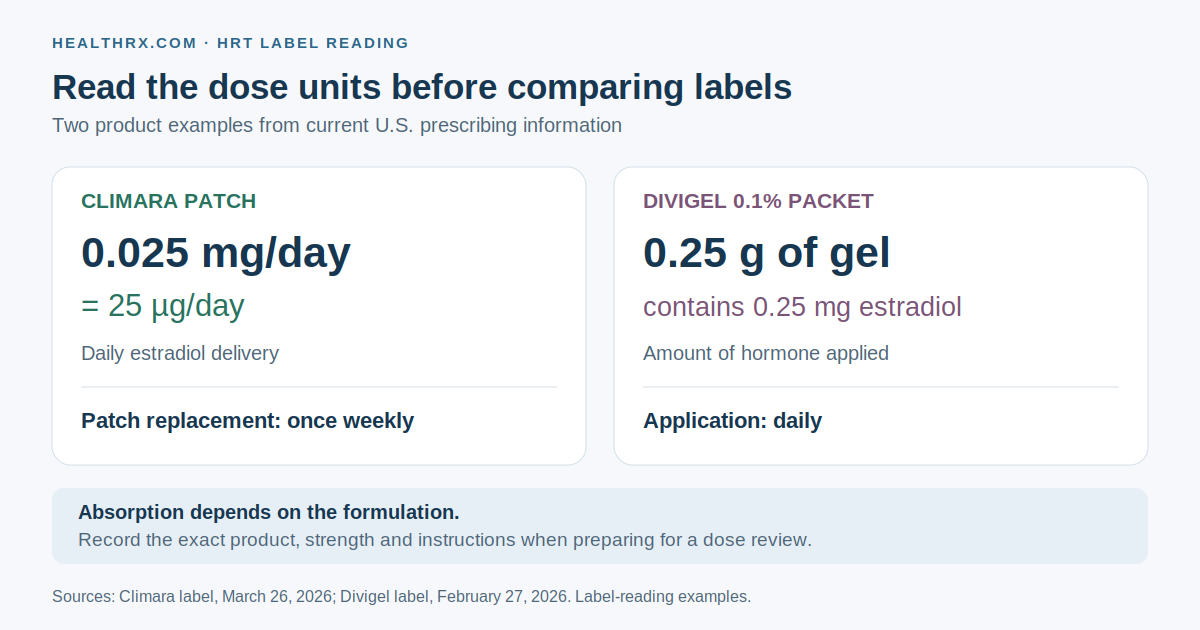
  • Starting estradiol patch dose / 0.025 mg/day (25 mcg/day), changed twice weekly
  • Therapeutic serum estradiol target / 40 to 100 pg/mL for vasomotor symptom relief
  • Oral estradiol starting dose / 0.5 to 1 mg daily, titrated by 0.5 mg increments
  • Continuous progesterone dose (intact uterus) / micronized progesterone 100 to 200 mg nightly
  • Cyclic progesterone schedule / 200 mg nightly for 12 to 14 days per calendar month
  • Testosterone cream starting dose (women) / 0.5 to 1 mg/day; target free testosterone mid-normal female range
  • Reassessment interval / 8 to 12 weeks after any dose change before adjusting again
  • Patch absorption variability / up to 30 to 40% interindividual difference in serum estradiol from same patch strength
  • Oral vs transdermal clot risk / transdermal routes do not produce the first-pass hepatic effect that raises VTE risk with oral estrogen
  • Guideline source / 2022 Menopause Society (NAMS) Position Statement on Hormone Therapy

What Is HRT Titration and Why Does It Matter

Titration is the process of finding the lowest dose that controls symptoms without excess hormone exposure. Starting high and adjusting downward is not standard practice. Starting low and stepping upward every 8 to 12 weeks based on symptoms and serum levels is the method endorsed by the Menopause Society 2022 Position Statement, which states: "Hormone therapy should be individualized using the best available evidence to maximize benefits and minimize risks, using the lowest effective dose." [1]

A fixed starting dose rarely matches a patient's absorptive capacity. Transdermal patches can produce serum estradiol levels ranging from fewer than 20 pg/mL to more than 100 pg/mL from the same 0.05 mg/day product because skin permeability varies by body site, hydration, adipose thickness, and individual enzyme expression. [2] This is why symptom tracking alone is insufficient and serum measurement at 8 to 12 weeks after any change gives the clinician objective data to anchor dose decisions.

Women who remain symptomatic at the starting dose despite adequate serum levels may have a receptor-sensitivity issue rather than a dosing issue. That distinction changes the clinical plan entirely, which is why the titration process combines laboratory data with structured symptom scoring at every visit. [3]

Estradiol Patch Dosing: Starting Points and Titration Steps

The transdermal patch is the most studied delivery system for systemic estradiol in menopause. The 0.025 mg/day (25 mcg/day) patch is the standard starting dose for most postmenopausal women. Applied twice weekly to the lower abdomen, buttock, or hip, it produces mean steady-state serum estradiol of approximately 25 to 45 pg/mL, though individual values span a much wider range. [4]

The ULTRA trial and the estradiol dose-finding work by Notelovitz et al. established a clear dose-response ladder: 0.025 mg/day, 0.0375 mg/day, 0.05 mg/day, 0.075 mg/day, and 0.1 mg/day patches are all FDA-approved strengths. [5] For vasomotor symptoms, the Women's Health Initiative re-analysis showed that a mean serum estradiol of approximately 40 to 60 pg/mL correlates with significant hot flash reduction. [6] Clinicians step up one patch strength after 8 to 12 weeks if:

  • Flushing frequency remains above 7 episodes per day
  • Serum estradiol is below 40 pg/mL on repeat testing
  • Sleep disruption from night sweats persists at baseline severity

Stepping down is indicated when serum estradiol exceeds 100 pg/mL without clear clinical benefit, or when estrogen-related side effects appear (breast tenderness, bloating, or spotting). Site rotation every application reduces local skin reactions and improves consistent absorption. [7]

Women who develop contact dermatitis or inconsistent absorption from patches may transition to estradiol gel (EstroGel, Divigel) or spray (Evamist). Gel dosing starts at one pump (0.75 mg estradiol) daily on the arm, with titration by one additional pump per 8-week cycle as needed. [8]

Oral Estradiol Dosing: Starting Points and Titration Steps

Oral micronized estradiol (17-beta estradiol) is absorbed via the gastrointestinal tract and undergoes substantial first-pass hepatic metabolism, converting much of the dose to estrone. This first-pass effect raises SHBG, triglycerides, and C-reactive protein compared to transdermal delivery, and a 2010 observational study in the BMJ (N=83,000 women) found oral but not transdermal estrogen was associated with elevated VTE risk. [9]

The standard starting dose is 0.5 to 1 mg daily. The 0.5 mg starting dose is appropriate for women with low cardiovascular or VTE risk who prefer oral administration. Titration steps are 0.5 mg increments at 8-week intervals. The therapeutic ceiling for vasomotor symptoms is typically 2 mg daily; doses above this level rarely produce additional symptom benefit and increase hepatic protein synthesis side effects. [10]

Serum estradiol monitoring after oral dosing reflects estradiol and its estrone metabolite. Because oral estradiol produces a higher estrone-to-estradiol ratio (roughly 5:1) compared to transdermal (roughly 1:1), serum estradiol levels are less directly comparable to transdermal levels at equivalent doses. [11] Clinicians should note whether the laboratory is reporting estradiol alone or total estrogens when interpreting results.

Women with hypertriglyceridemia should not use oral estrogens. Transdermal delivery is preferred in that population. [12]

Progesterone Dosing: Cyclic vs. Continuous Regimens

Any woman with an intact uterus receiving systemic estrogen requires progestogen to protect the endometrium. The PEPI trial (N=875) demonstrated that unopposed estrogen for 3 years produced a 62% rate of adenomatous or atypical endometrial hyperplasia, compared to less than 1% with adequate progestogen co-administration. [13]

Micronized progesterone (Prometrium) is the preferred progestogen in the United States because its safety and tolerability profile in postmenopausal women is better characterized than synthetic progestins in the context of breast tissue and cardiovascular endpoints. The 2022 NAMS Position Statement notes that micronized progesterone and some progestins may have different risk profiles for breast cancer when used with estrogen. [1]

Continuous regimen: 100 to 200 mg micronized progesterone nightly produces amenorrhea in most postmenopausal women within 3 to 6 months. The 100 mg dose is suitable for women who have been postmenopausal for at least 1 year. The 200 mg dose is used when breakthrough bleeding persists, when the estrogen dose is at the higher end (0.075 to 0.1 mg patch or 2 mg oral), or when endometrial protection adequacy is in question. [14]

Cyclic regimen: 200 mg nightly for 12 to 14 days of each calendar month is appropriate for perimenopausal women who still experience occasional cycles or who prefer scheduled withdrawal bleeding. Fewer than 12 days of progestogen per cycle is insufficient for endometrial protection in the presence of continuous systemic estrogen. [15] The Cochrane review of progestogen regimens in HRT (Lethaby et al.) confirmed that cyclic regimens with at least 12 days per cycle provide equivalent endometrial protection to continuous regimens in the short term. [16]

Women who experience pronounced sedation, mood depression, or morning grogginess with oral progesterone can switch to vaginal progesterone (Crinone, Endometrin off-label), which reduces systemic exposure while maintaining adequate local endometrial effect. Serum progesterone levels are not a reliable marker of endometrial protection with vaginal delivery; endometrial biopsy or ultrasound surveillance is used instead. [17]

Synthetic progestins (medroxyprogesterone acetate, norethindrone acetate) remain FDA-approved and clinically used but carry a less favorable risk signal for breast cancer based on the WHI estrogen-plus-progestin trial data. Where formulary or cost is a barrier, norethindrone acetate 0.1 mg daily provides effective endometrial protection and is an acceptable alternative. [18]

Testosterone Cream Dosing in Women

Testosterone declines with age and surgical oophorectomy in women, and low levels associate with reduced libido, fatigue, and reduced sense of wellbeing. The 2019 Global Consensus Statement on Testosterone in Women, published in the Journal of Clinical Endocrinology and Metabolism, concluded that testosterone therapy has proven benefit for hypoactive sexual desire disorder (HSDD) in postmenopausal women and recommended targeting serum levels within the normal premenopausal female reference range (approximately 15 to 70 ng/dL total testosterone). [19]

No FDA-approved testosterone product for women exists in the United States as of 2025, so compounded testosterone cream (or gel) is the standard approach. Starting doses at HealthRX are 0.5 to 1 mg/day testosterone in a cream base applied to the inner forearm, labia majora, or inner thigh.

The following dose-check framework is used at HealthRX:

| Week | Action | |------|--------| | 0 | Baseline serum total and free testosterone, SHBG, estradiol | | 6 to 8 | Serum testosterone 4 to 6 hours post-application; assess libido and energy | | 12 | Repeat serum testosterone; adjust dose by 0.25 to 0.5 mg/day if below 15 ng/dL total testosterone | | 24 | Confirm steady-state; target total testosterone 15 to 50 ng/dL |

Dose escalation beyond 2 mg/day is rarely warranted and risks androgenic side effects including acne, hirsutism, voice changes, and clitoral enlargement. If free testosterone exceeds the upper female reference range on two consecutive measurements, dose reduction is mandatory. [20]

The ISSWSH (International Society for the Study of Women's Sexual Health) process of care document states that supraphysiologic testosterone levels in women are associated with adverse lipid changes (reduced HDL) and should be avoided. [21] Clinicians should check a fasting lipid panel at baseline and at 6 months for women on testosterone therapy.

How to Read HRT Lab Results and Adjust Doses

Timing the blood draw matters. For transdermal estradiol (patch), draw serum estradiol on the last day before the next patch change, when levels are at trough. For oral estradiol, draw 2 to 4 hours post-dose for peak, or at least 12 hours post-dose for a more stable value. For testosterone cream, draw 4 to 6 hours after application to capture peak absorption. [22]

The Endocrine Society Clinical Practice Guideline for menopause does not mandate specific serum estradiol thresholds for all women because symptoms and not numbers drive adequacy for most patients. Still, the 40 to 100 pg/mL range is the most commonly used clinical target. [3] Women with persistent symptoms and serum estradiol above 100 pg/mL warrant evaluation for other contributors to their symptoms (thyroid dysfunction, sleep apnea, anxiety disorder) before further dose escalation.

Serum FSH is not a reliable marker of dose adequacy once HRT has been initiated, because exogenous estrogen suppresses FSH independently of whether the dose is therapeutically sufficient. Using FSH to guide titration after HRT start leads to systematic overdosing. [23]

SHBG rises with oral estrogen and lowers free fractions of both estradiol and testosterone. Women on oral HRT who add testosterone therapy may need slightly higher testosterone doses compared to women on transdermal estrogen, because their higher SHBG will bind more of the administered testosterone. [24]

When to Titrate Down: Signs of Excess

Dose reduction is indicated when any of the following are present:

  • Serum estradiol consistently above 150 pg/mL without residual symptoms
  • New or worsening breast tenderness unresponsive to dose-timing changes
  • Persistent vaginal bleeding beyond 6 months of continuous therapy without structural pathology
  • Endometrial thickness above 4 mm on ultrasound in a woman on continuous combined HRT [25]
  • Androgenic side effects with testosterone (acne grade 2 or higher, hirsutism score increase, voice change)

The Endocrine Society recommends annual symptom review and dose minimization attempts after 2 years of stable therapy, stepping down the estradiol dose by one level and reassessing over 3 months. [3] Many women can maintain symptom control at lower doses after the acute peri-menopausal transition period has passed.

Timing Considerations: Perimenopause vs Postmenopause

Titration strategy differs between perimenopause and postmenopause because endogenous ovarian estrogen output remains erratic in perimenopause, making serum measurements less interpretable on any given day. A woman in late perimenopause (irregular cycles, elevated FSH, vasomotor symptoms) will have day-to-day estradiol swings of 20 to 300 pg/mL. Adding exogenous estradiol on top of fluctuating endogenous production complicates both dosing and interpretation. [26]

For perimenopausal women, the preferred approach is to:

  1. Confirm the clinical picture with cycle history and one serum FSH above 25 IU/L on two separate measurements at least 4 to 6 weeks apart
  2. Start at the lowest patch or oral dose as above
  3. Defer serum estradiol assessment to cycle day 2 to 4 when endogenous production is at its nadir
  4. Rely more heavily on validated symptom tools (Menopause Rating Scale, Greene Climacteric Scale) for titration guidance

The SWAN cohort study, which followed 3,302 women through the menopausal transition, found that the most severe vasomotor symptoms occur in late perimenopause and early postmenopause, not at the initiation of the transition. [27] This means clinicians may need to increase doses during the first 1 to 2 years of HRT and can then attempt downward titration after menopause is fully established (12 consecutive months of amenorrhea).

Special Populations: Surgical Menopause and POI

Women who experience sudden estrogen loss from bilateral oophorectomy or premature ovarian insufficiency (POI, before age 40) typically require higher estradiol doses than women in natural menopause. The ESHRE Guideline on POI recommends targeting serum estradiol levels of 100 to 200 pg/mL in women with POI under age 50 to approximate physiologic premenopausal exposure. [28]

Starting doses in surgical menopause are typically the 0.05 mg/day patch or 1 mg/day oral estradiol, with rapid titration as needed. Women who undergo surgical menopause and are not contraindicated for testosterone should be offered testosterone assessment, as oophorectomy removes approximately 50% of total androgen production in premenopausal women. [19]

POI managed with HRT does not appear to carry the same elevated breast cancer risk signal as HRT in older postmenopausal women, because the therapy restores hormones to levels that would have been present physiologically. The ESHRE guideline and the British Menopause Society both support continuing HRT at minimum until the natural age of menopause (approximately age 51 to 52). [28, 29]

Route of Administration and Absorption Variability

Choosing the delivery route affects both efficacy and risk profile, and the choice influences the entire titration strategy. [30]

Transdermal patches produce the most predictable dose-response curve across a population, though individual variability remains significant. Gels and sprays offer dose flexibility (1 to 4 pumps daily) but are more user-dependent. Oral estradiol is the most convenient but requires attention to first-pass effects and drug-drug interactions, particularly with rifampin, certain anticonvulsants, and St. John's Wort, all of which induce CYP3A4 and reduce estradiol bioavailability by 40 to 70%. [31]

Vaginal estradiol (ring, cream, suppository) produces minimal systemic absorption at low doses and does not require progestogen co-administration for most women with an intact uterus at standard GSM treatment doses. The FDA label for the 10 mcg vaginal tablet (Vagifem/Yuvafem) and the 7.5 mcg/day ring (Estring) confirms systemic estradiol remains within postmenopausal range during use. [32]

For women on transdermal therapy who experience erratic symptom control, changing application sites (from abdomen to hip to inner arm) while keeping the dose constant is a worthwhile trial before increasing the dose, because site variability can explain 20 to 30 pg/mL differences in trough serum estradiol. [7]

Frequently asked questions

What is the starting dose for an estradiol patch?
The standard starting dose is the 0.025 mg/day (25 mcg/day) patch, changed twice weekly. Serum estradiol is checked at 8 to 12 weeks and the dose is stepped up to 0.0375 or 0.05 mg/day if symptoms persist and serum levels are below 40 pg/mL.
How long does HRT titration take?
Initial titration typically spans 8 to 24 weeks. The first dose adjustment window opens at 8 to 12 weeks after starting because transdermal estradiol reaches steady-state serum levels in about 4 weeks. Most women find their stable dose within two to three adjustment cycles, or 16 to 24 weeks total.
What serum estradiol level should I target on HRT?
The most widely used clinical target for vasomotor symptom relief is 40 to 100 pg/mL. Women with POI or surgical menopause under age 50 may be targeted toward 100 to 200 pg/mL per ESHRE guidelines. Levels above 150 pg/mL in older postmenopausal women warrant a dose reduction attempt.
How do I know if my estradiol dose is too low?
Signs of an inadequate dose include persistent hot flashes more than 7 times per day, continued night sweats disrupting sleep, ongoing vaginal dryness, and serum estradiol below 40 pg/mL at trough. All four criteria should be assessed together before stepping up the dose.
Can I use an estradiol patch and oral estradiol together?
Combining delivery routes is not standard practice and risks unpredictable total exposure. If one route is inadequate, the preferred approach is switching to a higher dose of the same route or transitioning to a different single route (for example, patch to gel) rather than layering formulations.
What is the difference between cyclic and continuous progesterone?
Cyclic progesterone (200 mg nightly for 12 to 14 days per month) produces a scheduled withdrawal bleed and suits perimenopausal women who still have occasional cycles. Continuous progesterone (100 to 200 mg nightly every night) aims for amenorrhea and is preferred for fully postmenopausal women. Both regimens protect the endometrium when used correctly.
How much testosterone cream do women need?
Starting doses of compounded testosterone cream in women are typically 0.5 to 1 mg/day. Serum total testosterone is checked at 6 to 8 weeks post-application peak and the dose adjusted by 0.25 to 0.5 mg increments to reach 15 to 50 ng/dL total testosterone. Doses above 2 mg/day risk androgenic side effects.
Does oral estradiol need a different titration approach than the patch?
Yes. Oral estradiol starts at 0.5 to 1 mg daily with 0.5 mg increment steps. Serum monitoring is more complex because oral estradiol produces a high estrone-to-estradiol ratio of roughly 5:1, making levels less directly comparable to transdermal targets. Oral estradiol also raises SHBG, which affects free testosterone levels if testosterone therapy is co-administered.
Is FSH useful for monitoring HRT dose?
No. Once HRT is started, exogenous estrogen suppresses FSH regardless of whether the dose is adequate for symptom control. Using FSH to guide titration after starting HRT leads to overdosing. Serum estradiol and structured symptom assessment are the correct monitoring tools.
What blood tests should I get before starting HRT?
Baseline labs typically include serum estradiol, FSH, LH, testosterone (total and free), SHBG, thyroid-stimulating hormone, complete metabolic panel, fasting lipids, and a complete blood count. Endometrial assessment (transvaginal ultrasound) is recommended for women with any abnormal uterine bleeding before starting systemic estrogen.
When should I consider reducing my HRT dose?
Dose reduction attempts are appropriate after 2 years of stable therapy, when serum estradiol is consistently above 150 pg/mL, when new estrogen-sensitive side effects appear, or when endometrial thickness exceeds 4 mm on continuous combined therapy. Step down one dose level and reassess over 3 months.
Does HRT dose need to change as I get older?
Yes. The dose that controlled symptoms at age 52 may be higher than needed at age 60. Annual symptom review with dose-minimization attempts is recommended by the Endocrine Society. Many women can step down by one patch strength or 0.5 mg of oral estradiol after the acute menopausal transition has passed.

References

  1. The Menopause Society. The 2022 Hormone Therapy Position Statement of The Menopause Society. Menopause. 2022;29(7):767-794. https://pubmed.ncbi.nlm.nih.gov/35797481/
  2. Stanczyk FZ, Archer DF, Bhavnani BR. Ethinyl estradiol and 17β-estradiol in combined oral contraceptives: pharmacokinetics, pharmacodynamics and risk assessment. Contraception. 2013;87(6):706-727. https://pubmed.ncbi.nlm.nih.gov/23375353/
  3. Stuenkel CA, Davis SR, Gompel A, et al. Treatment of Symptoms of the Menopause: An Endocrine Society Clinical Practice Guideline. J Clin Endocrinol Metab. 2015;100(11):3975-4011. https://pubmed.ncbi.nlm.nih.gov/26444994/
  4. Notelovitz M, Lenihan JP, McDermott M, Kerber IJ, Nanavati N, Arce J. Initial 17beta-estradiol dose for treating vasomotor symptoms. Obstet Gynecol. 2000;95(5):726-731. https://pubmed.ncbi.nlm.nih.gov/10775737/
  5. U.S. Food and Drug Administration. Climara (estradiol transdermal system) Prescribing Information. 2023. https://www.accessdata.fda.gov/drugsatfda_docs/label/2023/019718s063lbl.pdf
  6. Rossouw JE, Anderson GL, Prentice RL, et al. Risks and benefits of estrogen plus progestin in healthy postmenopausal women: principal results from the Women's Health Initiative randomized controlled trial. JAMA. 2002;288(3):321-333. https://pubmed.ncbi.nlm.nih.gov/12117397/
  7. Kuhl H. Pharmacology of estrogens and progestogens: influence of different routes of administration. Climacteric. 2005;8 Suppl 1:3-63. https://pubmed.ncbi.nlm.nih.gov/16112947/
  8. U.S. Food and Drug Administration. EstroGel (estradiol gel) 0.06% Prescribing Information. 2022. https://www.accessdata.fda.gov/drugsatfda_docs/label/2022/021166s017lbl.pdf
  9. Canonico M, Oger E, Plu-Bureau G, et al. Hormone therapy and venous thromboembolism among postmenopausal women: impact of the route of estrogen administration and progestogens: the ESTHER study. Circulation. 2007;115(7):840-845. https://pubmed.ncbi.nlm.nih.gov/17309934/
  10. U.S. Food and Drug Administration. Estrace (estradiol tablets) Prescribing Information. 2023. https://www.accessdata.fda.gov/drugsatfda_docs/label/2023/018405s044lbl.pdf
  11. Friel PN, Hinchcliffe C, Wright JV. Hormone replacement with estradiol: conventional oral doses result in excessive exposure to estrone. Altern Med Rev. 2005;10(1):36-41. https://pubmed.ncbi.nlm.nih.gov/15771561/
  12. Valdiviezo C, Lawson J, Ouyang P. Transdermal estrogen therapy in postmenopausal women with hypertriglyceridemia. J Womens Health (Larchmt). 2011;20(11):1575-1581. https://pubmed.ncbi.nlm.nih.gov/21875337/
  13. Writing Group for the PEPI Trial. Effects of estrogen or estrogen/progestin regimens on heart disease risk factors in postmenopausal women: the Postmenopausal Estrogen/Progestin Interventions (PEPI) Trial. JAMA. 1995;273(3):199-208. https://pubmed.ncbi.nlm.nih.gov/7807658/
  14. U.S. Food and Drug Administration. Prometrium (progesterone) Prescribing Information. 2023. https://www.accessdata.fda.gov/drugsatfda_docs/label/2023/019781s024lbl.pdf
  15. Archer DF, Pickar JH, Bottiglioni F. Bleeding patterns in postmenopausal women taking continuous combined or sequential regimens of conjugated estrogens with medroxyprogesterone acetate. Obstet Gynecol. 1994;83(5 Pt 1):686-692. https://pubmed.ncbi.nlm.nih.gov/8164928/
  16. Lethaby A, Farquhar C, Sarkis A, Roberts H, Jepson R, Barlow D. Hormone replacement therapy in postmenopausal women: endometrial hyperplasia and irregular bleeding. Cochrane Database Syst Rev. 2000;(2):CD000402. https://pubmed.ncbi.nlm.nih.gov/10796540/
  17. Miles RA, Paulson RJ, Lobo RA, Press MF, Dahmoush L, Sauer MV. Pharmacokinetics and endometrial tissue levels of progesterone after administration by intramuscular and vaginal routes. Fertil Steril. 1994;62(3):485-490. https://pubmed.ncbi.nlm.nih.gov/8062944/
  18. Manson JE, Chlebowski RT, Stefanick ML, et al. Medroxyprogesterone acetate and breast cancer risk: WHI findings and implications. Menopause. 2012;19(9):948-951. https://pubmed.ncbi.nlm.nih.gov/22727345/
  19. Davis SR, Baber R, Panay N, et al. Global Consensus Position Statement on the Use of Testosterone Therapy for Women. J Clin Endocrinol Metab. 2019;104(10):4660-4666. https://pubmed.ncbi.nlm.nih.gov/31498871/
  20. Wierman ME, Arlt W, Basson R, et al. Androgen therapy in women: a reappraisal: an Endocrine Society clinical practice guideline. J Clin Endocrinol Metab. 2014;99(10):3489-3510. https://pubmed.ncbi.nlm.nih.gov/25279570/
  21. Parish SJ, Simon JA, Davis SR, et al. International Society for the Study of Women's Sexual Health Clinical Practice Guideline for the Use of Systemic Testosterone for Hypoactive Sexual Desire Disorder in Women. J Sex Med. 2021;18(4):667-684. https://pubmed.ncbi.nlm.nih.gov/33814267/
  22. Strasser-Vogel B, Brucker A, Pfeifer M, Buchfelder M. Influence of sampling time on serum sex hormone concentrations. Gynecol Endocrinol. 2010;26(2):98-103. https://pubmed.ncbi.nlm.nih.gov/19891584/
  23. Hale GE, Hughes CL, Burger HG, Robertson DM, Fraser IS. Atypical estradiol secretion and ovulation patterns caused by luteal out-of-phase (LOOP) events underlying irregular ovulatory menstrual cycles in the menopausal transition. Menopause. 2009;16(1):50-59. https://pubmed.ncbi.nlm.nih.gov/18698277/
  24. Hammond GL. Diverse roles for sex hormone-binding globulin in reproduction. Biol Reprod. 2011;85(3):431-441. https://pubmed.ncbi.nlm.nih.gov/21613632/
  25. Goldstein SR. The endometrium in postmenopausal women using hormone therapy: guidelines for monitoring. Menopause. 2011;18(2):117-118. https://pubmed.ncbi.nlm.nih.gov/21187789/
  26. Soules MR, Sherman S, Parrott E, et al. Executive summary: Stages of Reproductive Aging Workshop (STRAW). Fertil Steril. 2001;76(5):874-878. https://pubmed.ncbi.nlm.nih.gov/11704110/
  27. Avis NE, Crawford SL, Greendale G, et al. Duration of menopausal vasomotor symptoms over the menopause transition. JAMA Intern Med. 2015;175(4):531-539. https://pubmed.ncbi.nlm.nih.gov/25686030/
  28. European Society of Human Reproduction and Embryology. ESHRE Guideline: Management of women with premature ovarian insufficiency. Hum Reprod. 2016;31(5):926-937. https://pubmed.ncbi.nlm.nih.gov/27008889/
  29. British Menopause Society. BMS Consensus Statement on Premature Ovarian Insufficiency. Post Reprod Health.