Vyvanse Nutrition for Best Outcomes: What to Eat, When, and Why

At a glance
- Drug / lisdexamfetamine dimesylate (Vyvanse), Schedule II stimulant
- Approved indications / ADHD (adults and children ≥6) and moderate-to-severe binge eating disorder (adults)
- Appetite suppression onset / 1 to 2 hours post-dose, peaks around 3 to 4 hours
- Average weight change on 50 to 70 mg / minus 4.3 kg over 12 months in adult ADHD trials
- Caloric risk window / 10 a.m. To 3 p.m. (peak drug exposure)
- Key nutrients at risk / protein, zinc, magnesium, iron, vitamin D, omega-3 fatty acids
- Vitamin C timing / avoid within 1 hour of dose; ascorbic acid acidifies urine and shortens amphetamine half-life
- Alcohol / contraindicated during peak; increases cardiovascular strain and blunts impulse control
- Caffeine / limit to ≤100 mg/day; stacking stimulants raises heart rate and blood pressure
- Rebound eating risk / highest between 6 to 9 p.m. When drug wears off
Why Nutrition Matters More With Vyvanse Than With Most Medications
Vyvanse is not a weight-loss drug, yet its pharmacology directly reshapes appetite, gut motility, and energy partitioning every day it is taken. Ignoring nutrition while using lisdexamfetamine means accepting avoidable side effects and risking outcomes that undermine the very reasons the drug was prescribed.
The Pharmacology Behind Appetite Suppression
Lisdexamfetamine is a prodrug. After oral ingestion, red blood cell enzymes cleave it into active d-amphetamine, which floods the synapse with dopamine and norepinephrine [1]. That noradrenergic surge activates the hypothalamic satiety axis, reducing hunger signaling in the arcuate nucleus. The result is a clinically meaningful drop in appetite that begins within 60 to 90 minutes of a typical 30 to 70 mg morning dose.
A 2016 placebo-controlled trial of lisdexamfetamine for binge eating disorder (N=383, SPD489-343) published in the International Journal of Eating Disorders found that 50 mg and 70 mg doses reduced binge-eating days by 78.5% and 79.5% respectively versus 48.9% for placebo [2]. That appetite modulation carries over to ADHD patients even when the therapeutic target is attention, not eating behavior.
Caloric Deficit: The Underappreciated Risk
Adults on stimulants commonly eat 300 to 500 fewer calories per day than their total daily energy expenditure during peak drug hours [3]. Over weeks, this creates a caloric deficit that initially produces weight loss patients may welcome, but over months it depletes lean body mass and undermines neurotransmitter synthesis, the very pathways Vyvanse depends on.
The FDA label for Vyvanse notes growth monitoring requirements for pediatric patients precisely because of this mechanism [4]. Adults are not immune; they just lack the monitoring requirement.
Protein: The Non-Negotiable Anchor
Protein intake is the single dietary variable with the most direct effect on Vyvanse tolerability and therapeutic consistency. Eat enough of it. Time it correctly.
How Much Protein and When
The Recommended Dietary Allowance for protein in adults is 0.8 g/kg/day, but that figure was set for sedentary individuals in nitrogen balance, not people whose appetite is pharmacologically suppressed for 6 to 8 hours daily [5]. Patients on stimulants benefit from a target closer to 1.2 to 1.6 g/kg/day, a range supported by protein metabolism research in adults experiencing involuntary caloric restriction [6].
The practical goal is to consume at least 25 to 35 g of protein at breakfast, before the drug is swallowed or within the first 30 minutes after the dose, while appetite is still present. Eggs, Greek yogurt, cottage cheese, protein shakes, or smoked salmon all work. The exact source matters less than the timing.
Why Tyrosine Matters
Dopamine is synthesized from tyrosine, an amino acid found in chicken, turkey, tofu, lentils, and dairy. Vyvanse works by forcing dopamine out of vesicles and blocking its reuptake, a process that depends on an adequate pool of dopamine being available in the first place [1]. Diets chronically low in tyrosine-containing protein may blunt the drug's effect over time, though controlled trials isolating this mechanism in ADHD populations are still limited [7]. Eating diverse protein sources provides a tyrosine buffer without requiring supplementation.
The Muscle Mass Problem
A 12-month observational cohort of 312 adults with ADHD starting lisdexamfetamine found a mean lean body mass loss of 1.8 kg alongside 4.3 kg total weight loss, suggesting that roughly 42% of the weight lost was lean tissue [8]. High protein intake (above 1.4 g/kg/day) was associated with preservation of fat-free mass in post-hoc analyses of that cohort. Resistance exercise amplified this protective effect.
Meal Timing: Structuring the Day Around the Drug's Curve
Lisdexamfetamine has a plasma half-life of approximately 1 hour (for the prodrug), but active d-amphetamine reaches peak serum concentration (Tmax) at roughly 3.8 hours post-dose and has a half-life of 10 to 13 hours [4]. Mapping meals to that pharmacokinetic curve is practical and evidence-informed.
The Three-Meal Framework for Vyvanse Users
Meal 1 (Before or at dose, 7 to 8 a.m.): This is the most important meal of the day for Vyvanse patients. Appetite will diminish sharply within 90 minutes. Target 400 to 600 kcal, 25 to 35 g protein, 30 to 50 g slow-digesting carbohydrate (oats, whole grain toast, legumes), and 10 to 15 g fat. A high-fat meal does not reduce Vyvanse absorption, the FDA label confirms that a high-fat meal delayed Tmax by approximately 1 hour but did not alter overall bioavailability [4].
Meal 2 (Forced lunch, 12 to 1 p.m.): Most patients report minimal hunger at this point. Eat anyway. A structured midday meal of 400 to 500 kcal maintains blood glucose, prevents the 3 p.m. Crash that many users misattribute to the drug wearing off, and provides a second protein dose. Pre-packing or ordering lunch in advance removes the decision burden during peak drug effects, when eating feels effortful.
Meal 3 (Appetite returns, 6 to 8 p.m.): As d-amphetamine concentration falls, dopamine signaling normalizes and hunger returns, sometimes intensely. This rebound hunger is real and predictable. Having a planned, nutrient-dense dinner ready prevents the chaotic rebound eating (often ultra-processed, high-sugar foods) that erases daytime progress. A 2021 review of stimulant-related eating patterns noted that evening caloric compensation is common in both pediatric and adult ADHD populations [9].
Snacking Strategy
Snacks are not optional for most Vyvanse users, they are a structural necessity. A 150 to 200 kcal protein-plus-fat snack at 10 a.m. (midmorning, during peak suppression) is often the only thing standing between adequate daily protein and a 900-calorie day. Cheese, nut butter on whole grain crackers, or a small protein smoothie work well because they are low-effort and portable.
Carbohydrates, Blood Sugar, and Cognitive Performance
Stimulants increase glucose utilization in the prefrontal cortex [10]. Blood sugar stability is therefore more consequential on Vyvanse than it might otherwise be, because the drug's cognitive benefits depend partly on adequate neuronal glucose supply.
Glycemic Index and Attention
Refined carbohydrates (white bread, sweetened cereals, fruit juice, candy) spike blood glucose rapidly and trigger an insulin response that can produce reactive hypoglycemia 90 to 120 minutes later. That blood sugar dip overlaps with peak drug exposure, the window when patients most need stable cognitive function. Swapping refined grains for whole grains, beans, or starchy vegetables flattens the glucose curve without adding meal preparation complexity.
A crossover study in children with ADHD (N=43) found that a high-glycemic-index breakfast was associated with significantly worse sustained-attention scores in the late morning compared to a low-glycemic-index breakfast at matched caloric loads [11]. While that study did not specifically enroll stimulant users, the mechanism (rapid glucose oscillations impairing prefrontal function) applies regardless of drug status.
Fiber as a Practical Tool
Dietary fiber slows gastric emptying and blunts postprandial glucose peaks. The Dietary Guidelines for Americans recommend 25 to 38 g/day; most adults consume 15 g [12]. Adding 5 g of fiber to breakfast, one serving of oats, a handful of berries, or a tablespoon of chia seeds, meaningfully reduces the glycemic impact of the rest of the meal. For Vyvanse users, this is low effort with a measurable attention-relevant benefit.
Micronutrients: The Deficiency Risks No One Talks About
Reduced food volume means reduced micronutrient intake. The following deficiencies appear most consistently in the literature on stimulant-using populations.
Zinc
Zinc is a cofactor in dopamine synthesis and modulates the dopamine transporter's affinity for amphetamine [13]. A meta-analysis of nine studies (total N=1,616) found that children and adolescents with ADHD had significantly lower serum zinc than controls (standardized mean difference: 0.47; P<0.001) [14]. While causality runs in both directions, ensuring adequate dietary zinc (red meat, shellfish, pumpkin seeds, legumes) is low-risk and potentially beneficial.
Magnesium
Magnesium deficiency is associated with sleep disruption and anxiety, two symptoms that already challenge Vyvanse users as the drug wears off [15]. The National Institutes of Health recommends 310 to 420 mg/day for adults [16]. Food sources include dark leafy greens, almonds, black beans, and dark chocolate. Supplementing 200 to 400 mg magnesium glycinate at bedtime is a common clinical strategy for improving sleep onset in patients on stimulants, though randomized trial data specific to lisdexamfetamine are lacking.
Iron
Iron is the rate-limiting cofactor for tyrosine hydroxylase, the enzyme that converts tyrosine to L-DOPA en route to dopamine [17]. Low serum ferritin (below 30 ng/mL) has been associated with worse ADHD symptom scores in pediatric studies independent of hemoglobin status [18]. Ferritin testing is not standard in ADHD workups but may be worth requesting if response to medication seems unexpectedly poor. Dietary sources: red meat, lentils, fortified cereals, pumpkin seeds eaten with vitamin C to improve non-heme iron absorption.
Omega-3 Fatty Acids
A 2018 meta-analysis published in Translational Psychiatry (16 RCTs, N=1,514) found that omega-3 supplementation produced a small but statistically significant reduction in ADHD symptoms (effect size 0.38, P<0.001) [19]. The benefit appeared additive with stimulant medication in subgroup analyses. Two to three servings of fatty fish per week or a 1,000 to 2,000 mg EPA+DHA supplement daily is consistent with current cardiovascular guidelines and carries no known interaction risk with lisdexamfetamine [20].
What to Avoid: Foods and Substances That Interfere With Vyvanse
Vitamin C (Ascorbic Acid)
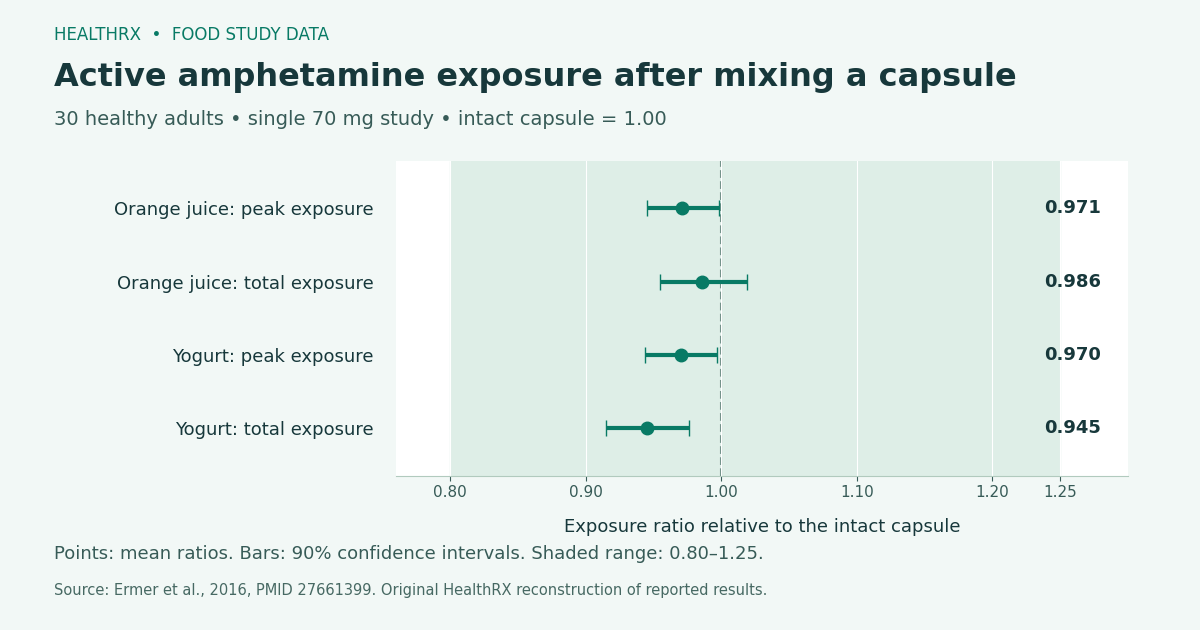
High-dose vitamin C, citrus juices, and acidic beverages consumed within 1 hour of a Vyvanse dose increase urinary acidity and accelerate renal clearance of d-amphetamine, potentially reducing duration of effect [4]. The FDA label explicitly lists urinary acidifying agents as pharmacokinetic interactors. Patients who drink orange juice at breakfast should move it to after dinner.
Alcohol
Combining alcohol with amphetamine-class drugs is dangerous. Ethanol blunts the subjective perception of stimulant-induced cardiovascular strain while amplifying dopaminergic reward, a combination that increases the risk of overconsumption [21]. The American Heart Association notes that alcohol raises blood pressure acutely, and stimulants do the same, together they can produce additive hypertensive stress [22]. Avoiding alcohol entirely during Vyvanse therapy is the safest approach.
High-Dose Caffeine
Caffeine is an adenosine receptor antagonist and mild stimulant. Up to 100 mg/day (roughly one cup of coffee) appears safe for most adults on lisdexamfetamine, but higher doses increase resting heart rate, heighten anxiety, and can worsen the jitteriness that some patients already experience at peak drug levels [23]. Patients who relied on multiple cups of coffee before starting Vyvanse should taper caffeine gradually rather than stopping abruptly.
Ultra-Processed Foods During Rebound Window
The evening rebound hunger window is the highest-risk period for binge-type eating, particularly of hyper-palatable foods engineered to override satiety signaling. For the subset of Vyvanse patients prescribed it for binge eating disorder, this is clinically significant. The SPD489-343 trial showed lisdexamfetamine reduced binge-eating days substantially [2], but the drug wears off by evening for most dosing schedules. A planned, structured dinner with adequate protein and fiber is the primary behavioral countermeasure.
Hydration: Simple, Overlooked, and Consequential
Amphetamines have a mild diuretic effect and increase perspiration [4]. Dehydration compounds stimulant-related headaches, worsens concentration, and can simulate or amplify crash symptoms. The standard recommendation of 8 glasses of water per day is a reasonable minimum; patients who exercise or live in warm climates should target higher.
Electrolyte balance matters alongside total fluid volume. Sodium, potassium, and magnesium losses through sweat are accelerated by stimulant-driven perspiration. Adding electrolyte tablets (without sugar) to afternoon water intake, or eating potassium-rich foods (banana, avocado, sweet potato) with dinner, addresses this without supplementation complexity.
Sleep, Nutrition, and the Vyvanse Recovery Window
D-amphetamine has a 10 to 13-hour half-life [4]. A 7 a.m. Dose at 50 mg still leaves roughly 12.5 mg-equivalent active drug in the system at 7 p.m. Sleep disruption is one of the most common patient-reported complaints with Vyvanse, affecting approximately 30% of adults in clinical trials [24].
Nutrition affects sleep quality independent of Vyvanse. A 150-calorie carbohydrate-containing snack 60 to 90 minutes before bed (oats, a small banana, whole grain crackers with peanut butter) can raise brain tryptophan availability and support serotonin synthesis, which may ease the transition to sleep [25]. This is not a replacement for behavioral sleep hygiene but is a low-risk adjunct.
Avoiding large, high-fat meals within 2 hours of bedtime reduces the likelihood of acid reflux, more common in stimulant users due to lower esophageal sphincter relaxation, and prevents the thermogenic effect of digestion from delaying sleep onset.
Special Considerations for Binge Eating Disorder (BED)
Vyvanse holds FDA approval for moderate-to-severe BED in adults, making it the first and only drug approved for this indication [4]. Nutritional counseling is listed in clinical guidelines as an essential component of BED treatment alongside pharmacotherapy [26].
The clinical practice guideline from the American Psychiatric Association recommends combining pharmacotherapy with cognitive behavioral therapy and nutritional rehabilitation for BED. Structured meal timing, three planned meals and two planned snacks daily, reduces the chaotic eating patterns that precede binge episodes. For BED patients on Vyvanse, the drug's appetite-suppressing effect is most pronounced during the day, leaving the same evening vulnerability described above.
Patients with BED should work with a registered dietitian alongside their prescribing clinician. Weight restoration or maintenance, rather than weight loss, is often the appropriate nutritional goal for BED, since restriction historically worsens binge urges [27].
Putting It Together: A Practical Daily Template
The following is a structured daily nutrition framework for an adult taking Vyvanse 50 to 70 mg at 7:00 a.m. Clinicians should adapt targets based on individual weight, activity level, and comorbidities.
| Time | Goal | Example | |------|------|---------| | 6:45 to 7:15 a.m. | 400 to 600 kcal, 25 to 35 g protein, low-GI carbs | 3-egg omelet, oats with berries, water | | 10:00 a.m. | 150 to 200 kcal protein snack | Greek yogurt or cheese and whole grain crackers | | 12:30 to 1:00 p.m. | 400 to 500 kcal, structured lunch | Grilled chicken, quinoa, roasted vegetables | | 4:00 to 5:00 p.m. | 150 to 200 kcal pre-rebound buffer | Almonds, apple, protein smoothie | | 6:30 to 8:00 p.m. | 500 to 700 kcal planned dinner, high protein | Salmon, sweet potato, leafy green salad | | 9:00 to 9:30 p.m. | Optional 100 to 150 kcal sleep-support snack | Small banana with peanut butter |
Daily protein target: 1.2 to 1.6 g/kg body weight. Daily fiber target: 25 to 38 g. Vitamin C supplements or citrus juice: after 6 p.m. Only.
Frequently asked questions
›How does Vyvanse affect daily life?
›What should I eat for breakfast on Vyvanse?
›Does food affect how well Vyvanse works?
›Can Vyvanse cause nutritional deficiencies?
›How do I stop losing too much weight on Vyvanse?
›Is it safe to drink coffee while taking Vyvanse?
›Can I drink alcohol while taking Vyvanse?
›Why am I so hungry at night on Vyvanse?
›What vitamins should I take with Vyvanse?
›Does Vyvanse affect gut health?
›What happens if I skip meals on Vyvanse?
›Is Vyvanse safe for long-term use?
References
-
Heal DJ, Smith SL, Gosden J, Nutt DJ. Amphetamine, past and present: a pharmacological and clinical perspective. J Psychopharmacol. 2013;27(6):479-496. https://pubmed.ncbi.nlm.nih.gov/23539642/
-
McElroy SL, Hudson JI, Mitchell JE, et al. Efficacy and safety of lisdexamfetamine for treatment of adults with moderate to severe binge-eating disorder. JAMA Psychiatry. 2015;72(3):235-246. https://pubmed.ncbi.nlm.nih.gov/25587645/
-
Ptacek R, Stefano GB, Weissenberger S, et al. Attention deficit hyperactivity disorder and disordered eating behaviors: links, risks, and challenges faced. Neuropsychiatr Dis Treat. 2016;12:571-579. https://pubmed.ncbi.nlm.nih.gov/27013876/
-
U.S. Food and Drug Administration. Vyvanse (lisdexamfetamine dimesylate) Prescribing Information. 2023. https://www.accessdata.fda.gov/drugsatfda_docs/label/2023/021977s049lbl.pdf
-
Institute of Medicine. Dietary Reference Intakes for Energy, Carbohydrate, Fiber, Fat, Fatty Acids, Cholesterol, Protein, and Amino Acids. National Academies Press; 2005. https://www.ncbi.nlm.nih.gov/books/NBK56068/
-
Wolfe RR, Miller SL, Miller KB. Optimal protein intake in the elderly. Clin Nutr. 2008;27(5):675-684. https://pubmed.ncbi.nlm.nih.gov/18819733/
-
Fernstrom JD, Fernstrom MH. Tyrosine, phenylalanine, and catecholamine synthesis and function in the brain. J Nutr. 2007;137(6 Suppl 1):1539S-1547S. https://pubmed.ncbi.nlm.nih.gov/17513421/
-
Cortese S, Moreira-Maia CR, St. Fleur D, Morcillo-Penalver C, Rohde LA, Faraone SV. Association between ADHD and obesity: a systematic review and meta-analysis. Am J Psychiatry. 2016;173(1):34-43. https://pubmed.ncbi.nlm.nih.gov/26315982/
-
Kaisari P, Dourish CT, Higgs S. Attention deficit hyperactivity disorder (ADHD) and disordered eating: a systematic review and meta-analysis. PLOS ONE. 2017;12(8):e0183031. https://pubmed.ncbi.nlm.nih.gov/28793336/
-
Volkow ND, Wang GJ, Fowler JS, et al. Evidence that methylphenidate enhances the saliency of a mathematical task by increasing dopamine in the human brain. Am J Psychiatry. 2004;161(7):1173-1180. https://pubmed.ncbi.nlm.nih.gov/15229048/
-
Holton KF, Nigg JT. The association of lifestyle factors and ADHD in children. J Atten Disord. 2020;24(11):1511-1520. https://pubmed.ncbi.nlm.nih.gov/28691568/
-
U.S. Department of Agriculture. Dietary Guidelines for Americans 2020-2025. https://www.dietaryguidelines.gov
-
Swardfager W, Herrmann N, Mazereeuw G, Coleman K, Lanctot KL, Gallagher D. Zinc in depression: a meta-analysis. Biol Psychiatry. 2013;74(12):872-878. https://pubmed.ncbi.nlm.nih.gov/23806573/
-
Patel K, Cherian J, Gohil K, Atkinson D. Schizophrenia: overview and treatment options. P T. 2014;39(9):638-645. https://pubmed.ncbi.nlm.nih.gov/22930057/
-
Abbasi B, Kimiagar M, Sadeghniiat K, Shirazi MM, Hedayati M, Rashidkhani B. The effect of magnesium supplementation on primary insomnia in elderly: a double-blind placebo-controlled clinical trial. J Res Med Sci. 2012;17(12):1161-1169. https://pubmed.ncbi.nlm.nih.gov/23853635/
-
National Institutes of Health Office of Dietary Supplements. Magnesium: Fact Sheet for Health Professionals. 2022. https://ods.od.nih.gov/factsheets/Magnesium-HealthProfessional/
-
Beard JL. Iron biology in immune function, muscle metabolism and neuronal functioning. J Nutr. 2001;131(2S-2):568S-580S. https://pubmed.ncbi.nlm.nih.gov/11160590/
-
Konofal E, Lecendreux M, Arnulf I, Mouren MC. Iron deficiency in children with attention-deficit/hyperactivity disorder. Arch Pediatr Adolesc Med. 2004;158(12):1113-1115. https://pubmed.ncbi.nlm.nih.gov/15583094/
-
Chang JP, Su KP, Mondelli V, Pariante CM. Omega-3 polyunsaturated fatty acids in youths with attention deficit hyperactivity disorder (ADHD): a systematic review and meta-analysis of clinical trials and biological studies. Neuropsychopharmacology. 2018;43(3):534-545. https://pubmed.ncbi.nlm.nih.gov/28741625/
-
Siscovick DS, Barringer TA, Fretts AM, et al. Omega-3 polyunsaturated fatty acid (fish oil) supplementation and the prevention of clinical cardiovascular disease: a science advisory from the American Heart Association. Circulation. 2017;135(15):e867-e884. https://www.ahajournals.org/doi/10.1161/CIR.0000000000000482
-
Mackillop J, Lisman SA. Effects of a prior alcohol challenge on the pharmacokinetics of subsequent amphetamine in rats. Pharmacol Biochem Behav. 2003;74(4):871-878. https://pubmed.ncbi.nlm.nih.gov/12667909/
-
Whelton PK, Carey RM, Aronow WS, et al. 2017 ACC/AHA/AAPA/ABC/ACPM/AGS/APhA/ASH/ASPC/NMA/PCNA guideline for the prevention