Anastrozole vs Exemestane on TRT: Which Aromatase Inhibitor Is Right for You?
At a glance
- FDA-approved male TRT use / neither drug
- Anastrozole / reversible, non-steroidal aromatase inhibitor
- Exemestane / irreversible, steroidal aromatase inactivator
- Direct male TRT evidence / small retrospective series for anastrozole; no comparable exemestane TRT outcomes study in this evidence set
- Direct head-to-head male TRT trial / not present in the evidence set reviewed
- Proven bone-safety winner / neither
- Proven fertility-preserving adjunct to exogenous TRT / neither
- Universal dose, switch interval, or estradiol target / not established
- Publication status / evidence-reconciled draft; medical approval required
The comparison has two solid columns—and one large blank
Both labels establish mechanism, approved indication, formulation, and warnings. Small male studies establish that each drug can lower measured estradiol. What is missing is the evidence readers usually need for “versus”: a direct male TRT comparison of symptom benefit, gynecomastia outcomes, fractures, sexual function, fertility, discontinuation, and long-term adverse effects.
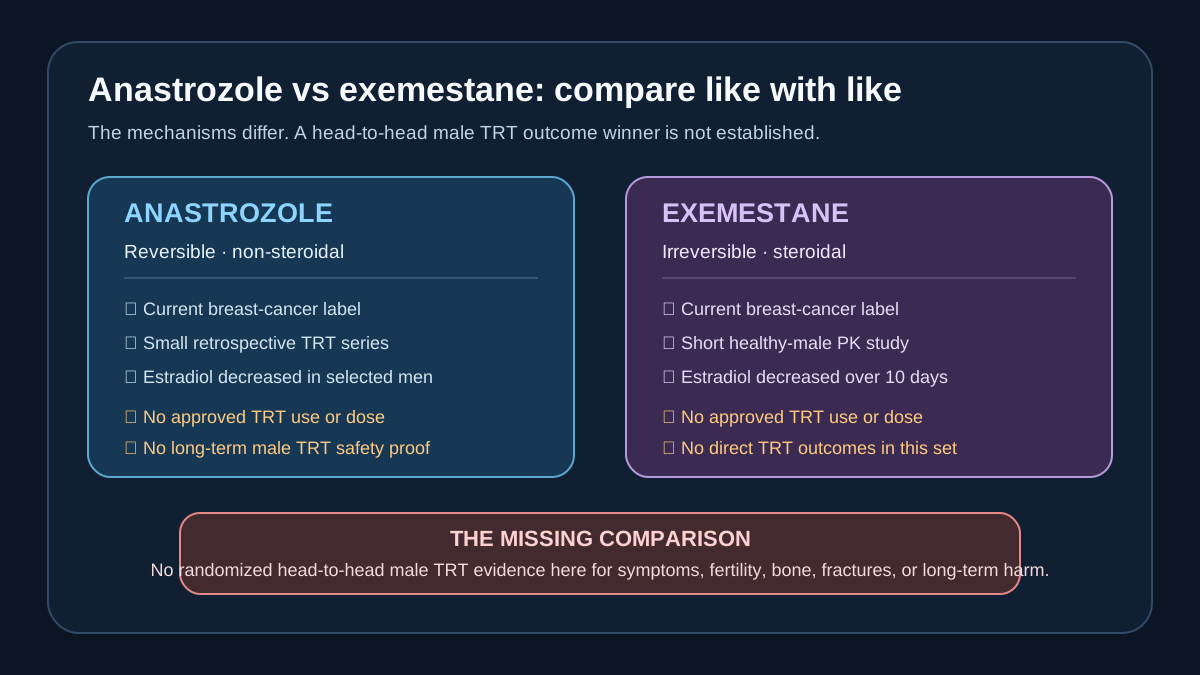
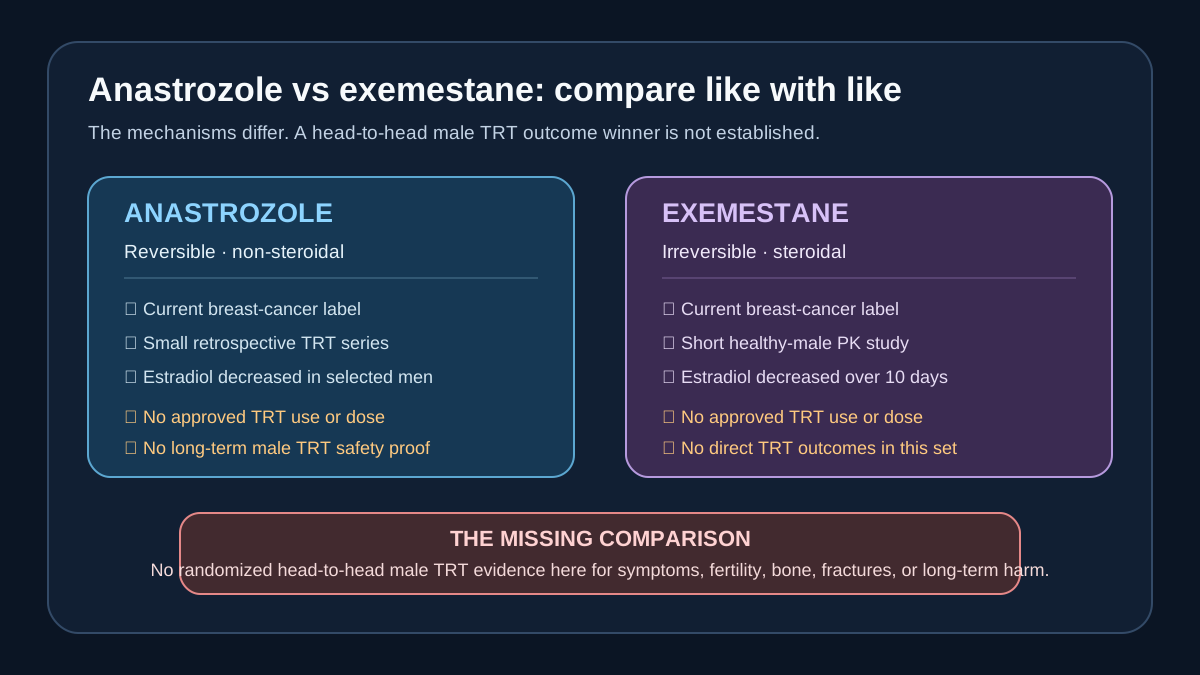
Figure 1. Evidence matrix for anastrozole versus exemestane on TRT. HealthRX.com editorial synthesis, August 29, 2026. Sources: current DailyMed labels, Punjani et al. (2021), Mauras et al. (2003), and AUA guidance. Method: compare only claims supported in the same evidence domain. Limitation: absence from this reviewed evidence set is not proof that no unpublished experience exists; it means superiority is not established here. The accessible matrix below contains the same information.
Evidence-matched comparison
| Question | Anastrozole | Exemestane | What the comparison permits |
|---|---|---|---|
| Mechanism | Selective, non-steroidal, reversible aromatase inhibitor | Steroidal, irreversible aromatase inactivator | The mechanism differs |
| U.S. approved use | Specified breast-cancer uses in postmenopausal women | Specified breast-cancer uses in postmenopausal women | Neither label approves male TRT use |
| Labeled dose | 1 mg once daily for the approved indication | 25 mg once daily after a meal for the approved indication | Neither labeled dose is a TRT instruction |
| Direct male evidence reviewed | Retrospective single-center TRT series; 44 analyzed men | Ten-day crossover dose study; 12 healthy young males | Both lower estradiol; the studies answer different questions |
| Direct male TRT outcome comparison | None in this evidence set | None in this evidence set | No evidence-based winner |
| Bone warning | Label warns estrogen lowering may reduce BMD; randomized male data also raise concern | Label says BMD reductions occur over time in the approved population | “Exemestane is bone neutral” is not supported |
| Long-term male safety | Not established | Not established | Monitoring and stop rules require clinical judgment |
| Fertility with exogenous TRT | Not established as a fertility-preserving add-on | Not established as a fertility-preserving add-on | Fertility is a separate treatment branch |
This structure prevents a common evidence error: comparing an anastrozole result in TRT patients with an exemestane result in healthy young men as if the populations, doses, duration, and outcomes were interchangeable.
Mechanism is useful, but it is not a clinical verdict
Anastrozole binds aromatase reversibly. Its current label reports an average elimination half-life of about 50 hours in the studied female population. Exemestane is processed as a false substrate and irreversibly inactivates aromatase; the body must make new enzyme for activity to return.
Those facts explain why plasma drug concentration and enzyme activity may recover differently. They do not establish that exemestane prevents an “estrogen rebound,” produces steadier symptom control, or is more forgiving after a missed dose. They also do not show that anastrozole is easier or safer to titrate in men on TRT.
The current exemestane label reports a mean terminal half-life of about 24 hours in healthy postmenopausal women. A short study in healthy young males estimated 8.9 hours after a 25 mg dose. That population difference is another reason not to turn half-life into a universal switching interval.
The male studies are not a head-to-head contest
What the anastrozole TRT series showed
Punjani and colleagues retrospectively reviewed 1,708 men receiving testosterone at one practice. Fifty-one received anastrozole and 44 remained after exclusions. The practice used its own estradiol and symptom criteria and prescribed 0.5 mg three times weekly. Median estradiol decreased from 65 to 22 pg/mL, while median total testosterone did not change significantly.
This is direct TRT evidence, but it was not randomized and did not establish symptom benefit, long-term safety, the best threshold, or the best dose.
What the exemestane male study showed
Mauras and colleagues studied 12 healthy eugonadal males ages 14 to 26 in a 10-day crossover experiment using 25 mg and 50 mg daily. Both regimens lowered estradiol and increased testosterone. The investigators concluded that exemestane was biologically active in males and drew a clear boundary: “Long-term efficacy and safety will need further study.”
This is direct male pharmacology, but not TRT evidence. It did not enroll men on exogenous testosterone, test an intermittent regimen, compare clinical symptoms, or measure long-term outcomes.
Putting these studies side by side shows an evidence gap, not a winner.
Bone health does not supply a shortcut
The previous comparison called exemestane bone-neutral or mildly anabolic and treated it as preferable when bone density was low. That conclusion is not supported by current labeling or a direct male TRT comparison.
The anastrozole label warns that estrogen lowering may reduce bone mineral density. A one-year randomized placebo-controlled study in 69 older men with low or borderline-low testosterone found lower posterior-anterior spine BMD during daily anastrozole treatment compared with placebo.
The exemestane label explicitly says reductions in BMD occur over time and describes assessment and management in its approved population. One metabolite's androgen-receptor affinity does not prove skeletal protection in men on TRT.
The honest comparison is that estrogen suppression can be consequential for bone, the magnitude may differ by drug, exposure, patient, and duration, and current male TRT evidence does not establish which agent produces the better long-term skeletal outcome.
Neither label supplies a male TRT dose
The approved doses—1 mg daily anastrozole and 25 mg daily exemestane—belong to breast-cancer treatment. The smaller or intermittent schedules discussed in TRT practice are off-label.
The cited studies also cannot be converted into a comparison table of “equivalent” TRT doses. One is a retrospective practice series in TRT patients; the other used daily exemestane for 10 days in healthy males. There is no validated conversion such as one amount of anastrozole equaling one amount of exemestane for symptom response or safety.
For the dosing-evidence boundary specific to anastrozole, see anastrozole dosing on TRT. For the evidence boundary specific to exemestane, see Aromasin (exemestane) on TRT.
The AUA pathway comes before selecting either drug
The AUA recommends measuring estradiol before testosterone therapy in patients with baseline breast symptoms or gynecomastia and measuring it when those symptoms develop during therapy. For persistent breast symptoms with elevated estradiol, its pathway considers the on-treatment testosterone result: testosterone-dose adjustment is described when testosterone is high, while an aromatase inhibitor is one option when testosterone is low or normal.
The guideline does not state that every elevated result needs treatment, name a preferred AI, provide a universal target, or give anastrozole-to-exemestane switching instructions.
Before a drug comparison matters, the clinical question should therefore be complete:
- Is there new or persistent breast tenderness or gynecomastia on examination?
- Is the estradiol result interpreted with the assay, range, baseline, and timing?
- What are the current testosterone level, formulation, dose, and collection timing?
- Could another medicine or condition explain the symptom?
- Is the proposed outcome specific and measurable?
- What bone and fertility considerations change the risk?
If the indication is uncertain, choosing between two AIs is the wrong next decision.
Fertility evidence is easily misapplied
The AUA/ASRM male-infertility guideline conditionally allows aromatase inhibitors, hCG, selective estrogen receptor modulators, or combinations for infertile men with low serum testosterone; the evidence level is Grade C. Its current Statement 42 says exogenous testosterone therapy should not be prescribed to men interested in current or future fertility.
That branch aims to raise endogenous testosterone while protecting spermatogenesis. It does not establish that adding anastrozole or exemestane to exogenous testosterone preserves fertility. Neither male study above answers that question.
A defensible selection note should disclose uncertainty
If a prescriber recommends one agent, a useful note should state:
| Field | What should be explicit |
|---|---|
| Indication | The symptom, finding, and laboratory context being treated |
| Why this agent | The patient-specific reason, not a generic mechanism slogan |
| Evidence limit | No FDA-approved male TRT use or proven head-to-head winner |
| Intended outcome | What benefit will be measured and by when |
| Safety context | Bone history, other medicines, adverse-effect plan, and fertility goal |
| Stop or switch rule | What happens after no benefit, excessive suppression, or intolerance |
This is more decision-useful than declaring a default winner. It makes the prescriber's judgment inspectable without pretending that weak comparative evidence is strong.
Frequently asked questions
Which is better on TRT: anastrozole or exemestane?
Is exemestane safer for bone because it is steroidal?
Are the labeled doses comparable?
Can I switch from anastrozole to exemestane after a set number of days?
Does an elevated estradiol result mean I need one of these drugs?
Which one is better for fertility?
References
-
DailyMed. Anastrozole tablets, current U.S. prescribing information; revised May 2025. https://dailymed.nlm.nih.gov/dailymed/drugInfo.cfm?setid=71f053c2-8d0d-41a1-8630-2d797eced799
-
DailyMed. Exemestane tablets, current U.S. prescribing information; revised December 2024. https://dailymed.nlm.nih.gov/dailymed/drugInfo.cfm?setid=abde1ccd-0ec9-40d4-b205-fbc00f5878b9
-
Punjani N, Bernie H, Salter C, Flores J, Benfante N, Mulhall JP. The Utilization and Impact of Aromatase Inhibitor Therapy in Men With Elevated Estradiol Levels on Testosterone Therapy. Sex Med. 2021 Aug;9(4):100378. doi:10.1016/j.esxm.2021.100378. PMID:34090245. PMCID:PMC8360915. PubMed record PMC full text
-
Mauras N, Lima J, Patel D, Rini A, di Salle E, Kwok A, Lippe B. Pharmacokinetics and dose finding of a potent aromatase inhibitor, aromasin (exemestane), in young males. J Clin Endocrinol Metab. 2003 Dec;88(12):5951-6. doi:10.1210/jc.2003-031279. PMID:14671195. PubMed record
-
American Urological Association. Evaluation and Management of Testosterone Deficiency: AUA Guideline. https://www.auanet.org/Documents/Guidelines/PDF/Testosterone%20Website%20Final%280%29.pdf
-
Burnett-Bowie SA, McKay EA, Lee H, Leder BZ. Effects of aromatase inhibition on bone mineral density and bone turnover in older men with low testosterone levels. J Clin Endocrinol Metab. 2009 Dec;94(12):4785-92. doi:10.1210/jc.2009-0739. PMID:19820017. PMCID:PMC2795655. PubMed record PMC full text
-
Finkelstein JS, Lee H, Burnett-Bowie SA, Pallais JC, Yu EW, Borges LF, Jones BF, Barry CV, Wulczyn KE, Thomas BJ, Leder BZ. Gonadal steroids and body composition, strength, and sexual function in men. N Engl J Med. 2013 Sep 12;369(11):1011-22. doi:10.1056/nejmoa1206168. PMID:24024838. PMCID:PMC4142768. NCT:NCT00114114. PubMed record PMC full text
-
American Urological Association and American Society for Reproductive Medicine. Diagnosis and Treatment of Infertility in Men: AUA/ASRM Guideline (2020; amended 2024). See Statements 41 and 42. 2024 unabridged guideline