Oral Minoxidil Overdose: Recognition, Management, and What to Do After an Accidental Extra Dose

Clinical medical image for oral minoxidil: Oral Minoxidil Overdose: Recognition, Management, and What to Do After an Accidental Extra Dose

At a glance

  • Typical hair-loss dose / 0.625 to 5 mg once daily
  • FDA-approved hypertension dose range / 10 to 40 mg per day (max 100 mg)
  • Onset of cardiovascular effects after ingestion / 30 minutes to 2 hours
  • Peak plasma concentration / approximately 1 hour post-dose
  • Plasma half-life / approximately 4.2 hours
  • Primary overdose risk / severe hypotension with reflex tachycardia
  • Antidote / no specific antidote; IV normal saline and phenylephrine are first-line supportive measures
  • Poison Control (U.S.) / 1-800-222-1222
  • Pericardial effusion risk threshold / chronic doses above 10 mg per day
  • Pediatric ingestion of any amount / treat as a medical emergency

How Oral Minoxidil Works and Why Overdose Matters

Oral minoxidil is a potent arterial vasodilator originally developed and FDA-approved in 1979 for severe, refractory hypertension at doses of 10 to 40 mg daily. The drug opens ATP-sensitive potassium channels in vascular smooth muscle, reducing peripheral resistance and lowering blood pressure. That same vasodilatory mechanism, at much lower doses, drives increased follicular blood flow and prolongs the anagen (growth) phase of hair.

The Potassium Channel Mechanism

Minoxidil sulfate, the active metabolite produced by hepatic sulfotransferase enzymes, acts on K_ATP channels in smooth muscle cell membranes. Channel opening causes potassium efflux, membrane hyperpolarization, and relaxation of arteriolar walls. This effect is dose-dependent. At 1.25 mg, the blood pressure drop in a normotensive adult is typically minimal. At 20 mg or above, it can be profound.

Why Low Dermatologic Doses Sit Close to Cardiovascular Thresholds

Sinclair's 2018 dose-ranging study documented hair density improvements at oral doses from 0.25 to 5 mg daily [1]. The gap between a therapeutic dermatologic dose (2.5 to 5 mg) and the lowest antihypertensive dose (10 mg) is only a factor of two to four. That ratio is smaller than many patients assume. A patient taking 5 mg daily for hair loss who accidentally ingests a second tablet has effectively entered antihypertensive territory.

Defining Overdose: Thresholds and Risk Stratification

Not every extra tablet constitutes a dangerous overdose. Risk depends on the amount ingested, baseline blood pressure, concurrent medications, and individual sensitivity to vasodilation.

Low-Risk Scenarios

An accidental double dose in a patient prescribed 1.25 mg (total ingested: 2.5 mg) falls well within the range studied for hair loss. Sinclair et al. Reported that doses up to 5 mg daily were tolerated in dermatologic patients, though hypertrichosis and pedal edema increased at higher doses [1]. Most adults in this range will not experience clinically significant hypotension.

Moderate-Risk Scenarios

Ingestion of 10 to 20 mg in an adult, or any supratherapeutic dose in a patient concurrently taking antihypertensives, beta-blockers, or PDE5 inhibitors (sildenafil, tadalafil), requires monitoring. The FDA prescribing information warns that concomitant use with guanethidine can produce "profound orthostatic hypotension," and similar combination applies to other blood-pressure-lowering agents [2].

High-Risk and Pediatric Scenarios

Doses exceeding 50 mg in adults or any confirmed ingestion in a child under 6 years old should be treated as a medical emergency. Minoxidil's vasodilatory potency in children, combined with lower body weight, means even a single 2.5 mg tablet can produce symptomatic hypotension in a toddler. The American Association of Poison Control Centers annual reports consistently flag pediatric minoxidil exposures as requiring medical evaluation [3].

Signs and Symptoms of Oral Minoxidil Overdose

The clinical picture of minoxidil toxicity follows directly from its pharmacology: excessive vasodilation producing hypotension, and the body's compensatory response driving tachycardia and fluid retention.

Cardiovascular Symptoms

The earliest sign is typically a drop in systolic blood pressure below the patient's baseline, often appearing within 30 to 60 minutes of ingestion. Reflex tachycardia follows as baroreceptors detect reduced arterial pressure and trigger sympathetic outflow. Heart rates above 100 bpm are common in moderate overdose. In severe cases, hypotension can progress to cardiovascular collapse if unsupported [4].

Pericardial effusion is a known complication of chronic minoxidil use at antihypertensive doses. It is unlikely after a single acute overdose but should be considered if echocardiography is performed. A retrospective review published in the Journal of the American Academy of Dermatology noted that pericardial effusion risk rises with doses above 10 mg per day taken chronically, not acutely [5].

Non-Cardiovascular Symptoms

Dizziness, lightheadedness, and syncope reflect cerebral hypoperfusion. Nausea may occur. Fluid retention can develop rapidly in overdose, presenting as peripheral edema or, in severe cases, pulmonary edema. Headache is common and results from vasodilation of cerebral arteries.

Timeline of Symptom Onset

Oral minoxidil reaches peak plasma concentration in approximately 1 hour. The FDA label reports a plasma half-life of 4.2 hours, meaning that 95% of the drug is eliminated within roughly 21 hours [2]. Symptoms from a single acute ingestion typically peak at 1 to 3 hours and resolve within 24 hours, assuming adequate supportive care.

Emergency Management Protocol

There is no specific antidote for minoxidil overdose. Management is supportive and guided by hemodynamic status.

Immediate Steps (Pre-Hospital)

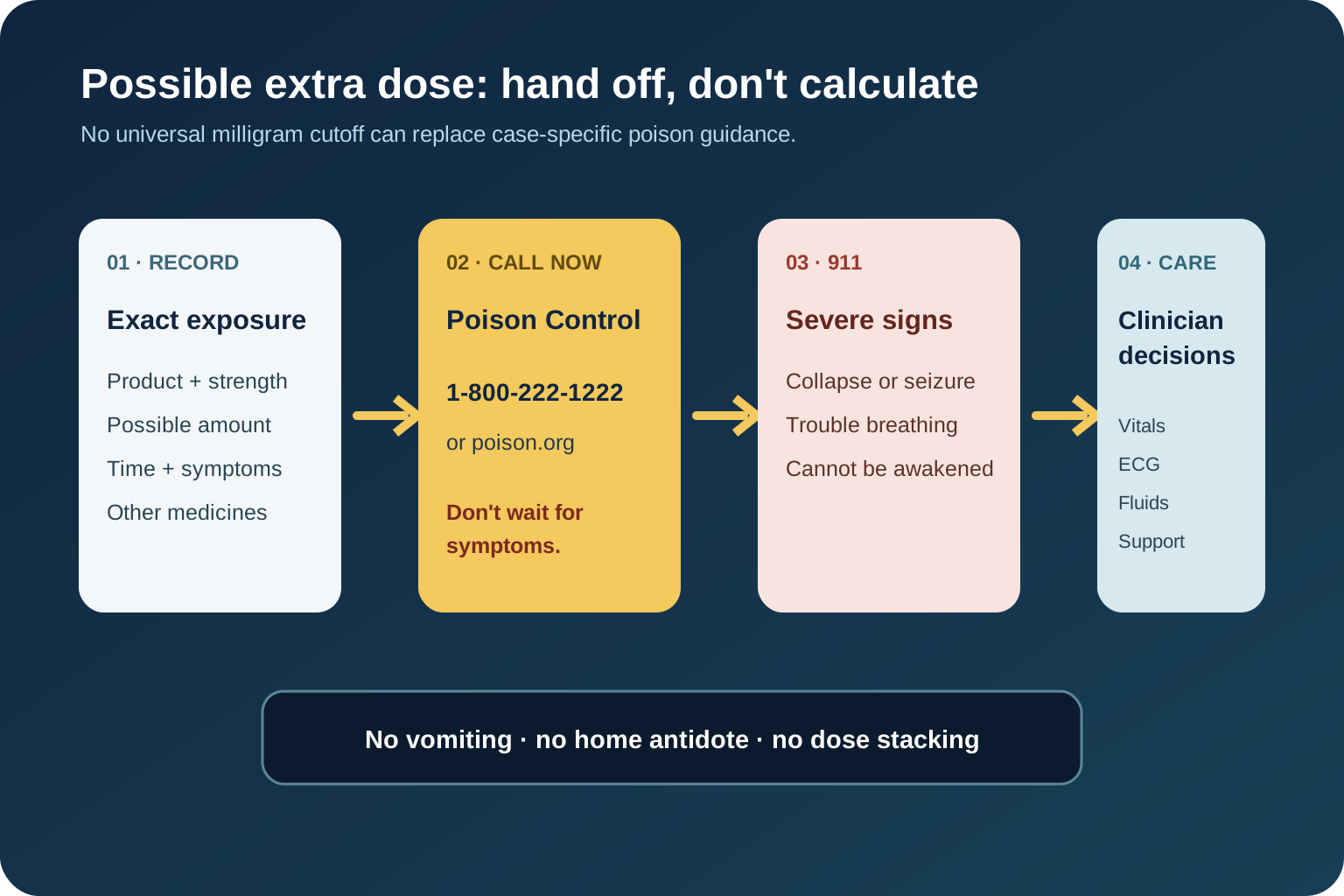
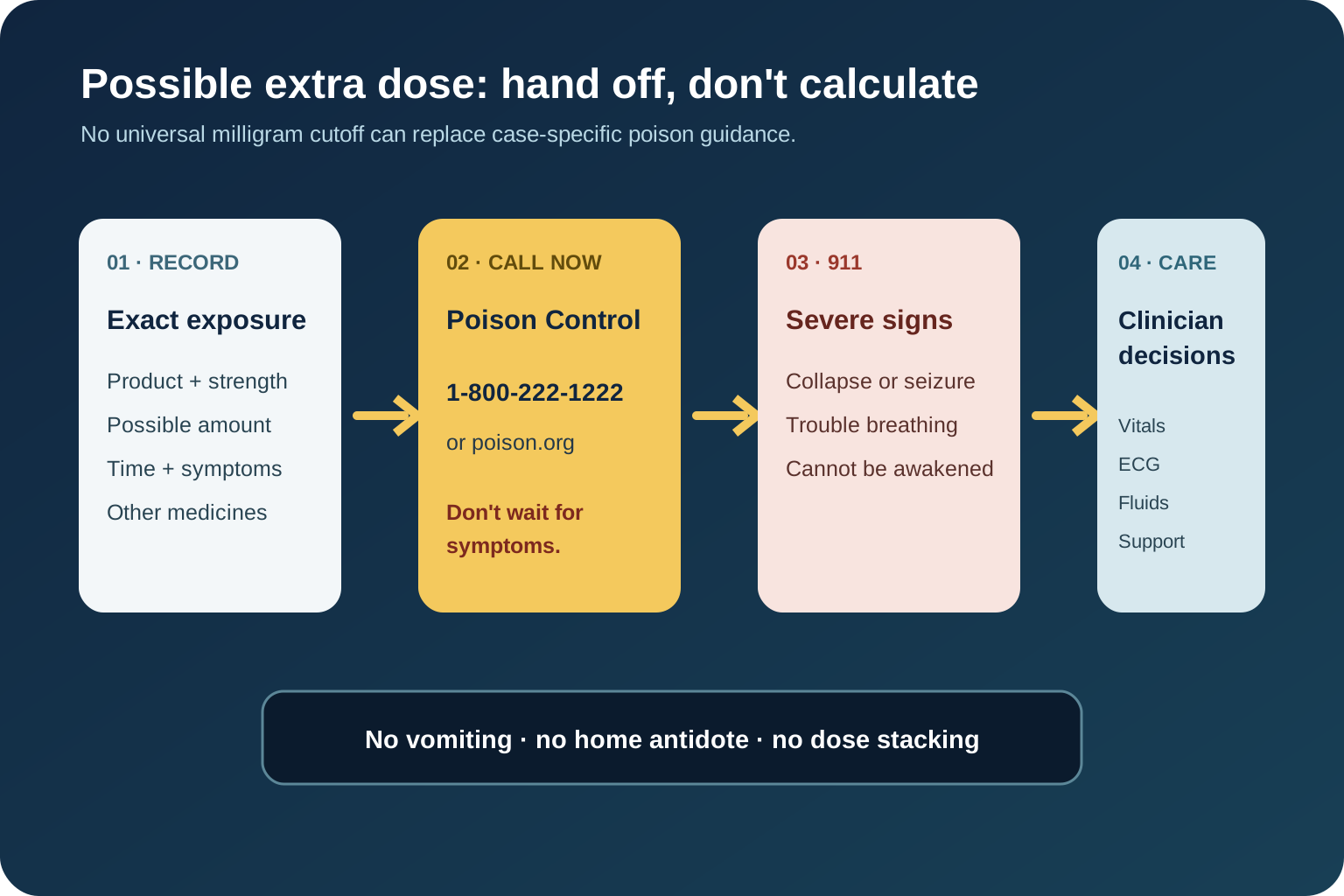
If the overdose occurred within the preceding hour and the patient is alert and cooperative, contact Poison Control (1-800-222-1222 in the United States) before inducing any intervention. Do not induce vomiting unless explicitly directed by a poison control specialist or physician. Place the patient supine with legs elevated to support venous return.

Emergency Department Management

Initial assessment should include continuous cardiac monitoring, blood pressure measurement every 5 minutes during the acute phase, and IV access. The 2022 AACT (American Academy of Clinical Toxicology) position statement on single-dose activated charcoal supports administration within 1 hour of ingestion if the airway is protected and no contraindications exist [6].

Hypotension Treatment

IV normal saline (0.9% NaCl) is first-line for volume resuscitation. If blood pressure does not respond to fluids, vasopressors are indicated. The FDA prescribing information specifically recommends phenylephrine, vasopressin, or dopamine, noting that epinephrine should be avoided because its cardiac-stimulating effects could worsen reflex tachycardia [2].

Managing Reflex Tachycardia

Beta-blockers should be used cautiously. While they address tachycardia, they also blunt the compensatory cardiac output increase that is partially supporting blood pressure. Short-acting agents like esmolol allow titration. The decision to give a beta-blocker should be made only after blood pressure has been stabilized with fluids and, if necessary, vasopressors.

Monitoring Duration

Patients who ingested more than twice their prescribed dose, or any patient with documented hypotension or tachycardia, should be monitored for a minimum of 8 hours. Given the 4.2-hour half-life, this captures approximately two half-lives and covers the period of greatest risk. Asymptomatic patients after 8 hours of observation can typically be discharged with instructions to monitor blood pressure at home.

The Accidental Double Dose: A Practical Decision Guide

This is the most common real-world scenario. A patient prescribed 2.5 mg for androgenetic alopecia realizes they took their tablet twice.

Step 1: Assess the Total Dose

A double dose of 2.5 mg equals 5 mg. This remains within the range studied by Sinclair et al. For hair loss [1]. A double dose of 5 mg equals 10 mg, which is the lowest FDA-approved antihypertensive dose and carries a higher risk profile.

Step 2: Check for Concurrent Medications

Patients also taking amlodipine, lisinopril, propranolol, sildenafil, or tadalafil face amplified hypotensive risk. A systematic review in the British Journal of Dermatology emphasized that drug-drug interactions are the primary safety concern with low-dose oral minoxidil, particularly in patients already on antihypertensive regimens [7].

Step 3: Monitor at Home or Seek Care

For a double dose of 2.5 mg or less, with no concurrent antihypertensives: monitor for dizziness, lightheadedness, or palpitations for 4 hours. Skip the next scheduled dose. Resume normal dosing the following day.

For a double dose of 5 mg, or any supratherapeutic dose with concurrent blood-pressure-lowering medications: check blood pressure if a home cuff is available. If systolic pressure drops below 90 mmHg, or heart rate exceeds 110 bpm, or the patient feels faint, seek emergency evaluation.

Prevention: Reducing the Risk of Accidental Overdose

Overdose prevention starts with prescription design and patient education.

Prescribing Safeguards

Dermatologists prescribing low-dose oral minoxidil should specify tablet strengths that minimize the consequence of a double dose. Prescribing 1.25 mg tablets instead of 5 mg tablets means an accidental double dose peaks at only 2.5 mg. A 2020 expert consensus in the Journal of the American Academy of Dermatology recommended starting at the lowest effective dose (0.625 mg for women, 2.5 mg for men) to balance efficacy against cardiovascular risk [8].

Storage and Labeling

Keep minoxidil tablets in original pharmacy packaging, separated from other daily medications that look similar. This is especially important in households with children, where a single ingested tablet could produce symptomatic hypotension.

Pill Organizer Pitfalls

Weekly pill organizers reduce double-dosing risk by making it visually obvious whether a day's dose has been taken. Patients who rely on memory alone are more likely to take an uncertain second dose. A reasonable rule: if unsure whether a dose was taken, skip it. Missing one day of a hair-loss medication has no measurable clinical consequence.

Special Populations and Overdose Risk

Elderly Patients

Adults over 65 have reduced baroreceptor sensitivity and are more vulnerable to orthostatic hypotension. A dose that would be low-risk in a 30-year-old may produce syncope in an 80-year-old. The 2019 Beers Criteria from the American Geriatrics Society lists minoxidil among medications with high risk for orthostatic hypotension in older adults [9].

Patients with Renal Impairment

Minoxidil is predominantly metabolized by hepatic glucuronidation, but reduced renal clearance can prolong the elimination of active metabolites. The FDA label recommends dose adjustment in patients with significant renal impairment (eGFR <30 mL/min) [2]. An accidental extra dose in this population carries a longer duration of effect.

Patients with Pre-Existing Cardiac Conditions

Patients with heart failure, coronary artery disease, or pulmonary hypertension face disproportionate risk from minoxidil-induced vasodilation and fluid shifts. Any supratherapeutic dose in these patients warrants medical evaluation regardless of the absolute milligram amount.

Pharmacokinetics Relevant to Overdose Timing

Understanding minoxidil's absorption and metabolism helps clinicians and patients gauge the window for intervention.

Absorption and Peak Effect

Oral bioavailability exceeds 90%. Peak plasma levels occur at approximately 60 minutes. The drug is almost completely absorbed from the GI tract, which means activated charcoal has a narrow utility window (within 1 hour of ingestion).

Metabolism and Elimination

The liver converts minoxidil to minoxidil sulfate (the active vasodilator) and minoxidil glucuronide (inactive). The pharmacokinetic profile described in clinical pharmacology references shows that roughly 90% of an oral dose is metabolized, with 12% excreted unchanged in urine [4]. The 4.2-hour half-life means drug effects wane substantially by 8 to 12 hours post-ingestion.

Clinical Implication

If a patient realizes they took an extra dose 3 or more hours ago and remain asymptomatic with normal blood pressure, the risk of delayed deterioration is low. The drug has already reached peak effect and is being cleared.

When to Call Poison Control vs. 911

Call Poison Control (1-800-222-1222) for asymptomatic adults who ingested up to double their prescribed low dose and have no concurrent antihypertensives.

Call 911 for any of the following: confirmed ingestion exceeding 20 mg; any pediatric ingestion; systolic blood pressure below 90 mmHg; heart rate above 120 bpm; syncope or near-syncope; chest pain; or any ingestion in a patient with known heart failure. The National Capital Poison Center guidance on cardiovascular drug overdoses supports this risk-stratified triage approach [3].

Patients taking low-dose oral minoxidil for hair loss should store Poison Control's number in their phone at the time of first prescription fill.

Frequently asked questions

What happens if I accidentally take two oral minoxidil pills?
If you take a double dose of 2.5 mg or less (total 5 mg), monitor for dizziness, lightheadedness, or rapid heartbeat for 4 hours. Skip your next dose and resume the following day. If you feel faint or your blood pressure drops below 90 systolic, seek emergency care.
Is there an antidote for minoxidil overdose?
No specific antidote exists. Treatment is supportive: IV fluids for low blood pressure, vasopressors like phenylephrine if fluids are insufficient, and monitoring. Activated charcoal may help if given within 1 hour of ingestion.
How long do minoxidil overdose symptoms last?
Minoxidil has a plasma half-life of about 4.2 hours. Symptoms from a single acute overdose typically peak at 1 to 3 hours and resolve within 12 to 24 hours with appropriate supportive care.
Can a child be harmed by swallowing one minoxidil tablet?
Yes. Even a single 2.5 mg tablet can cause significant hypotension in a small child. Any confirmed or suspected pediatric minoxidil ingestion should be treated as a medical emergency. Call 911 immediately.
How does oral minoxidil work for hair loss?
Minoxidil opens ATP-sensitive potassium channels in blood vessel walls, increasing blood flow to hair follicles and prolonging the anagen (growth) phase. The active metabolite, minoxidil sulfate, is responsible for both the hair-growth and blood-pressure-lowering effects.
Should I go to the ER if I took an extra dose of 1.25 mg minoxidil?
Probably not. A total of 2.5 mg (double a 1.25 mg dose) is still within the studied dermatologic dose range. Monitor yourself for 4 hours. Seek care only if you develop symptoms like dizziness, fainting, or heart rate above 110 bpm.
Does oral minoxidil interact with blood pressure medications during overdose?
Yes. Concurrent use of antihypertensives, beta-blockers, or PDE5 inhibitors (sildenafil, tadalafil) amplifies the blood-pressure-lowering effect. Any supratherapeutic dose combined with these medications warrants medical evaluation.
What is the lethal dose of oral minoxidil?
No well-defined lethal dose in humans has been established in the literature. Fatalities have been reported with massive ingestions (hundreds of milligrams), but serious cardiovascular compromise can occur at much lower doses depending on individual factors. The FDA-approved maximum daily dose for hypertension is 100 mg.
Can I take activated charcoal at home after a minoxidil overdose?
Do not self-administer activated charcoal. It must be given under medical supervision, ideally within 1 hour of ingestion, and only after confirming the airway is protected. Call Poison Control first for guidance.
How do doctors monitor for minoxidil toxicity?
Monitoring includes continuous blood pressure readings, heart rate tracking, ECG for tachycardia or ST changes, and in chronic high-dose use, echocardiography to check for pericardial effusion. Basic metabolic panel may be drawn to assess renal function.
Is low-dose oral minoxidil (2.5 mg) safe long-term?
Sinclair and colleagues documented tolerability at doses from 0.25 to 5 mg daily for hair loss, though side effects including hypertrichosis, pedal edema, and dizziness increase at higher doses. Long-term cardiovascular safety data at low doses are limited but reassuring in patients without pre-existing heart disease.
What should I tell the ER if I overdosed on minoxidil?
Tell them the exact dose you took, the time of ingestion, all other medications you take (especially blood pressure drugs), and any symptoms you are experiencing. Bring the pill bottle if possible so they can confirm the tablet strength.

References

  1. Sinclair R. Et al. Treatment of female pattern hair loss with oral antiandrogens and minoxidil. Australas J Dermatol. 2018;59(2):e105-e107. https://pubmed.ncbi.nlm.nih.gov/29498028/
  2. U.S. Food and Drug Administration. Minoxidil (Loniten) prescribing information. Revised 2015. https://www.accessdata.fda.gov/drugsatfda_docs/label/2015/018154s026lbl.pdf
  3. Gummin DD, et al. 2021 Annual Report of the National Poison Data System (NPDS). Clin Toxicol. 2022;60(12):1381-1643. https://www.ncbi.nlm.nih.gov/pmc/articles/PMC9017675/
  4. Lowenthal DT, Affrime MB. Pharmacology and pharmacokinetics of minoxidil. J Cardiovasc Pharmacol. 1980;2 Suppl 2:S93-S106. https://pubmed.ncbi.nlm.nih.gov/3769993/
  5. Randolph M, Tosti A. Oral minoxidil treatment for hair loss: A review of efficacy and safety. J Am Acad Dermatol. 2021;84(3):737-746. https://pubmed.ncbi.nlm.nih.gov/31078584/
  6. Chyka PA, et al. Position paper: Single-dose activated charcoal. Clin Toxicol. 2005;43(2):61-87. https://pubmed.ncbi.nlm.nih.gov/15573992/
  7. Villani A, et al. Review of oral minoxidil as treatment of hair disorders: In search of the perfect dose. J Eur Acad Dermatol Venereol. 2021;35(7):1485-1492. https://pubmed.ncbi.nlm.nih.gov/31512730/
  8. Vaño-Galván S, et al. Oral minoxidil in alopecia: Expert consensus on indications and use. J Am Acad Dermatol. 2020;82(1):195-197. https://pubmed.ncbi.nlm.nih.gov/31678219/
  9. American Geriatrics Society 2019 Beers Criteria Update Expert Panel. American Geriatrics Society 2019 Updated AGS Beers Criteria for Potentially Inappropriate Medication Use in Older Adults. J Am Geriatr Soc. 2019;67(4):674-694. https://pubmed.ncbi.nlm.nih.gov/30693946/