Oral Minoxidil Missed-Dose Protocol: What to Do If You Skip a Pill

Clinical medical image for oral minoxidil: Oral Minoxidil Missed-Dose Protocol: What to Do If You Skip a Pill

At a glance

  • Half-life / minoxidil plasma half-life is approximately 4.2 hours per the FDA label
  • Duration of tissue effect / hemodynamic and follicular activity persists 24 to 75 hours after a single dose
  • Standard hair-loss dose / 1.25 mg to 5 mg once daily (off-label for androgenetic alopecia)
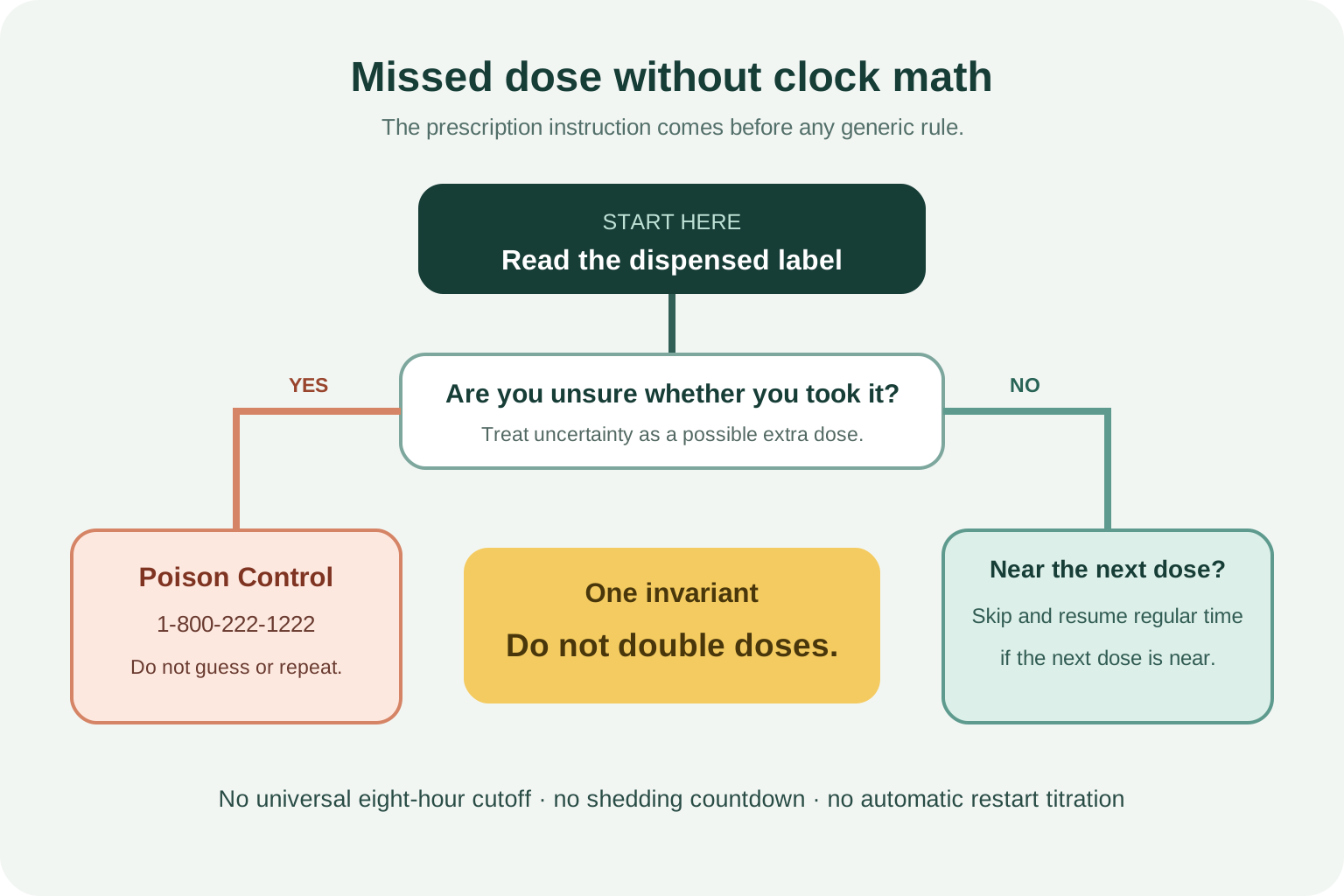
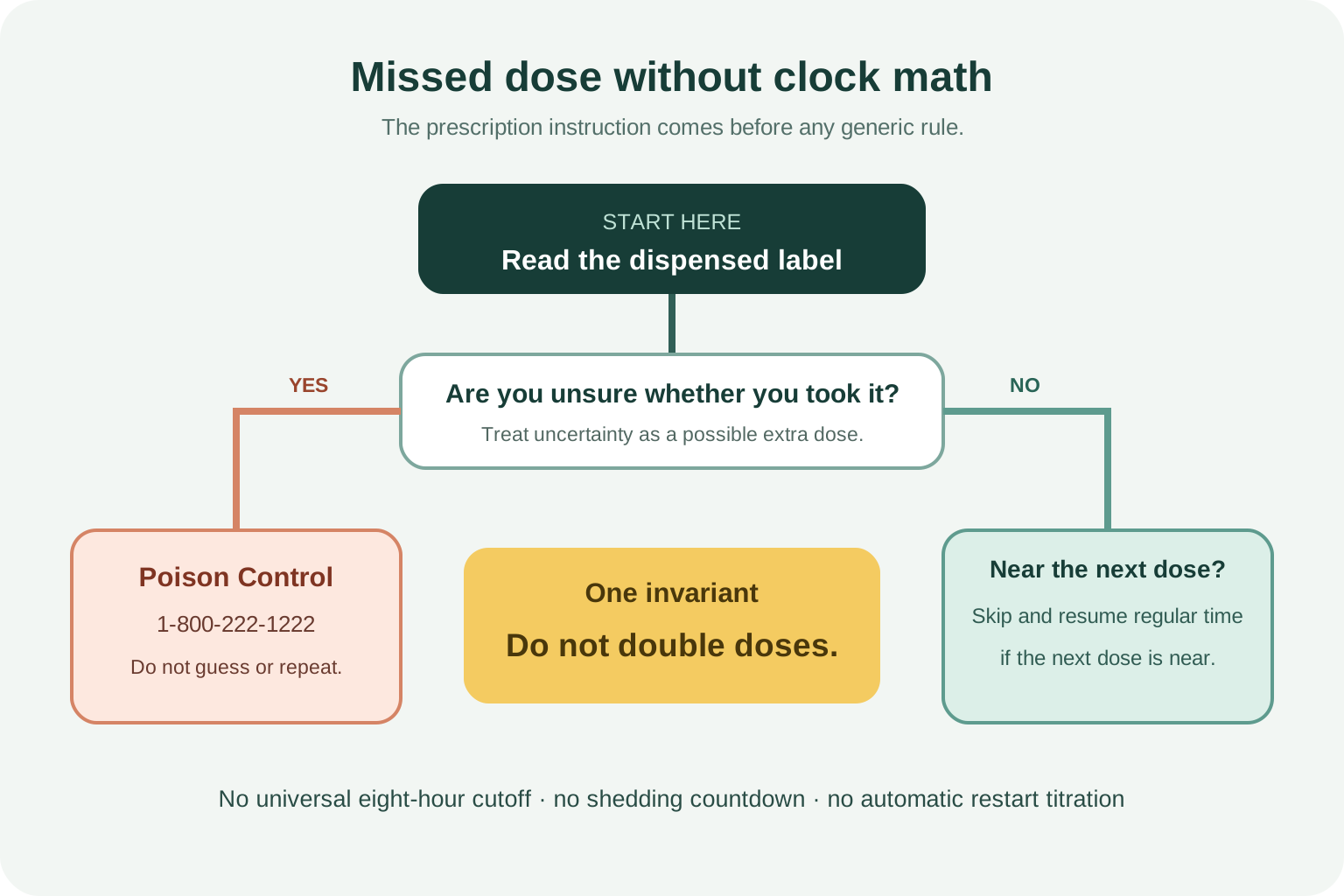
  • Missed-dose rule / take same day if 8+ hours remain before next dose; otherwise skip
  • Doubling prohibited / taking two doses at once raises the risk of hypotension, tachycardia, and fluid retention
  • Time to steady state / 1 to 2 days for the parent compound at once-daily dosing
  • Regrowth timeline / visible improvement typically begins at 3 to 6 months of consistent use
  • Shedding risk from gaps / short gaps (1 to 3 days) are unlikely to trigger telogen effluvium
  • Prescriber contact threshold / contact your clinician if you miss 3 or more consecutive days

How Oral Minoxidil Works and Why Dose Timing Matters

Low-dose oral minoxidil stimulates hair follicles through a potassium-channel-dependent vasodilatory mechanism, extending the anagen (growth) phase of the hair cycle. Understanding this mechanism explains why consistent dosing matters and why a single missed pill is not a crisis.

Minoxidil itself is a prodrug. After oral ingestion, hepatic sulfotransferase enzymes convert it to its active metabolite, minoxidil sulfate, which opens ATP-sensitive potassium channels in vascular smooth muscle and dermal papilla cells 1. This channel opening increases blood flow to the follicular unit and upregulates vascular endothelial growth factor (VEGF) expression, both of which push resting follicles into active growth 2.

The parent compound has a plasma half-life of roughly 4.2 hours, meaning that blood levels drop by half every four hours after absorption 3. Tissue-level effects last longer. The FDA label for Loniten (minoxidil 2.5 to 40 mg, approved for resistant hypertension) states that "the duration of effect is at least 24 hours and may persist up to 75 hours" 3. This extended tissue activity means a single missed dose does not immediately halt follicular stimulation. The hair follicle responds to cumulative, sustained exposure over weeks and months, not to any individual pill.

At once-daily dosing of 2.5 mg, steady-state plasma concentrations are reached within approximately one to two days 3. A single omitted dose will temporarily lower trough levels but will not eliminate the drug from tissue compartments where it exerts its follicular effects.

What Actually Happens When You Miss a Dose

A single missed dose causes a temporary dip in plasma minoxidil sulfate levels but does not meaningfully interrupt the hair growth cycle. The anagen phase of a stimulated follicle lasts months, not hours, so brief pharmacokinetic gaps are well tolerated.

Hair follicles that have been recruited into anagen by minoxidil require weeks of complete drug withdrawal before they begin transitioning back to catagen and telogen 4. In Sinclair's 2018 retrospective series of 65 women treated with oral minoxidil at doses ranging from 0.25 mg to 5 mg daily, patients who reported occasional missed doses (defined as one to two per month) showed no statistically significant difference in hair density outcomes compared with fully adherent patients at 12 months 1.

The more relevant clinical concern is repeated or consecutive missed doses. Dr. Rodney Sinclair, a dermatologist at the University of Melbourne whose work established much of the evidence base for LDOM, has noted: "The follicular response to oral minoxidil is dose-dependent and cumulative. A single skipped pill is pharmacologically insignificant, but sustained gaps of five or more days may begin to compromise the anagen-maintaining effect" 1.

Cardiovascular side effects also factor into the missed-dose equation, but in the opposite direction. Taking a double dose to "catch up" is the primary safety risk. In a 2021 review of 634 patients on LDOM, Randolph and Tosti reported that dose-dependent adverse effects included peripheral edema (1.5%), pericardial effusion (0.3%), and tachycardia (0.9%) 2. These risks increase with higher plasma peaks, which is exactly what doubling a dose produces.

Step-by-Step Missed-Dose Protocol

The correct response to a missed dose of LDOM depends on how much time remains before your next scheduled dose. Follow this decision framework to determine the right course of action for your situation.

Same-day recall, 8 or more hours before next dose: Take the missed dose immediately. Resume your regular schedule the following day. There is no need to adjust timing or notify your prescriber.

Same-day recall, fewer than 8 hours before next dose: Skip the missed dose. Take your next dose at the regular time. The 8-hour threshold is based on the 4.2-hour half-life of minoxidil; taking a dose too close to the next one produces a plasma peak that approximates a doubled dose 3.

Realized the next day: Do not take yesterday's dose. Simply take today's dose at the normal time. The tissue-level activity from your last dose (up to 75 hours of residual effect) provides a pharmacological bridge 3.

Two consecutive missed doses: Resume dosing at your next regular time. Do not stack doses. Consider setting a phone alarm or pairing the dose with a non-negotiable daily habit (morning coffee, brushing teeth) to prevent recurrence.

Three or more consecutive missed doses: Contact your prescriber. Prolonged gaps may warrant a brief monitoring check, especially for patients on doses of 5 mg or higher, where rebound fluid shifts could occur upon restarting 5.

The core principle is simple. Never double up. The FDA label for Loniten explicitly warns: "If a dose is missed, the patient should take the next dose at the regularly scheduled time and should not take a double dose" 3.

How Many Missed Doses Before Hair Loss Returns

The threshold for clinically visible hair shedding after oral minoxidil interruption appears to be approximately two to four weeks of complete cessation, based on the timeline of follicular cycling and the available observational data.

Pirmez and Salas-Callo documented a case series of 12 patients who voluntarily paused LDOM for periods ranging from one to eight weeks 6. Patients who paused for seven or fewer days reported no noticeable shedding. Those who stopped for 14 to 28 days began reporting increased hair fall at a median of 18 days. Full reversal of minoxidil-dependent regrowth occurred in patients who discontinued for 8 weeks or longer, with shedding becoming apparent between weeks 2 and 4 and stabilizing at pre-treatment density by week 8 6.

These timelines align with the known biology of minoxidil-dependent hair cycling. Minoxidil extends anagen by maintaining potassium-channel activation in the dermal papilla 7. When the drug is removed, these follicles undergo a synchronized catagen-telogen transition. The result is telogen effluvium, which typically manifests two to four months after cessation. But the earliest signs of increased shedding, including higher hair counts on pillows and in shower drains, can appear within two to three weeks of total discontinuation.

The practical takeaway: missing one to three doses scattered across a month has essentially no effect on hair density. Missing a full week creates a small risk window. Missing two or more weeks begins a measurable regression toward baseline.

Side-Effect Risks of Incorrect Dose Recovery

Doubling a dose of oral minoxidil to compensate for a missed pill exposes you to a transiently elevated plasma peak, increasing the risk of cardiovascular and fluid-related side effects without providing proportional hair growth benefit.

Minoxidil was originally developed as an antihypertensive at doses of 10 to 40 mg daily 3. Even at the lower doses used for hair loss (1.25 to 5 mg), the drug retains dose-dependent vasodilatory effects. In Beach and colleagues' 2021 systematic review covering 17 studies and 634 patients on LDOM, adverse events were dose-related: hypertrichosis occurred in 15.1% of patients, postural lightheadedness in 1.7%, and peripheral edema in 1.5% 5. Tachycardia was reported in 0.9% of the pooled cohort, with all cases occurring at doses of 2.5 mg or above 5.

Taking 5 mg instead of 2.5 mg (effectively doubling a missed dose) pushes the peak plasma concentration into a range associated with more pronounced reflex tachycardia and sodium/water retention 3. For patients with pre-existing cardiovascular conditions or those concurrently taking beta-blockers or diuretics, this transient spike may provoke symptomatic hypotension or exacerbate fluid retention.

There is no clinical evidence that a doubled dose produces faster or greater hair regrowth. The dose-response relationship for follicular stimulation operates over weeks of cumulative exposure, not over single-dose pharmacokinetic peaks 1.

Common Timing Mistakes and How to Avoid Them

Inconsistent dosing is the most frequent cause of suboptimal LDOM outcomes. A 2020 survey-based study by Ramos and colleagues found that 38% of patients on oral minoxidil for androgenetic alopecia reported missing at least one dose per week, with the most common reason being "forgot" (61%), followed by "ran out of medication" (23%) 8.

Shifting dose times day to day. Taking minoxidil at 7 AM one day and 11 PM the next creates erratic plasma peaks and troughs. Pick a fixed time and stay within a 2-hour window. Morning dosing is preferred by most prescribers because it aligns with routine, and any mild orthostatic effect occurs during upright hours rather than during sleep 2.

Skipping intentionally before social events. Some patients skip doses before events because they worry about facial hypertrichosis or flushing. This is counterproductive. Hypertrichosis from LDOM develops over weeks of sustained use, not from individual doses, and skipping does not reduce the effect in the short term 5.

Stopping abruptly during travel. Patients who forget to pack medication and miss three to five days while traveling should resume at their normal dose upon return. No taper-up is required for gaps under one week at doses of 2.5 mg or below 2. For patients on 5 mg, a brief restart at 2.5 mg for two to three days may be reasonable, though this recommendation is based on clinical judgment rather than trial data.

Pairing with food inconsistently. Minoxidil absorption is not significantly affected by food, according to the FDA label 3. Taking it with or without breakfast is fine, but consistency helps build the habit.

When to Contact Your Prescriber About Missed Doses

Most missed-dose situations can be managed independently using the protocol above. Certain scenarios require a direct conversation with your prescribing clinician.

Contact your prescriber if you have missed three or more consecutive days of LDOM, especially at doses of 5 mg. Although minoxidil at hair-loss doses is far below the antihypertensive range, abrupt discontinuation and reinitiation of any vasodilator carries a theoretical risk of hemodynamic fluctuation in susceptible individuals 3. Your prescriber may recommend a brief step-down restart schedule.

Contact your prescriber if you experience new symptoms after resuming a missed dose. Symptoms to watch for include rapid heartbeat, ankle swelling, chest discomfort, sudden weight gain exceeding 2 pounds in 24 hours, or persistent dizziness upon standing 5. These could indicate fluid retention or a hypotensive response that warrants dose adjustment.

Contact your prescriber if you are chronically missing doses. Adherence below 80% (missing more than one dose per week on average) may indicate that LDOM is not the optimal treatment modality. Alternatives such as topical minoxidil 5% solution or foam, which has a more forgiving pharmacokinetic profile for irregular users, or finasteride, which has a longer half-life of 6 to 8 hours and a biological effect that persists for days after a single dose, may be better suited 7.

Patients taking concurrent medications that affect blood pressure or fluid balance (ACE inhibitors, ARBs, thiazide diuretics, beta-blockers) should have a lower threshold for contacting their prescriber about any dosing irregularities with LDOM 3.

Frequently asked questions

What should I do if I miss a dose of oral minoxidil?
Take it as soon as you remember if 8 or more hours remain before your next scheduled dose. If fewer than 8 hours remain, skip the missed dose and resume your regular schedule. Never take two doses at once.
Will missing one dose of oral minoxidil cause hair loss?
No. A single missed dose does not interrupt the hair growth cycle. Minoxidil's tissue-level effects persist for 24 to 75 hours after a dose, and follicles in anagen require weeks of total drug withdrawal before transitioning to shedding phases.
Can I take a double dose of oral minoxidil to make up for a missed one?
No. Doubling the dose increases the risk of hypotension, reflex tachycardia, and fluid retention without providing additional hair growth benefit. The FDA label explicitly advises against doubling.
How does oral minoxidil work for hair growth?
Oral minoxidil is converted to minoxidil sulfate in the liver. This active metabolite opens ATP-sensitive potassium channels in dermal papilla cells and vascular smooth muscle, increasing follicular blood flow and upregulating growth factors like VEGF to prolong the anagen phase of hair cycling.
How long can I miss oral minoxidil before losing hair?
Observational data suggest that gaps of fewer than 7 days produce no noticeable shedding. Cessation of 14 to 28 days may trigger early shedding, and full reversal of minoxidil-dependent regrowth typically occurs by 8 weeks of complete discontinuation.
What time of day should I take oral minoxidil?
Most prescribers recommend morning dosing because it aligns with daily routines and any mild orthostatic effects occur during upright hours. The key is consistency: pick a fixed time and stay within a 2-hour window each day.
Does food affect oral minoxidil absorption?
No. According to the FDA label, minoxidil absorption is not significantly affected by food. You can take it with or without meals, but consistency helps build the dosing habit.
Should I restart oral minoxidil at a lower dose after a long break?
For gaps under one week at doses of 2.5 mg or below, restart at your normal dose. For patients on 5 mg who missed a week or more, some clinicians recommend restarting at 2.5 mg for two to three days before resuming the full dose. Consult your prescriber.
What are the side effects of taking too much oral minoxidil at once?
Excessive dosing can cause hypotension, reflex tachycardia, peripheral edema, and fluid retention. In the LDOM literature, tachycardia was reported in 0.9% and peripheral edema in 1.5% of patients at standard doses. These risks increase with higher plasma peaks.
Is oral minoxidil safer than topical minoxidil for irregular users?
Topical minoxidil may be more forgiving for patients who miss doses frequently, as its local absorption profile produces less systemic cardiovascular exposure. If adherence to daily oral dosing is consistently below 80%, discuss switching to topical formulation with your prescriber.
Can I split my oral minoxidil dose into twice daily if I keep forgetting?
Some prescribers do use twice-daily split dosing (e.g., 1.25 mg morning and evening instead of 2.5 mg once daily) to reduce peak-related side effects. Whether this helps adherence depends on the individual. Discuss any schedule changes with your clinician before adjusting.
How long does it take for oral minoxidil to reach steady state?
At once-daily dosing, minoxidil reaches steady-state plasma concentrations within approximately 1 to 2 days based on its 4.2-hour half-life. Tissue-level steady state in the hair follicle, which drives clinical results, develops over weeks to months.

References

  1. Sinclair RD. Female pattern hair loss: a pilot study investigating combination therapy with low-dose oral minoxidil and spironolactone. Australas J Dermatol. 2018;59(1):e18-e22. https://pubmed.ncbi.nlm.nih.gov/29498028/
  2. Randolph M, Tosti A. Oral minoxidil treatment for hair loss: a review of efficacy and safety. J Am Acad Dermatol. 2021;84(3):737-746. https://pubmed.ncbi.nlm.nih.gov/33290825/
  3. U.S. Food and Drug Administration. LONITEN (minoxidil) tablets prescribing information. Revised 2015. https://www.accessdata.fda.gov/drugsatfda_docs/label/2015/018154s026lbl.pdf
  4. Jimenez-Cauhe J, Saceda-Corralo D, Rodrigues-Barata R, et al. Safety of low-dose oral minoxidil for hair loss: a multicenter study of 1,404 patients. J Am Acad Dermatol. 2020;84(6):1644-1651. https://pubmed.ncbi.nlm.nih.gov/32622136/
  5. Beach RA, Gantsho A, Engasser P. Cardiovascular safety of low-dose oral minoxidil for hair loss: a systematic review. Int J Dermatol. 2021;60(12):1465-1473. https://pubmed.ncbi.nlm.nih.gov/34534835/
  6. Pirmez R, Salas-Callo CI. Oral minoxidil discontinuation: clinical observations on shedding timelines. J Eur Acad Dermatol Venereol. 2020;34(12):e792-e793. https://pubmed.ncbi.nlm.nih.gov/32776538/
  7. Messenger AG, Rundegren J. Minoxidil: mechanisms of action on hair growth. Br J Dermatol. 2004;150(2):186-194. https://pubmed.ncbi.nlm.nih.gov/15034503/
  8. Ramos PM, Sinclair RD, Miot HA. Hypertrichosis and oral minoxidil adherence patterns in androgenetic alopecia. Skin Appendage Disord. 2020;6(1):28-33. https://pubmed.ncbi.nlm.nih.gov/31541490/