Your provider confirms the strength and dose after intake. Payment does not guarantee a prescription.
Meet the formula
A peptide formula, clearly explained.
A skincare ingredient earns its place in a routine through its identity and purpose. Copper peptide is a complex of a peptide with copper, an element involved in normal skin biology. This cream keeps its named active focused: copper peptide at 0.2%. Its ingredient family differs from a tretinoin retinoid, a hydroquinone pigment formula or a moisturizing humectant. Here is how to read that distinction and place a peptide cream within a thoughtful skincare routine.
01
Peptide complex
A small peptide associated with copper
02
Topical delivery
A cream applied to the skin
03
Routine context
Compare ingredient roles before percentages
Inside the formula
The names on the label, explained.
0.2%
Copper peptide
The word peptide describes a chain of amino acids; the word copper identifies the element associated with the complex. Copper-peptide research includes work on movement into and through skin layers. The 0.2% concentration identifies the named active in this cream. It is a different ingredient class from vitamin A derivatives, exfoliating acids and pigment-focused compounds, each of which has its own biology.
A closer look / 01
What makes a peptide complex interesting?
Skincare conversations often group very different products under “anti-aging.” The ingredient explanation is more specific. A copper-peptide complex brings together a peptide and a metal ion, while tretinoin binds retinoic-acid receptors and hydroquinone is associated with pigmentation biology. Understanding the family of an ingredient gives you a clearer reason for comparing it with products you already use.
Laboratory research on copper tripeptides has examined skin retention and penetration using isolated human skin layers. That work asks how a studied complex behaves at the skin barrier. It is a delivery question, distinct from measuring changes in the appearance of fine lines in people using a finished cream. Both the experimental question and the exact formulation matter when reading skincare research.
A closer look / 02
A cream is a complete formulation.
The named active is one part of a topical product. The cream format is another: it provides the vehicle in which the ingredient is delivered and determines part of the application experience. This listing is a topical copper-peptide cream. An injectable peptide product, a standalone copper supplement and a topical peptide cream have different product identities even when the word copper or peptide appears in all three.
A percentage works within that formulation. Copper peptide 0.2% and tretinoin 0.05% identify amounts of different ingredients, rather than providing a direct ranking. Comparing ingredient classes first makes the numbers meaningful and keeps a smaller percentage from being mistaken for a weaker version of another molecule.
A closer look / 03
Build a routine around distinct roles.
Start with a short inventory: cleanser, moisturizer and the named actives in any treatment products. Separate the goal of hydration from the goal of addressing visible texture, tone or blemishes. That makes it easier to see whether you are comparing two products with similar roles or exploring a different ingredient family.
For a useful personal record, describe texture and the appearance of fine lines separately from how a cream feels when applied. Keep photos consistent in lighting, angle and distance. A smooth-feeling application and a change in visible skin texture are different observations; keeping both gives a more informative picture of your routine over time.
Make an informed comparison
Compare the actual ingredients and formats.
These formulas belong to different ingredient families. Compare the named active and the skincare focus before the percentage, the container or a broad “renewal” label. Copper peptide is the focused peptide option in this comparison.
Copper peptide and tretinoin are separate ingredient classes. A retinoid is related to vitamin A and works through retinoid signaling. A copper-peptide complex pairs a peptide with copper. Their names and mechanisms provide the useful distinction, even when both appear in a skincare category.
What does 0.2% tell me?
It identifies the listed copper-peptide concentration in this cream. It is one formula specification. Ingredient identity, the cream vehicle and the skincare role provide the rest of the product context, which is why percentages across unrelated actives are best read separately.
Choose your treatment options and complete secure checkout. Then complete the online health intake.
Provider review
A licensed provider reviews your health history and determines whether this treatment is appropriate for you.
Ships to your door
If prescribed, a US-licensed pharmacy prepares and ships your medication.
Ongoing support
Contact the care team with questions about your treatment or order.
Copper peptide 0.2%
The concentration is shown up front, so you can compare the formula with other skincare options.
A cream, not an injection
This product is applied to the skin. It is a separate option from injectable peptides.
One focused formula
A copper peptide cream without the additional retinoid or pigment ingredients found in other blends.
A familiar routine
A topical format that fits into a skincare plan discussed with your care team.
Formula details, research & comparisons
About Copper Peptide Cream
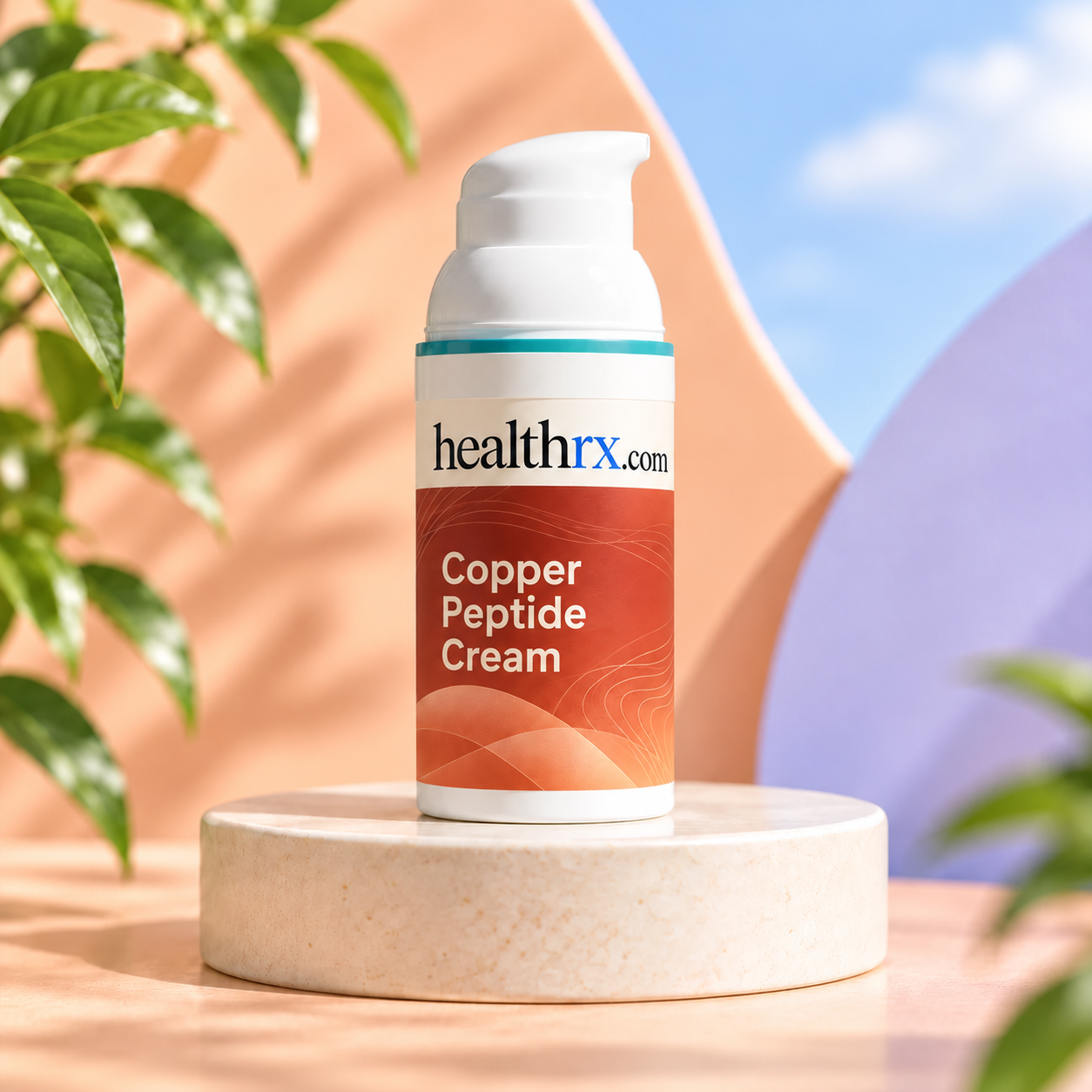
Copper peptide cream puts a peptide-based formula into one topical step. The verified formulation contains copper peptide at 0.2%. It offers a cream format for people exploring an alternative to a retinoid-based skin routine.
✓Copper peptide 0.2%
✓A cream, not an injection
✓One focused formula
Peptide ingredient
The formula contains a copper peptide complex.
Topical cream
The cream base delivers the ingredient to the skin surface.
A distinct option
The formulation differs from tretinoin and hydroquinone blends.
What is in the formula
What the research shows
Researchers have examined how a copper tripeptide interacts with isolated human skin layers. This laboratory study concerns a specified tripeptide and is distinct from a clinical trial of this cream.
Laboratory study
The cited copper-tripeptide study examined isolated human skin layers.
Compare the ingredients and format before choosing your plan.
Copper Peptide Cream
Tretinoin cream
Formula
Copper peptide 0.2%
Tretinoin retinoid
Format
Topical cream
Topical cream
Ordering
Online plan selection
Online plan selection
What to expect
The steps from choosing your plan to continuing your routine.
Getting started
Choose your plan
Compare the ingredients and the available purchase options.
After checkout
Follow your treatment plan
Use the instructions provided with your prescribed formulation.
Along the way
Keep in touch
Contact the existing care team with questions about your treatment or order.
HealthRX.com verified facts
Copper Peptide Cream online: price and access
Copper Peptide Cream starts at $152 per month on monthly plan; the lowest checkout charge is $152 (billed monthly). A prescription is never guaranteed. A licensed provider reviews each request before a pharmacy can dispense treatment.
Price
$152/month equivalent
Lowest checkout charge
$152, billed monthly
Prescription
Required; a licensed provider decides whether treatment is appropriate
Catalog verified October 3, 2026. Source: HealthRX.com checkout catalog and refund policy. Monthly equivalent divides the discounted plan charge by the number of months; checkout may collect a multi-month total.
Frequently asked questions
Which plan lengths can I choose?+−
This cream currently has a one-month option.
How do I choose between similar formulations?+−
Compare the ingredient lists and discuss your skin goals with your care team.
An independent US-licensed clinician reviews every request. If they decide the treatment is not right for you, you get a full refund for the medication.
Prescriptions are filled by a US-licensed pharmacy and shipped free, in discreet packaging, on every plan.
LegitScript-certified · Cert 50087439
Compounded medications are prepared by a US-licensed pharmacy and are not reviewed by the FDA for safety or effectiveness. Products are dispensed only after a licensed provider determines they are appropriate. Information here is educational and is not a substitute for medical advice.