Targets the mTOR pathway
Rapamycin inhibits mTOR, a central regulator of how your cells balance growth and repair.
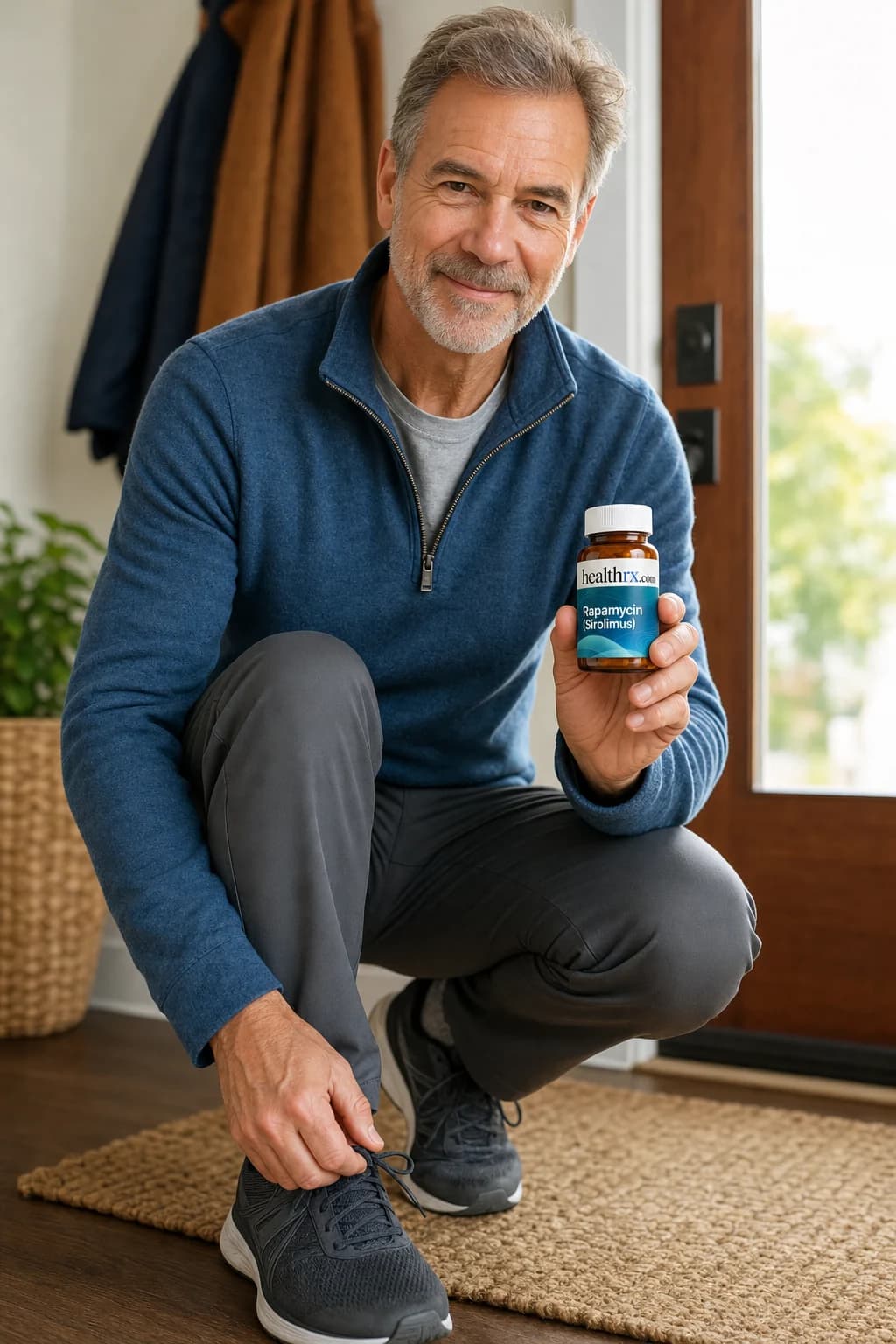

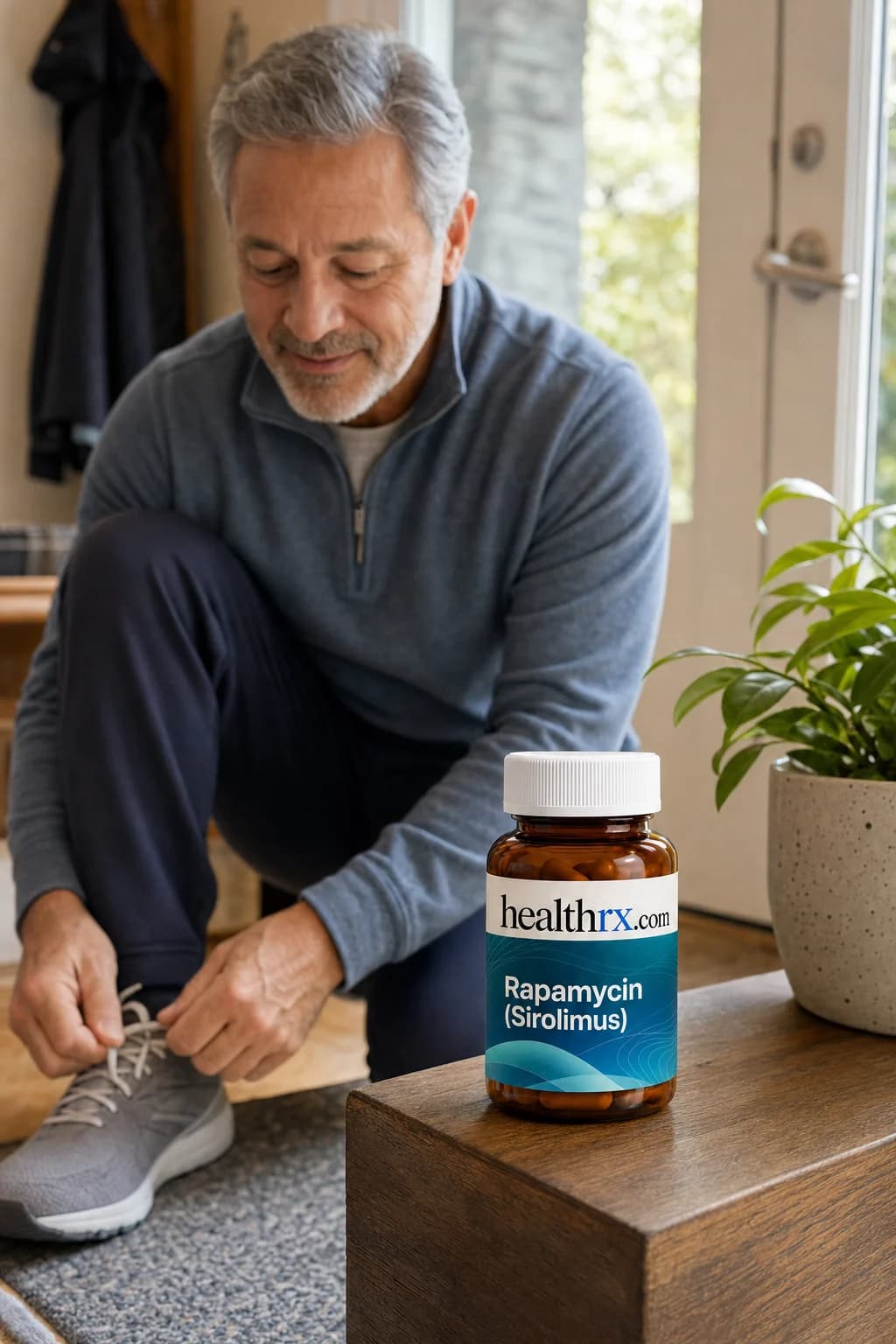
The people pictured are models, not patients.
RxLongevity
The longevity molecule, prescribed.
40,000+ products sold · LegitScript certified
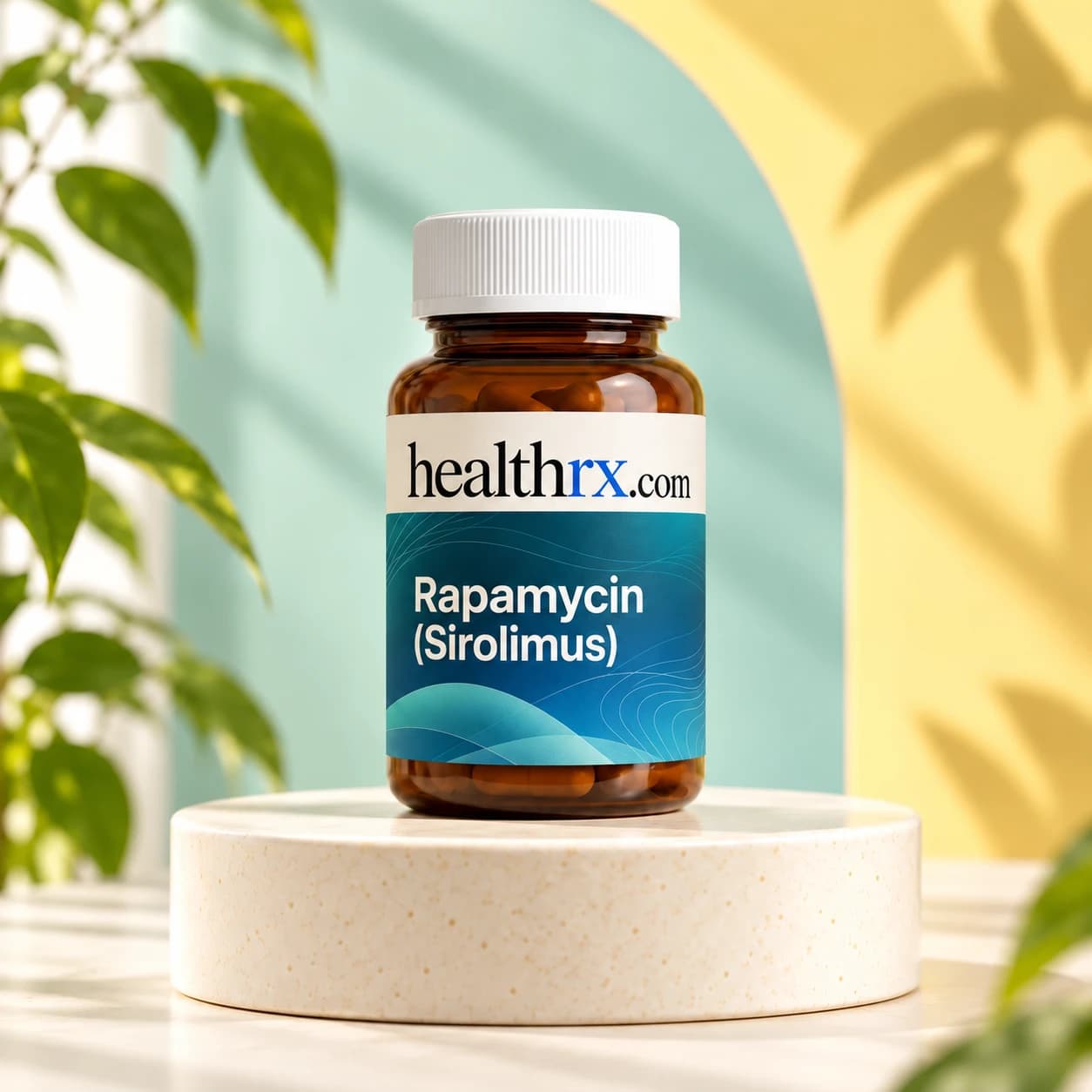
Rapamycin, also called sirolimus, in a 1 mg capsule listing. Explore FKBP-12, mTOR signaling and the distinctions that matter in aging research.
Explore the ingredients and compare options →Pause, change, or cancel anytime from your account.
How Would You Like To Pay?
Choose Your Plan
Or pay with
$152 billed today, then every month until canceled.
Not prescribed? Full refund.
After checkout you complete a short medical review in your member portal, and a US-licensed provider reviews it before your rapamycin ships.
Full refund if not prescribed Free, discreet shipping Cancel anytime






Order today and here is what happens next
Common questions
 LegitScript certifiedCert. 50087439
Morning walks
The people pictured are models, not patients.
Rapamycin inhibits mTOR, a central regulator of how your cells balance growth and repair.
Longevity dosing is low and intermittent, usually once a week, set by your provider rather than taken daily.
Rapamycin is the most studied molecule in the field, though most of that evidence is from laboratory models and human longevity trials are still early.
A US-licensed provider prescribes it off-label and monitors labs such as lipids and blood counts.
How we compare
Meet the formula
Rapamycin and sirolimus are two names for the same molecule. Its defining pharmacologic story concerns mTOR, the mechanistic target of rapamycin, a regulatory protein involved in cellular responses to nutrients and growth signals. This pathway is a major subject in aging biology. The HealthRX.com listing identifies rapamycin 1 mg capsules, with a 24-capsule catalog quantity. Understanding the pathway and the type of research being discussed makes the product much more specific than a general longevity label.
Rapamycin associates with FKBP-12
The resulting complex inhibits mTOR signaling
Cellular regulation and defined aging-related endpoints
Inside the formula
1 mg
Sirolimus binds to FKBP-12, an intracellular binding protein. The resulting complex inhibits mTOR, a kinase involved in cellular regulation. This explains the origin of the pathway’s name and the molecule’s place in nutrient-sensing research. The 1 mg figure describes the listed capsule strength. It is separate from a study regimen or an individualized schedule.
A closer look / 01
Cells respond to signals about nutrients, energy availability and growth. mTOR is part of the signaling machinery that helps coordinate those responses. Describing rapamycin through this pathway makes its identity clearer: it is a specific molecule acting through a specific intracellular interaction, rather than an interchangeable member of a generic anti-aging category.
A pathway can be scientifically important without serving as one universal outcome measure. Cellular signaling, physical performance, immune measurements and lifespan describe different endpoints. Research on mTOR inhibition asks particular questions within that range, so the endpoint deserves to stay attached to the study.
A closer look / 02
Some aging-related human studies have investigated everolimus, RTB101 or combinations of mTOR-pathway inhibitors. These compounds belong to a related scientific conversation, but their names matter. A study of another inhibitor is pathway context, rather than automatically a study of a rapamycin capsule. Identifying the compound is the first step toward a useful interpretation.
A small randomized study of rapamycin itself in an older human cohort examined feasibility and measures involving immune function, physical performance and cognition. That supplies a more directly matched example of human rapamycin research. Its design and duration still define the question being asked.
A closer look / 03
Experimental models allow researchers to investigate aging biology under controlled conditions. Human studies often measure more practical endpoints over shorter periods, such as a laboratory marker or a functional assessment. An animal lifespan experiment and a human performance study therefore answer different questions. Keeping that distinction visible gives aging research its actual meaning instead of turning every interesting result into the same promise.
A closer look / 04
The strength identifies the amount in a listed capsule; the 24-capsule quantity identifies the catalog option. The package does not define a universal longevity schedule. Product-specific treatment instructions supply the regimen context, while the catalog gives the concrete formulation being purchased. This distinction is especially useful for a molecule with research spanning different populations and dosing approaches.
When comparing a personal goal, name the observation: a functional task, a laboratory measurement or a day-to-day experience. That makes the goal more concrete than one overall biological-age score and keeps it connected to the relevant question.
Make an informed comparison
These compounds occupy different pathways. Rapamycin focuses on mTOR inhibition, metformin on glucose-regulation pharmacology, and low-dose naltrexone on a lower-dose opioid-antagonist context. Their place in one browsing category does not erase those differences.
| Option | Ingredient identity | What distinguishes it |
|---|---|---|
| Rapamycin | Sirolimus | FKBP-12 / mTOR pathway; capsule |
| Metformin ER | Metformin | Biguanide; extended-release tablet |
| Low Dose Naltrexone | Naltrexone | Opioid-receptor antagonist; lower-dose capsule |
The useful details
They are names for the same molecule. Sirolimus is the generic drug name; rapamycin is the name commonly used in the pathway and aging-research conversation. Seeing either name can therefore refer to this ingredient, while the formulation and strength identify the product.
Match the compound, participant group, dose context and measured endpoint. These details distinguish a rapamycin study from a study of a related mTOR inhibitor and distinguish a human outcome from an experimental-model result. That gives the scientific explanation a clear scope.
Explore the ingredient research
See the available product options.
View optionsHealthRX.com verified facts
Rapamycin (Sirolimus) starts at $122 per month on 12-month plan; the lowest checkout charge is $152 (billed monthly). A prescription is never guaranteed. A licensed provider reviews each request before a pharmacy can dispense treatment.
Catalog verified August 26, 2026. Source: HealthRX.com checkout catalog and refund policy. Monthly equivalent divides the discounted plan charge by the number of months; checkout may collect a multi-month total.
Choose your treatment options and complete secure checkout. Then complete the online health intake.
A US-licensed provider reviews your history and, if appropriate, prescribes a weekly protocol off-label.
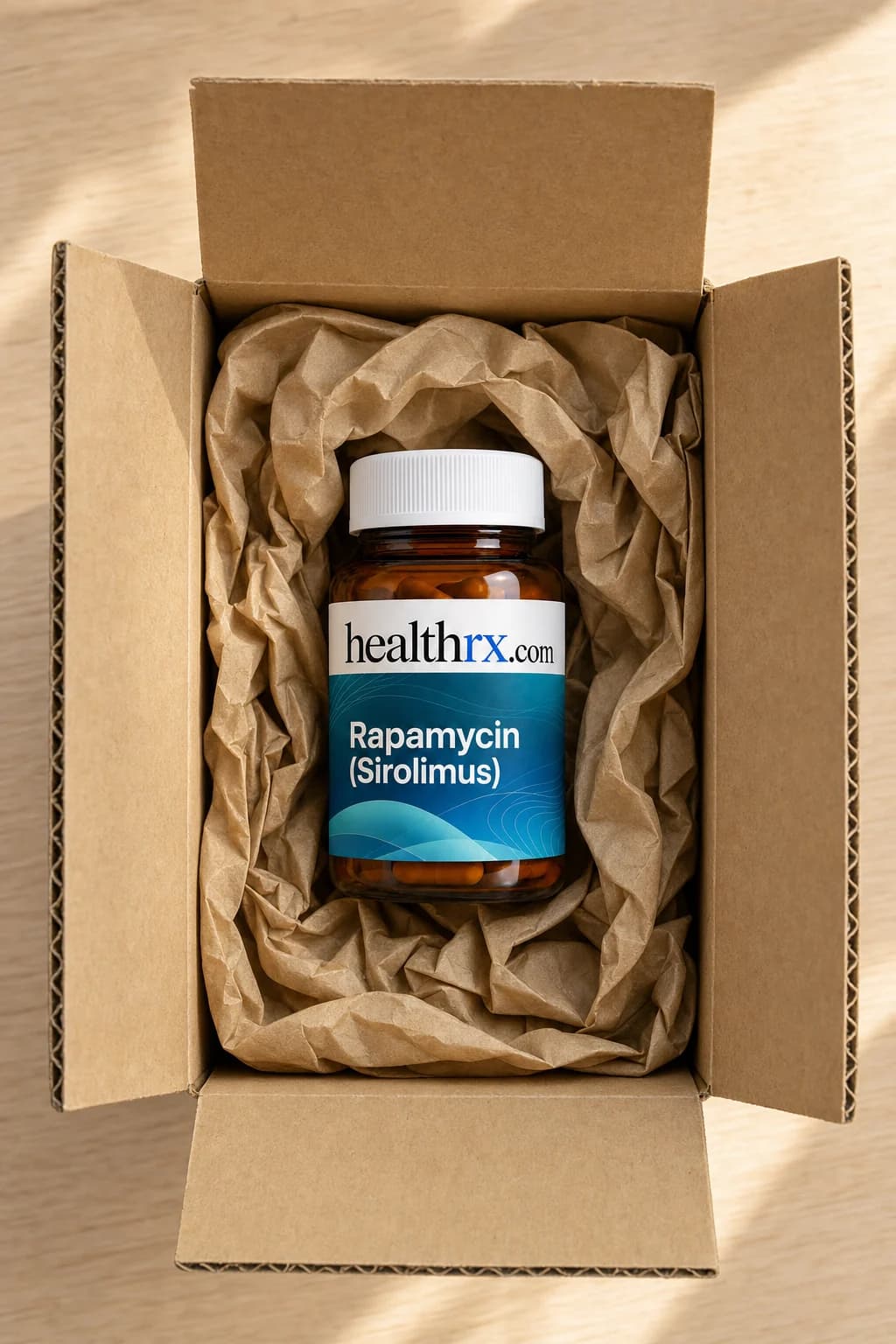
Your dose is compounded and ships to your door in 3 to 5 days.
Your provider checks lipids and blood counts and adjusts the protocol.
Rapamycin is the molecule at the center of longevity research, because it inhibits mTOR, a pathway that governs how cells balance growth and repair. It is prescribed off-label, typically on a weekly protocol your provider sets. Reviewed by a licensed provider, compounded by a US-licensed pharmacy.
Rapamycin (sirolimus) inhibits the mTOR pathway, which regulates cell growth, metabolism and autophagy. Compounded by a US-licensed pharmacy.
Binds FKBP12
Rapamycin pairs with a protein called FKBP12 inside your cells.
Inhibits mTORC1
That pairing blocks mTORC1, a hub that drives cell growth.
Shifts toward repair
With growth signaling turned down, cells lean toward maintenance and autophagy, their cleanup process.
In laboratory studies this shifts cells from growth toward repair. Whether that translates to longevity in people is still being studied.
Why longevity dosing looks different from transplant dosing
| Weekly longevity protocol | Daily transplant dosing | |
|---|---|---|
| Dose size | Low | High |
| How often | Usually once a week | Every day |
| Immune suppression | Kept low by the dose | Strong, intended |
| Goal | Dial down mTOR intermittently | Prevent organ rejection |
| Monitoring | Periodic labs | Intensive drug-level monitoring |
| Prescribed | Off-label, provider-set | On-label immunosuppression |
This is a long-horizon protocol rather than something you feel day to day. Your provider sets the cadence and monitors you over time.
Week 1
Begin the weekly dose your provider sets.
Week 2 to 4
Note any mouth sores or stomach changes and message your provider.
Week 6 to 8
Your provider reviews your lipids and blood counts.
Ongoing
Your provider tunes the protocol to how you respond.
Prescribed off-label and not right for everyone. Rapamycin is an immunosuppressant, so it can raise infection risk; avoid live vaccines while on it. It interacts with grapefruit and CYP3A4 medications, which change its levels. Tell your provider about infections and every medication.
Rapamycin interacts with grapefruit and many medicines through the CYP3A4 pathway, so share your full medication list. Your provider monitors lipids and blood counts, and the protocol is paused around surgery or active infection. Live vaccines are avoided while taking it.
No prescription needed. Dietary supplements for the daily habits around your care, sold separately from prescription treatment. Ask your provider before adding one to your routine.
Dietary supplements, not medications. These statements have not been evaluated by the Food and Drug Administration. These products are not intended to diagnose, treat, cure, or prevent any disease.
An independent US-licensed clinician reviews every request. If they decide the treatment is not right for you, you get a full refund for the medication.
Prescriptions are filled by a US-licensed pharmacy and shipped free, in discreet packaging, on every plan.
LegitScript-certified · Cert 50087439
Compounded medications are prepared by a US-licensed pharmacy and are not reviewed by the FDA for safety or effectiveness. Products are dispensed only after a licensed provider determines they are appropriate. Information here is educational and is not a substitute for medical advice.