Your provider confirms the strength and dose after intake. Payment does not guarantee a prescription.
Meet the formula
Understand uneven tone at the ingredient level.
Uneven tone is more specific than a general wish for brighter skin. Brown patches, marks after blemishes and changes in overall color are observations about pigmentation. This formula combines hydroquinone 6%, kojic acid 6% and niacinamide 5%, ingredients with different roles in pigmentation biology. Understanding how pigment is made and how it reaches surrounding skin cells gives the blend a clearer identity, and makes comparison with exfoliating acids or retinoids much more useful.
01
Pigment production
Hydroquinone and kojic acid
02
Pigment transfer
Niacinamide and melanosome transfer
03
Topical blend
Three named actives in one formula
Inside the formula
The names on the label, explained.
6%
Hydroquinone
Hydroquinone is a pigment-focused ingredient associated with reducing melanin production. Its role makes this blend different from a product centered on exfoliation or hydration. The listed 6% identifies the hydroquinone component of this particular formula; the neighboring hydroquinone blends in the catalog have their own ingredient lists and concentrations.
6%
Kojic acid
Kojic acid is studied for its effects on tyrosinase, an enzyme involved in melanin synthesis. It provides a second pigment-production ingredient within the formula. Although hydroquinone and kojic acid share a pigmentation focus, they are distinct compounds. Listing both helps describe the design of the blend without collapsing them into one overall percentage.
5%
Niacinamide
Niacinamide is a form of vitamin B3. Pigmentation research has examined its effect on the transfer of melanosomes, the pigment-containing structures passed from pigment-producing cells to surrounding skin cells. That is a different step from melanin production. Niacinamide therefore supplies another ingredient role within the hydroquinone and kojic-acid blend.
A closer look / 01
Follow pigment from production to transfer.
Melanocytes are the cells that produce melanin. Melanosomes carry that pigment and are transferred to keratinocytes, the predominant cells in the outer skin. A formula can therefore include ingredients associated with pigment production and ingredients associated with pigment transfer. This pathway view explains why three ingredient names can represent different parts of the same skin concern.
It also explains the difference from a texture-focused product. A retinoid acts through retinoid signaling, while salicylic acid is an exfoliating beta hydroxy acid. Those ingredients may appear in skincare conversations about marks or complexion, but their ingredient families differ from this hydroquinone, kojic-acid and niacinamide combination.
A closer look / 02
Compare the concern before comparing the cream.
A flat brown mark after a blemish, a broader patch of uneven pigmentation and a change in skin texture are separate observations. Record where the concern appears, whether it is flat or raised, and whether the main change is color or texture. That gives the product comparison a concrete starting point and makes a pigment-focused blend easier to distinguish from a pore-focused or retinoid option.
A closer look / 03
What ingredient studies tell you.
Niacinamide research includes work on melanosome transfer and clinical pigmentation measurements. A separate split-face study compared niacinamide and hydroquinone formulations in people with melasma. These studies illustrate different ways of examining pigmentation: laboratory mechanisms, measured color changes and a comparison between treatments. The concentrations and combinations in those studies belong to those products; this page identifies its own three-ingredient blend.
For a personal photo record, consistent light and camera position matter. A brighter room can make pigmentation appear different even without a change in the skin. Compare color and texture separately so that a record answers the question you actually set out to follow.
Make an informed comparison
Compare the actual ingredients and formats.
A pigment-focused formula, an exfoliating blend and a retinoid blend have different active maps. Look for the ingredients that define each option, then compare their exact strengths and formats. This blend is centered on hydroquinone, kojic acid and niacinamide.
Why include niacinamide with pigment-production ingredients?
Its pigmentation research concerns another step: melanosome transfer. Knowing that distinction helps explain the ingredient selection more clearly than a generic brightening description. The full blend contains three named compounds, each with its own concentration.
Is kojic acid the same kind of acid as salicylic acid?
The names both include acid, but the compounds have different roles. Kojic acid is studied in pigmentation biology. Salicylic acid is a beta hydroxy acid used for exfoliation and acne care. Ingredient names need their mechanism context to make a useful comparison.
Choose your treatment options and complete secure checkout. Then complete the online health intake.
Provider review
A licensed provider reviews your health history and determines whether this treatment is appropriate for you.
Ships to your door
If prescribed, a US-licensed pharmacy prepares and ships your medication.
Ongoing support
Contact the care team with questions about your treatment or order.
Hydroquinone 6%
The pigment-focused component of this topical blend.
Kojic acid 6%
An additional ingredient used in pigment-focused formulations.
Niacinamide 5%
Vitamin B3, studied for the appearance of aging facial skin.
A different blend
Choose between formulas by their ingredient list rather than treating all hydroquinone products as interchangeable.
Formula details, research & comparisons
About Hydroquinone / Kojic Acid / Niacinamide
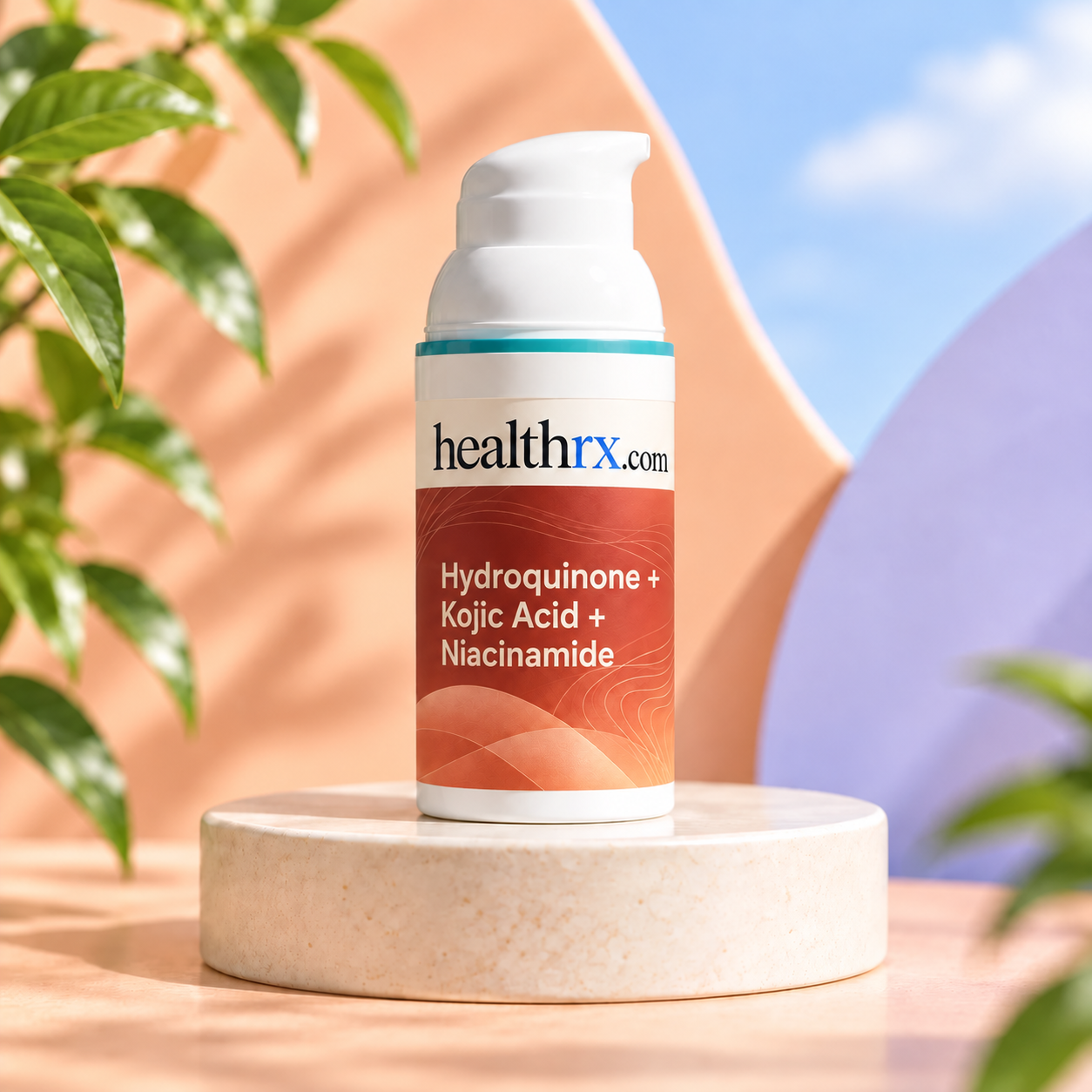
This topical blend combines hydroquinone, kojic acid and niacinamide. Hydroquinone and kojic acid are pigment-focused ingredients, while niacinamide has clinical research on skin appearance. This formulation is distinct from the existing hydroquinone blend that also contains tretinoin.
✓Hydroquinone 6%
✓Kojic acid 6%
✓Niacinamide 5%
Hydroquinone
An ingredient used in pigment-focused skin treatment.
Kojic acid
Combined with hydroquinone in this formula.
Niacinamide
Completes the three-ingredient blend at 5%.
What is in the formula
What the research shows
The kojic acid study evaluated a gel with hydroquinone and glycolic acid. Niacinamide was studied separately at 5%. These references describe ingredient research in their studied formulations.
Split-face study
Kojic acid was evaluated in a hydroquinone and glycolic acid gel.
Lim, 1999
50 participants
A separate niacinamide study used 5% niacinamide for 12 weeks.
Hydroquinone + Kojic Acid + Niacinamide or Hydroquinone Brightening
Compare the ingredients and format before choosing your plan.
Hydroquinone + Kojic Acid + Niacinamide
Hydroquinone Brightening
Formula
Hydroquinone / kojic acid / niacinamide
Hydroquinone blend with tretinoin
Format
Topical cream
Topical cream
Ordering
Online plan selection
Online plan selection
What to expect
The steps from choosing your plan to continuing your routine.
Getting started
Choose your plan
Compare the ingredients and the available purchase options.
After checkout
Follow your treatment plan
Use the instructions provided with your prescribed formulation.
Along the way
Keep in touch
Contact the existing care team with questions about your treatment or order.
HealthRX.com verified facts
Hydroquinone / Kojic Acid / Niacinamide online: price and access
Hydroquinone / Kojic Acid / Niacinamide starts at $154 per month on monthly plan; the lowest checkout charge is $154 (billed monthly). A prescription is never guaranteed. A licensed provider reviews each request before a pharmacy can dispense treatment.
Price
$154/month equivalent
Lowest checkout charge
$154, billed monthly
Prescription
Required; a licensed provider decides whether treatment is appropriate
Catalog verified October 3, 2026. Source: HealthRX.com checkout catalog and refund policy. Monthly equivalent divides the discounted plan charge by the number of months; checkout may collect a multi-month total.
Frequently asked questions
Which plan lengths can I choose?+−
This cream currently has a one-month option.
How do I choose between similar formulations?+−
Compare the ingredient lists and discuss your skin goals with your care team.
An independent US-licensed clinician reviews every request. If they decide the treatment is not right for you, you get a full refund for the medication.
Prescriptions are filled by a US-licensed pharmacy and shipped free, in discreet packaging, on every plan.
LegitScript-certified · Cert 50087439
Compounded medications are prepared by a US-licensed pharmacy and are not reviewed by the FDA for safety or effectiveness. Products are dispensed only after a licensed provider determines they are appropriate. Information here is educational and is not a substitute for medical advice.